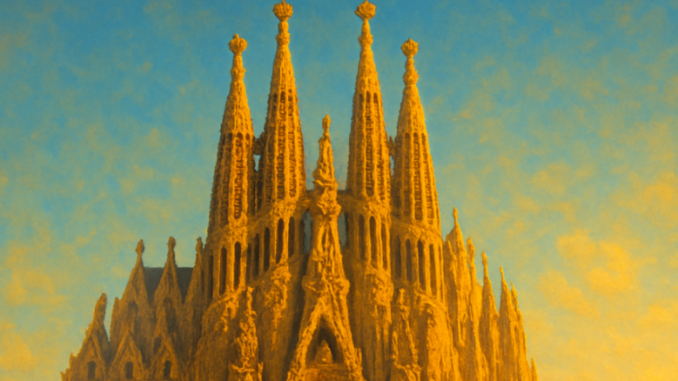
When the Sagrada Família in Barcelona received its first stone in 1882, no one could have imagined that this extraordinary building would become the dramatic backdrop for an international thriller more than a century later. Dan Brown deliberately chose Antoni Gaudí’s unfinished cathedral as the culminating setting for his novel Origin. But what does the book actually claim about this iconic structure, and how does its fiction compare to the historical reality surrounding Gaudí and the symbolic traditions that inspired him?
Why an Unfinished Cathedral?
Dan Brown is well known for using monumental architecture as a narrative device. After the Vatican, the Louvre, and the National Cathedral in Washington, he turned his attention to Barcelona in Origin. The Sagrada Família doesn’t merely serve as a backdrop in the novel — it functions as a symbol in its own right. Brown presents the building as a meeting point between science and faith, between the ancient and the modern. His protagonist, Robert Langdon, walks through the still-unfinished church as profound questions about the origin of humanity are revealed.
The book emphasizes that the Sagrada Família has been under construction for well over a hundred years. This incompleteness is presented as deeply meaningful — a symbol of humanity’s ongoing quest for the divine. Brown plays with the tension between past and future, between tradition and technological progress. Within the story, the cathedral becomes the place where these opposing forces converge.
Gaudí’s Symbolic Language According to the Novel
In Origin, Antoni Gaudí is portrayed as an architect whose work is saturated with hidden symbolism. The book suggests that Gaudí deliberately embedded concealed meanings in his designs. The spiraling towers, the organic forms inspired by nature, the mathematical structures — everything is presented as a continuous code waiting to be deciphered. Brown applies the same approach he previously used with the works of Leonardo da Vinci: the architect as mysterious messenger.
Dan Brown presents architecture not as decoration, but as a language in which hidden truths await discovery.
The novel hints at connections between Gaudí’s work and esoteric traditions without fully developing the idea. Readers are invited to investigate further on their own. This technique, a hallmark of Brown’s writing style, has predictably spawned countless online theories about what Gaudí truly meant with his designs. Whether or not these theories hold water, they have succeeded in drawing fresh attention to the symbolic dimensions of sacred architecture.
Historical Roots of Symbolism in Architecture
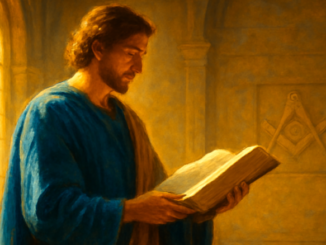
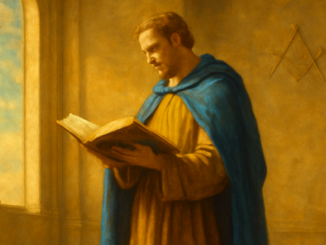
The suggestion in Origin that architects embed hidden messages in their work has deep historical roots. Medieval cathedral builders, often organized in guilds of stonemasons, did indeed work with a rich symbolic vocabulary. Freemasonry, which traces part of its origin to these operative guilds, inherited this tradition of symbolic communication. Notable Freemasons such as Johann Wolfgang von Goethe wrote extensively about the significance of architectural symbolism and its capacity to convey moral and spiritual truths.
Gaudí himself was not a Freemason — he was a devout Catholic. Yet he shared with Freemasonry a profound fascination with nature as a blueprint for design. His use of the golden ratio, spirals based on shells and trees, and light as a spiritual element all show striking parallels with the way Freemasons interpret the building arts as a path toward higher knowledge. The compass, the square, and the plumb line may not appear in Gaudí’s designs, but the underlying philosophy — that construction is a sacred act — resonates deeply with Masonic thought.
What the Book Suggests About Hidden Knowledge
A recurring theme in Origin is that certain buildings contain more than meets the eye. The Sagrada Família is presented as a space where ancient wisdom and modern science can meet. Brown has his characters speculate about whether Gaudí designed his church as a kind of time capsule — a place where future generations would find answers to fundamental questions about existence.
Among the symbolic interpretations the novel offers or implies:
- The spiraling towers as a symbol of the DNA helix
- The play of light through the stained glass windows as a reference to enlightenment
- The building’s incompleteness as a metaphor for the human quest for meaning
- The combination of nature and geometry as a universal language
These interpretations are largely fictional and serve the narrative. Yet they touch on something real. Freemasonry has always emphasized that architecture carries a spiritual dimension. The rough ashlar that is shaped into a perfect cube is the central symbol for personal development and moral refinement. In that sense, Brown’s fascination with hidden meanings in architecture connects to a centuries-old tradition that remains very much alive in Masonic lodges around the world.
How Were These Claims Received?
Following the publication of Origin, considerable debate arose about Brown’s portrayal of the Sagrada Família. Architectural historians pointed out that Gaudí’s symbolism was primarily Christian, not esoteric. The church itself — still under construction under the direction of the Junta Constructora — distanced itself from some of the novel’s interpretations. At the same time, the book attracted new visitors to Barcelona, people fascinated by the possibility that there was more to discover than the official guides revealed.
This tension between fact and fiction is precisely what Brown aims to create. As with his earlier novels about secret societies and hidden histories, he invites readers to conduct their own research. Whether or not one believes in hidden messages encoded in stone and glass, the Sagrada Família remains a building that inspires wonder and raises timeless questions about the relationship between humanity, nature, and the divine.
In Origin, Dan Brown uses the Sagrada Família as far more than a setting — the building becomes a character in the story, a symbol for the creative tension between tradition and progress. While his claims about hidden codes in Gaudí’s work are largely fictional, they touch on a genuine tradition of symbolic architecture that also plays a central role in Freemasonry. The question that lingers is not whether Brown is right, but whether architecture can truly teach us something about ourselves — a question that both cathedral builders and Freemasons have been pondering for centuries.
Copyright text & image: devrijmetselaar.nl
Texts are based on the ideas and content of the author of devrijmetselaar.nl, reviewed, corrected, and supplemented with the assistance of OpenAI. Images are created based on the ideas of the author of devrijmetselaar.nl using OpenAI/DALL-E.

Be the first to comment