
A silversmith's crucible over fire symbolizing the refiner's purification
Christianity

Malachi: The Messenger Who Brings Refinement

A crucible sits upon the fire. The metal within begins to glow, impurities rise to the surface and are skimmed away. What remains is purer, stronger, more valuable. This image from the daily life of ancient craftsmen carries a timeless truth within it. The last book of the Hebrew prophets — Malachi — speaks precisely about this process, not of metal, but of the human soul. As the closing chapter of the Old Testament, this brief text forms a bridge between what was and what is to come, between outward ritual and inner transformation. The Crucible as Mirror At the heart of Malachi stands the image of the refiner. The prophet describes a coming messenger who will sit as a silversmith, refining and purifying silver. This is not a destructive fire but a transformative one — and the distinction is essential. Destruction annihilates what is flawed, but refinement separates the valuable from the worthless so that the former can truly shine. The crucible in the silversmith’s workshop is, in this light, a symbol of conscious self-improvement. The fire that melts the metal is not random; it is carefully controlled by a craftsman who knows precisely when the purification is complete. […]

Candlelit Masonic lodge with open Bible showing the Book of Zephaniah
Christianity

Zephaniah and the Day of Purification: A Prophetic Mirror

Candles flicker softly in the dim light of the lodge as a brother reads aloud from an ancient text — a prophet warning of a day of reckoning, yet promising that from the ashes something new will rise. The brethren listen in silence, recognizing in these age-old words something strikingly contemporary: the necessity of inner purification before any true building can begin. The Book of Zephaniah, written in the kingdom of Judah during the seventh century BCE, speaks with an urgency that still resonates today. The Prophet and His Time Zephaniah was active during the reign of King Josiah, a period when Judah was struggling with religious decay and societal corruption. The prophet spoke to a people who had neglected their foundations — a nation that maintained the outer temple walls while allowing the inner temple to crumble. His message was twofold: first, a confrontation with what had become rotten; then, a promise of restoration for those willing to be reshaped. This small book, only three chapters long, opens with a gripping description of what Zephaniah calls the “Day of the Lord.” This is no simplistic fire-and-brimstone sermon but a call to fundamental reflection. The prophet does not only address […]

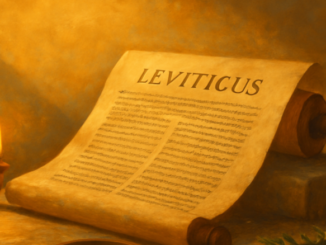
Open Bible showing the Book of Leviticus with Masonic symbolism
Spiritual Traditions

Leviticus: A Moral Guide for Spiritual Purification

The Book of Leviticus, the third book of the Old Testament, stands as one of the most complex and symbolically rich texts in the Bible. Focused on rituals, laws, and offerings designed to promote a holy way of life, Leviticus holds a particular fascination for Freemasons. Its themes of discipline, dedication, and purification resonate deeply with the Masonic journey toward spiritual enlightenment. In this article, we explore how Leviticus can inspire personal and moral growth — not just as a religious text, but as a timeless guide for those walking the path of self-improvement. What Is the Book of Leviticus? Leviticus is the third book of the Bible and contains the rules and ordinances that Moses conveyed to the Israelites. At first glance, many of these laws appear strictly ritualistic or culturally specific to the ancient world. Yet beneath the surface, they carry universal lessons about purity, devotion, and justice — themes that transcend time and culture. For the thoughtful reader, and especially for Freemasons, Leviticus offers far more than a historical code of conduct; it provides a framework for understanding the relationship between outward discipline and inward transformation. Holiness and Purification One of the central themes running through Leviticus […]