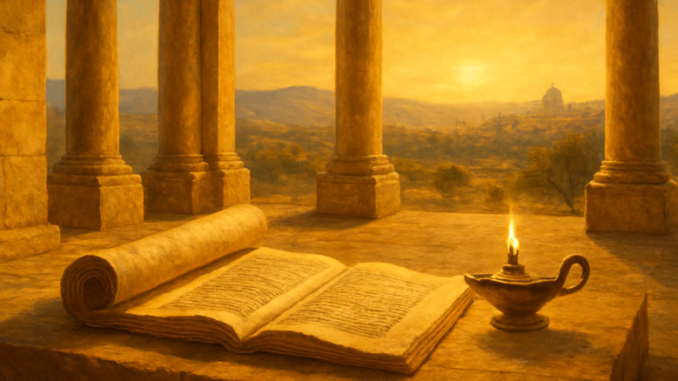
A crucible sits upon the fire. The metal within begins to glow, impurities rise to the surface and are skimmed away. What remains is purer, stronger, more valuable. This image from the daily life of ancient craftsmen carries a timeless truth within it. The last book of the Hebrew prophets — Malachi — speaks precisely about this process, not of metal, but of the human soul. As the closing chapter of the Old Testament, this brief text forms a bridge between what was and what is to come, between outward ritual and inner transformation.
The Crucible as Mirror
At the heart of Malachi stands the image of the refiner. The prophet describes a coming messenger who will sit as a silversmith, refining and purifying silver. This is not a destructive fire but a transformative one — and the distinction is essential. Destruction annihilates what is flawed, but refinement separates the valuable from the worthless so that the former can truly shine.
The crucible in the silversmith’s workshop is, in this light, a symbol of conscious self-improvement. The fire that melts the metal is not random; it is carefully controlled by a craftsman who knows precisely when the purification is complete. The silversmith gazes into the molten metal and knows it is pure when he can see his own face reflected in it. This ancient image speaks powerfully to anyone engaged in the work of self-development.
Malachi: A Voice at the End of an Era
The Book of Malachi was written after the Babylonian exile, at a time when the Second Temple had been rebuilt but the people’s spiritual enthusiasm had ebbed away. The rituals were still being performed, but without inspiration. Offerings were brought, but of inferior quality. The priests carried out their duties, but without heart. Malachi addresses a community that preserves the outward form while allowing the inner flame to die.
“For from the rising of the sun to its setting, my name is great among the nations.”
This prophetic call for renewal resonates far beyond its historical context. Malachi poses fundamental questions: What is the value of ritual without meaning? What good is it to speak the right words when the heart is elsewhere? These are questions every person can ask themselves, regardless of religious background. For those who practice any form of ritual work — whether in a lodge, a house of worship, or the quiet space of personal reflection — these questions cut to the bone.
The Fire of Inner Transformation
In traditions of spiritual self-development, fire plays a central role as a symbol of purification and enlightenment. It is no accident that candles burn in sacred spaces, that light is kindled at momentous occasions. Fire transforms, fire illuminates, fire warms. But fire can also consume whatever cannot withstand the truth.
The refinement Malachi describes is not punishment but a gift. Whoever passes through the fire emerges stronger. The impurities that are burned away are precisely those qualities that prevent us from becoming who we truly can be — pride, indifference, superficiality. They melt away in the fire of honest self-examination and the sincere desire for improvement. This is the inner alchemy that transforms the rough stone into something fit for its place in the greater structure.
The Return to What Is Essential
One of the most powerful themes in Malachi is the call to return. The Hebrew word for this — teshuvah — literally means “turning” or “reversal.” It suggests not a journey toward something new, but a remembering of what was always already present. The message is not that we must become something we are not, but that we must return to who we essentially are.
This return takes many forms: a return to sincerity instead of hypocrisy; a return to justice in human relationships; a return to reverence for the mystery of existence; a return to genuine connection with our fellow human beings.
This movement of return is not a nostalgic longing for the past but an active choice to live in the present from a foundation of deeper values. It is the recognition that outward forms only carry meaning when they are sustained by inner intention. The ritual, the symbol, the spoken word — all are hollow shells unless animated by the living spirit behind them.
The Sun of Righteousness
Malachi concludes with a vision of hope. The prophet speaks of the “sun of righteousness” that shall rise “with healing in its wings.” This poetic image combines light, warmth, and restoration. After the refining comes the dawn. After the purifying fire comes the light that gives direction.
The sun as a symbol of knowledge and insight is universal. It shines for everyone, makes no distinction, and illuminates what was hidden in darkness. The righteousness it brings is not vengeance but restoration, not condemnation but rectification. It is a vision of a world in which inner purity and outward justice converge — a world that begins not with grand external reforms, but with the quiet inner work of each individual.
A Closing That Is Also a Beginning
As the thirty-ninth and final book of the Old Testament, Malachi closes a cycle but simultaneously opens a door. The prophet points forward to a messenger who will prepare the way, to a time of renewal. This moment of closure and opening is an archetype found wherever people engage in the work of personal development.
Every completion is a new beginning. Every act of refinement makes room for growth. The crucible upon the fire reminds us that the uncomfortable heat of self-reflection ultimately yields something precious — a clearer version of ourselves, a purer capacity to serve and to connect with others.
The Book of Malachi invites us not to rest content with outward form, but to seek the inner flame that gives that form its meaning. The crucible waits patiently for the fire; the silver waits for the refiner’s hand. And in that waiting — in that moment of surrender to the process — lies the promise of transformation. Whoever dares to look into the molten metal of their own heart will ultimately see a purified face reflected back at them.
Copyright text & image: devrijmetselaar.nl
Texts are based on the ideas and content of the author of devrijmetselaar.nl, reviewed, corrected, and supplemented with the assistance of OpenAI. Images are created based on the ideas of the author of devrijmetselaar.nl using OpenAI/DALL-E.
Frequently Asked Questions
How does the symbolism of the crucible relate to Freemasonry?
The crucible represents the transformative work of self-improvement that is central to Masonic practice. Just as a silversmith carefully refines metal to reveal its true value, Freemasonry provides tools and teachings to help members purify themselves of flaws and develop their character. This process of refinement mirrors the spiritual journey that Masons undertake through their degrees and personal development.
Why is the Book of Malachi significant in Masonic teachings?
Malachi's message about the importance of sincere inner work rather than empty ritual directly aligns with Masonic philosophy. The prophet's call for spiritual renewal and authentic practice resonates with Freemasonry's emphasis on meaningful personal transformation rather than mere ceremonial observance. This connection helps Masons understand that their ritual work is intended to inspire genuine self-reflection and moral improvement.
What does Malachi teach us about the purpose of Masonic ritual?
Malachi teaches that ritual is only valuable when it connects to genuine inner transformation and sincere intention. In Freemasonry, this principle emphasizes that the lodge's ceremonies are not merely symbolic performances but are meant to inspire real personal growth and enlightenment. A Mason who participates in rituals with full presence and commitment experiences the true power of these ancient teachings.
How can the refiner's fire symbolize the Masonic journey?
The refiner's fire represents the challenges and lessons that help strip away our impurities and reveal our true character, much like the Masonic journey through its degrees. This fire is not meant to destroy but to strengthen and clarify, allowing each Mason to reflect more clearly the light of wisdom and virtue. Through this process of refinement, Masons become better versions of themselves and stronger contributors to their communities.

Be the first to comment