
In 478 BCE, a drama unfolded in the Persian Empire that is still commemorated to this day. A young woman, seemingly powerless at the court of an all-powerful king, changed the course of history through her courage and wisdom. The Book of Esther is unique within the Hebrew Bible: God’s name is never once mentioned, yet the divine is palpably present in every twist of the narrative. For Freemasons, this remarkable book offers a treasure trove of symbolism about hidden wisdom, moral courage, and the power of acting at precisely the right moment.
A Historical Turning Point in Persia
The story of Esther takes place at the court of King Ahasuerus, who ruled an empire stretching from India to Ethiopia. The historical backdrop is the Persian exile — a period when the Jewish people lived scattered under foreign rule. In this context, a young woman named Hadassah, later known as Esther, becomes queen. Her uncle Mordecai warns her to keep her heritage hidden. This element of concealment is not merely a practical survival strategy; it touches on a deeper truth about identity and the right moment of revelation.
When the courtier Haman hatches a plot to annihilate all Jews in the empire, Esther faces an impossible choice. To appear before the king unsummoned could mean death. Yet she resolves to act, uttering the now-famous words: “If I perish, I perish.” This moment of decision is a turning point — not only in the narrative, but in the symbolic meaning of the entire book.
Concealment as a Symbolic Theme
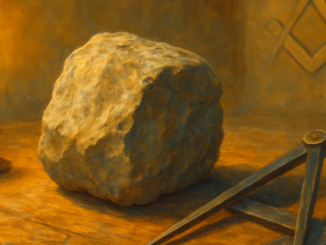
The absence of God’s name in the Book of Esther has fascinated commentators for centuries. Some scholars see it as a deliberate choice: the divine works not through overt miracles, but through human actions and apparent coincidences. This idea resonates powerfully with Freemasonry, where the Great Architect of the Universe is neither defined nor confined, but is present in the very structure and harmony of existence itself.
The name Esther itself is related to the Hebrew word for “hidden.” Her Persian name conceals her true identity, just as the symbolic language of Freemasonry veils deeper truths from those not yet ready to receive them. This principle of gradual revelation is well known in the lodge as the journey from darkness to light, where each degree unlocks new layers of understanding.
Courage and Moral Duty
Mordecai poses a question to Esther that has echoed through the ages: “Who knows whether you have not come to royal dignity for just such a time as this?” This question strikes at a fundamental Masonic principle: every person occupies a unique position and therefore carries a unique responsibility. The circumstances in which we find ourselves are not mere accident — they are a call to action.
Who knows whether you have not come to royal dignity for just such a time as this?
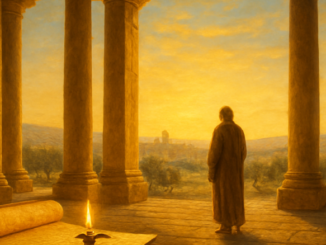
Esther’s courage is not the absence of fear, but the willingness to act in spite of it. She prepares herself with three days of fasting and meditation before approaching the king. This moment of inner preparation reflects the importance Freemasonry places on contemplation and reflection before making important decisions. The quiet chamber of thought precedes the decisive act.
Justice and the Reversal of Power
The story of Esther contains a dramatic reversal: Haman, who had built a gallows for Mordecai, ends up on that very gallows himself. This twist is more than narrative irony. It symbolizes a moral principle deeply rooted in many wisdom traditions: he who digs a pit for another will fall into it himself. Freemasonry teaches that our actions carry consequences, and that the moral universe ultimately tends toward balance.
The festival of Purim, which commemorates this story to this day, celebrates this reversal. It is a feast of joy, but also of reflection on the fragility of power and the strength of moral steadfastness. For Freemasons, this festival can serve as a reminder of the impermanence of worldly status and the enduring importance of inner integrity.
Lessons for Today
What can we, in our own time, learn from this ancient story? First, the value of patience and timing. Esther does not act impulsively but waits for the right moment. Second, the importance of solidarity: she risks her own safety for the sake of her community. Third, the recognition that hidden qualities, when the moment arrives, may emerge and make all the difference.
- Hidden wisdom reveals itself when the time is ripe
- Moral courage requires inner preparation
- Our position in life carries responsibility
- Justice sometimes works through seeming coincidence
In the lodge, we build not only a symbolic temple, but also ourselves. The story of Esther invites us to reflect on our own hidden qualities, on the moments when we are called to speak or to act, and on the courage that demands. Just as Esther revealed her true identity to save others, so too are we sometimes asked to step beyond our comfort zone for a higher purpose.
The Book of Esther remains a source of inspiration after more than two thousand years. Its themes of concealment, courage, and divine providence working through human action speak directly to the heart of Freemasonry. May this ancient story remind us that we, too, in our own circumstances and in our own place, may be called upon to bring light where darkness threatens. The question Mordecai posed to Esther is one that life poses to each of us: What are we here for — right now, at this very moment?
Copyright text & image: devrijmetselaar.nl
Texts are based on the ideas and content of the author of devrijmetselaar.nl, reviewed, corrected, and supplemented with the assistance of OpenAI. Images are created based on the ideas of the author of devrijmetselaar.nl using OpenAI/DALL-E.
Frequently Asked Questions
Why do Freemasons find the Book of Esther spiritually significant?
Freemasons recognize the Book of Esther as a powerful symbol of hidden wisdom and moral courage. The story's themes of concealment, gradual revelation, and divine presence without explicit naming parallel Freemasonry's own principles of symbolic teaching and the journey from darkness to light.
What does the absence of God's name in the Book of Esther teach Masons?
This absence demonstrates that the divine works through human actions, apparent coincidences, and the harmony of existence itself—not only through overt miracles. This resonates with Freemasonry's conception of the Great Architect of the Universe as present in the structure and order of creation rather than confined to literal definitions.
How does Esther's courage relate to Masonic principles?
Esther embodies the Masonic ideal that every person holds a unique position and therefore carries unique responsibility. Her willingness to act despite fear, combined with preparation through meditation and fasting, demonstrates that true courage is not the absence of fear but the commitment to fulfill one's moral duty when circumstances call for it.
What is the significance of Esther's hidden identity in Freemasonry?
Esther's concealed Jewish heritage symbolizes the principle of selective revelation central to Masonic teaching. Just as her true identity is revealed at the crucial moment, Freemasonry uses veiled symbolic language to gradually unveil deeper truths to initiates as they progress through the degrees and become ready to receive greater understanding.
What can modern Masons learn from Esther's story?
Esther's narrative teaches that we may not understand why we are placed in certain circumstances, but these positions often present opportunities to serve a greater purpose. Her example encourages Masons to cultivate both moral courage and wisdom, recognizing that their unique talents and positions are meant to be used for the betterment of their communities.


Be the first to comment