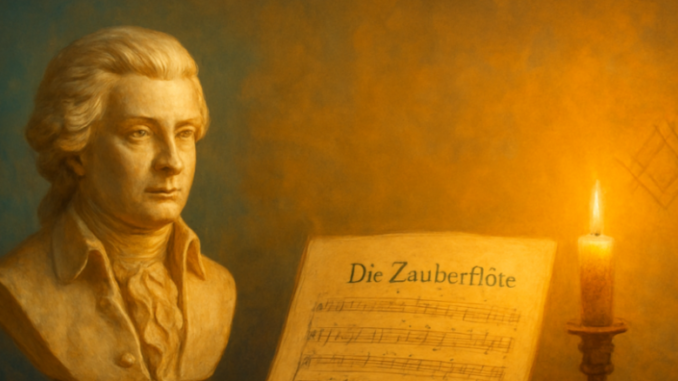
What do Mozart, Churchill, and George Washington have in common? They were all Freemasons. Though they lived in different eras and moved through vastly different worlds, they shared a common pursuit: becoming a better version of themselves while making a positive impact on the world around them. In this deep dive, we explore the lives and ideals of famous Freemasons — men who didn’t just make history, but who actively shaped their own character along the way.
What Makes Someone a Famous Freemason?
Not every lodge member becomes famous — and that’s perfectly fine. Freemasonry is fundamentally about inner growth, not outward glory. Yet some individuals have managed to walk both paths. They became role models because they translated the core values of Freemasonry — honesty, self-reflection, and service to others — into concrete action. You can see it in their work, their conduct, and their lasting impact on society.
Wolfgang Amadeus Mozart — Musical Genius and Symbolic Builder
Mozart was initiated into a lodge in Vienna at a young age. His compositions are filled with references to Masonic symbolism, most notably in his celebrated opera The Magic Flute. In this work, he wove in themes of enlightenment, purification, and brotherhood — all core values within Freemasonry.
For Mozart, music was more than art — it was a vehicle for moral elevation. His lodge membership affirmed his belief in harmony, not just in musical tones, but between people.
George Washington — The First President and Devoted Brother
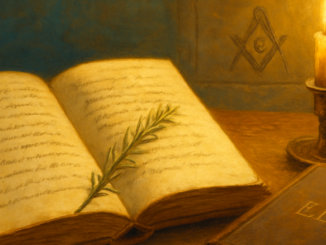
George Washington was not only the first President of the United States but also a deeply committed Freemason. He was initiated in 1752 and remained connected to the Craft throughout his life. During his inauguration, he took his oath on a Masonic Bible — a powerful symbol of how deeply his ideals were rooted in Masonic values: justice, equality, and a sense of duty.
Washington’s leadership was defined by moral integrity. He led by example and relied on the inner compass he had developed, in part, through Freemasonry.
Winston Churchill — Freedom, Courage, and Brotherhood
Churchill joined Freemasonry early in his career. Although he became less active in lodge life later on, the influence of Masonic principles remained visible in his thinking. His dedication to freedom, his razor-sharp rhetoric, and his ability to unite people were all rooted in a deep sense of responsibility.
His most famous words — “Never, never, never give up” — reflect the perseverance and discipline that are also cultivated within Freemasonry.
Multatuli (Eduard Douwes Dekker) — The Rebellious Thinker
In the Netherlands, Multatuli is one of the best-known Freemasons. His landmark novel Max Havelaar is a fierce indictment of injustice and hypocrisy, and a passionate plea for human dignity. These themes align seamlessly with the moral values at the heart of Freemasonry.
Multatuli used his writing as a tool to awaken consciousness. He challenged society to become more honest, more just, and more courageous. His lodge membership gave him the inner backbone to do so.
Frits Philips — Business with a Human Face
Frits Philips, the renowned head of the Philips technology company, was also a Freemason. Ethics played a central role in his business decisions. During World War II, he managed to protect hundreds of Jewish employees by keeping them on the company payroll.
His commitment to humanity, service, and equality reflected the values he learned and championed within Freemasonry.
Simon Carmiggelt — Chronicler of Everyday Life
Simon Carmiggelt, a beloved Dutch columnist and writer, was a Freemason as well. In his short pieces, he captured the beauty of everyday life with remarkable poetry and empathy. His subtlety and attention to detail sprang from a deeply reflective outlook on life — something he undoubtedly nurtured through his lodge experience.
He showed that even small acts, words, and gestures can carry profound meaning. Freemasonry helped him see and honor the beauty in the ordinary.
Willem Drees Jr. — Philosopher and Politician with a Moral Compass
As the son of a Dutch prime minister and a political figure in his own right, Willem Drees Jr. had a keen eye for ethics. His Freemasonry nourished his philosophical nature and his pursuit of personal integrity.
He wasn’t driven by power, but by purpose. He believed that a society can only flourish when its members commit to working on themselves. That is precisely the heart of Freemasonry.
What Can We Learn from Famous Freemasons?
The strength of these men lies not in their fame, but in their conviction. They didn’t allow themselves to be guided by trends, profit, or superficial recognition. They followed a path of inner growth, reflection, and service. And it was precisely because of that attitude — not in spite of it — that they left such a deep mark on the world.
Their stories reveal that Freemasonry is not a secretive club for insiders, but an open invitation to transformation. They prove that anyone — you, me, a neighbor, or a composer — can choose to live a meaningful life.
Freemasonry Today: Not a Relic, but a Living Ideal
You might think Freemasonry belongs to a bygone era — men in formal attire gathering in old buildings. But nothing could be further from the truth. The values that inspired Churchill, Carmiggelt, and Drees are more relevant today than ever.
In a world full of distraction, division, and superficiality, Freemasonry offers a space for reflection, depth, and genuine connection. A place where you can work on your own strength, character, and contribution to the world around you.
Famous Freemasons remind us that greatness isn’t about recognition — it’s about the quiet, persistent work of building a better self. From Mozart’s transcendent compositions to Washington’s principled leadership, from Churchill’s unwavering courage to Multatuli’s fierce pursuit of justice, these men show us what happens when inner conviction meets outward action. Their legacy is not just historical — it’s a living invitation. Freemasonry continues to offer a path for anyone willing to look inward, grow with intention, and make a difference that endures.
Copyright text & image: devrijmetselaar.nl
Texts are based on the ideas and content of the author of devrijmetselaar.nl, reviewed, corrected, and supplemented with the assistance of OpenAI. Images are created based on the ideas of the author of devrijmetselaar.nl using OpenAI/DALL-E.
Frequently Asked Questions
What do famous Freemasons like Mozart and George Washington have in common?
Though they lived in different eras and contexts, famous Freemasons shared a commitment to core Masonic values including honesty, self-reflection, and service to others. They translated these principles into concrete action through their work and leadership, making lasting positive impacts on society. What sets them apart is their ability to combine personal character development with meaningful contributions to the world around them.
Is Freemasonry about becoming famous?
No, Freemasonry is fundamentally about inner growth and personal development, not outward glory or fame. While some lodge members have become notable figures in history, the true purpose of Freemasonry is helping individuals become better versions of themselves. Fame is simply a byproduct for those who translate Masonic values into meaningful action in their lives and communities.
How did Mozart incorporate Freemasonry into his music?
Mozart wove Masonic symbolism and values throughout his compositions, most famously in his opera The Magic Flute, which explores themes of enlightenment, purification, and brotherhood. For Mozart, music served as a vehicle for moral elevation and harmony—not just between musical tones, but between people. His lodge membership affirmed his belief that art could express and promote the core principles of Freemasonry.
What role did Freemasonry play in George Washington's leadership?
George Washington was initiated into Freemasonry in 1752 and remained committed to the Craft throughout his life, even taking his presidential oath on a Masonic Bible. His leadership was defined by the Masonic values of justice, equality, and duty that he had developed through his lodge membership. Washington led by example and relied on the moral compass cultivated through his Masonic practice.
Can Freemasons be activists and social reformers?
Yes, Freemasonry actively encourages members to apply its principles of honesty, justice, and human dignity to improve society. Multatuli, a prominent Dutch Freemason, exemplified this by using his writing to challenge injustice and advocate for human rights. Masonic values naturally inspire members to become advocates for positive social change and moral progress in their communities.

Be the first to comment