
Open book of Montaigne's essays with Masonic symbols and candlelight
Michel de Montaigne – Content & Summary

Montaigne on Eloquence: The Art of the Deliberate Word

Can words come too quickly? Michel de Montaigne, the sixteenth-century French philosopher, posed this very question in his tenth essay. In an era when rhetoric was considered the highest art, he dared to question whether fluent eloquence truly reflects wisdom. This short but powerful essay invites us to pause and consider a fundamental paradox: is the fastest speaker also the wisest, or does slowness in speech actually conceal greater depth? The Core Idea of the Essay In this tenth essay from his first book, Montaigne examines the relationship between eloquence and the speed at which someone speaks. He begins with a seemingly simple observation: some people speak slowly and searchingly, while others let words flow effortlessly. Yet Montaigne refuses to render a simple verdict on which is better. Instead, he shows that both ways of speaking have their own value and their own limitations. The philosopher candidly acknowledges that he himself belongs to the slower speakers. He needs time to organize his thoughts and find the right words. By his own admission, this makes him less suited to the courtroom or the political debate, where speed and improvisation are rewarded. But is that a shortcoming, he wonders, or rather a […]
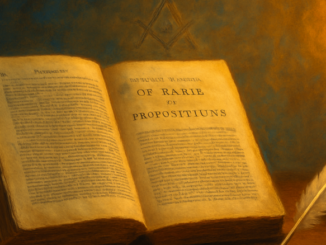
Vrijmetselarij - John Stuart Mill’s Of Names and Propositions: Fundamenten van Taal en Logica
Philosophy

John Stuart Mill over namen en proposities: de fundamenten van taal, logica en betekenis

Dit artikel over het baanbrekende werk van John Stuart Mill over taal en logica is recent bijgewerkt en verrijkt met nieuwe inzichten. Mill’s analyse van namen en proposities raakt aan fundamentele vragen die ook binnen de vrijmetselarij centraal staan: hoe verhouden woorden zich tot waarheid, en hoe kunnen symbolen ons dichter bij kennis brengen? Een verkenning die verrassend actueel blijft. John Stuart Mill, one of the most influential thinkers of the 19th century, is best known for his contributions to ethics, political philosophy, and economics. However, his work in the philosophy of language and logic is equally important, though less recognized. In Of Names and Propositions, a chapter from his masterpiece A System of Logic (1843), Mill delves deeply into the nature of language and meaning. This essay has had a lasting impact on philosophy and forms a key foundation for modern views on language, thought, and reasoning. This post provides a detailed analysis of Of Names and Propositions. We will explore its core ideas, implications for philosophy and logic, and the relevance of Mill’s work in contemporary discussions. The Context of Mill’s Work Mill wrote A System of Logic to clarify the foundations of scientific thinking and reasoning. At […]