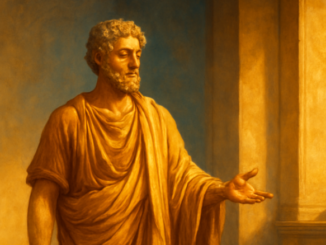
Marcus Aurelius bust symbolizing Stoic philosophy and Masonic virtue
Marcus Aurelius – Freemasonry & Connection

Marcus Aurelius on the Good: Living According to Nature

What did Marcus Aurelius actually mean when he wrote about living in accordance with nature? And why does this ancient idea resonate so deeply with what Freemasons strive for? In the third book of his Meditations, the Roman emperor unfolds a vision of the good that remains strikingly relevant today. These are thoughts worth exploring together — as seekers of truth have always done. What Did Marcus Aurelius Mean by ‘Nature’? This is perhaps the first question that arises when reading Book III. Marcus Aurelius speaks constantly about living according to nature, but he does not mean the romantic ideal of untouched forests and flowing rivers. For the Stoics, nature carried a far deeper meaning: the rational order that permeates the universe, the logos that connects all things. The emperor saw each person as part of a greater whole. When we act in harmony with our rational nature, we act rightly — almost by definition. This may sound abstract, but its practical implication is remarkably clear: to live virtuously means to recognize and fulfill your role in the larger fabric of existence. Is this not precisely what a Freemason pursues when working on his rough ashlar? The Connection Between Stoic […]
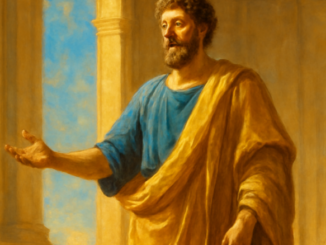
Ancient Roman bust of Marcus Aurelius with Stoic philosophical texts
Marcus Aurelius – Meditations

Marcus Aurelius Book III: Philosophical Roots of the Good

When a Roman emperor sits in the silence of his military tent and writes about the nature of the good, he does not speak in a vacuum. Marcus Aurelius composed his Meditations as the heir to a rich intellectual tradition stretching back centuries before his birth. Book III reveals that inheritance in a remarkable way: here, Greek philosophy and Roman practicality converge in reflections that still resonate today. But whose voices whisper alongside the emperor’s as he commits his thoughts on goodness and nature to the page? The Paradox of a Meditating Ruler There is a fascinating tension at the heart of the Meditations: the most powerful man in the world reminding himself of his own insignificance. Marcus Aurelius did not ascend the throne as a philosopher — he inherited an empire. Yet the pages of Book III radiate a philosophical maturity that speaks to decades of study and contemplation. This tension is not a contradiction; it is the very core of his thinking. The Stoicism he embodied draws a sharp distinction between what lies within our power and what lies beyond it. The throne belonged to the latter category; the quality of his thought belonged to the first. Zeno […]