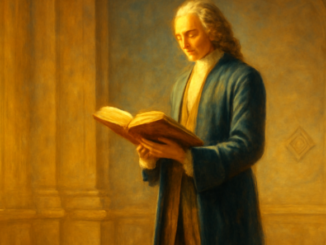
Open book with Enlightenment symbols representing Voltaire and Freemasonry
Symbolism & Rituals

Voltaire on God: Where Reason Meets Freemasonry

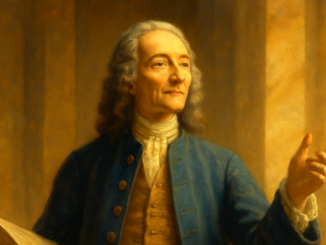
What did Voltaire actually mean when he wrote about God? And why do Freemasons feel such a strong kinship with his ideas? In his Philosophical Dictionary, the French thinker tackles a question that has occupied seekers for centuries: how do human reason and the divine relate to one another? Let us sit across the table from Voltaire himself and explore where his philosophy intersects with the Masonic path. What Did Voltaire Really Write About God? Voltaire was no atheist, despite what his critics often claimed. In his entry “On God” in the Philosophical Dictionary, he argues that the existence of an ordering force in the universe is entirely reasonable. He observes nature — the regularity of the stars, the mathematical precision of natural laws — and concludes that behind it all lies a formative principle. But here is the crucial point: Voltaire explicitly rejects the anthropomorphic God of many religious traditions. He speaks instead of a Supreme Being that manifests in the harmony of the cosmos, not through dogmas or revelations. This position places him squarely within the tradition of deism — the belief that God created the world but does not actively intervene in human affairs. For Voltaire, this […]
Vrijmetselarij - De Romeinen in de Koran: lessen over vergankelijkheid en hoop
Islam

The Romans in the Quran: Lessons on Impermanence and Hope

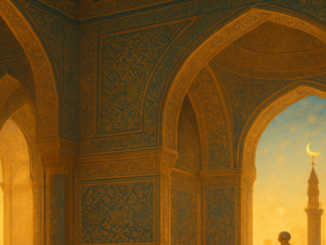
Imagine living in the seventh century and hearing that the mighty Byzantine Empire has suffered a crushing defeat at the hands of the Persians. The world as you knew it seems to teeter on the edge. Then a text appears — one that not only offers consolation but makes a remarkable prediction: within a few years, the tide will turn. This is the essence of Surah Ar-Rum, the thirtieth chapter of the Quran, which deals with the Romans. Today, we explore this text through two lenses: that of the faithful Muslim and that of the seeking Freemason. What can both perspectives teach us about impermanence, resilience, and spiritual growth? The Historical Context of Surah Ar-Rum Surah Ar-Rum opens with a reference to a concrete historical event: the defeat of the Byzantines — referred to in the Islamic tradition as “the Romans” — by the Persian Empire around 614 CE. The verses speak of a victory that will follow within “a few years.” Historically, this prediction proved accurate when Emperor Heraclius turned the tide and defeated the Persians in 627 CE. For believers, this is a sign of divine knowledge; for historians, it is a fascinating example of prophetic literature intersecting […]

Candle flame symbolizing Voltaire's philosophical view of God and Freemasonry
Symbolism & Rituals

Voltaire on God: Philosophical Roots of an Enlightened Thinker

A candle in the darkness. So simple, so ordinary, and yet so laden with meaning. For Voltaire, the idea of God was exactly like that — a light that human reason needed in order to perceive, but which itself remained elusive. In his celebrated Philosophical Dictionary of 1764, he penned one of his most thoughtful essays on the concept of God. The philosophical roots of that essay, however, reach far deeper than the eighteenth century alone. The Legacy of English Empiricism Voltaire’s thinking about God is unimaginable without the influence of John Locke. During his exile in England from 1726 to 1728, Voltaire encountered Locke’s Essay Concerning Human Understanding. Locke argued that all knowledge arises from sensory experience and reflection. This had far-reaching consequences for any theology: if we cannot perceive God directly, how can we claim to know anything about Him? Voltaire took this question seriously, yet he also departed from Locke in important ways. While Locke still allowed room for a rational proof of God’s existence, Voltaire grew more skeptical about the reach of human reason. Yet unlike the radical atheists of his day, he held firm to the existence of an ordering force in the universe. A […]

Square and compasses with the letter G — key symbols in Freemasonry
Symbolism & Rituals

Symbols in Freemasonry: Their Meaning and Background

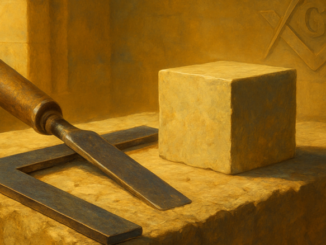
Freemasonry is one of the oldest and most fascinating fraternities in the world, and its symbolism lies at the very heart of everything it stands for. The symbols in Freemasonry are not random decorations — they are carefully chosen images that embody deep moral, philosophical, and spiritual lessons. From the square and compasses to the All-Seeing Eye and the rough ashlar, each symbol invites the Freemason to engage in self-reflection, personal growth, and the pursuit of a better world. In this article, we explore the most important Masonic symbols, their historical origins, and what they mean within the Craft. The Historical Background of Masonic Symbols To truly understand the symbols in Freemasonry, it is essential to look back at the roots of the fraternity. Modern speculative Freemasonry as we know it was formally established on June 24, 1717, when four lodges in London united to form the first Grand Lodge of England. However, the symbolic traditions they inherited reach much further back — to the operative stonemasons and cathedral builders of the Middle Ages. These medieval craftsmen — the so-called operative masons — used tools like the compasses, the square, and the level in their daily work. When the fraternity […]

Freemasonry symbols representing unity and respect among world religions
Religion

Freemasonry and Religion: A Bridge of Connection and Respect

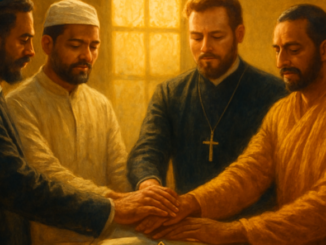
Freemasonry is an ancient fraternity built on universal values such as truth, brotherhood, and morality. While it is not a religion, it maintains a unique and fascinating relationship with religions around the world. How does Freemasonry position itself in relation to faith traditions, and what makes its spiritual vision so distinctive? Freemasonry: Not a Religion, But Deeply Spiritual One of the most common misconceptions about Freemasonry is that it is a religion. It is not. Freemasonry does not require its members to hold any specific religious belief. What it does ask is that members believe in a Supreme Being — often referred to as the “Grand Architect of the Universe” — a universal concept of a higher power that transcends any single faith tradition. This openness allows people from all religious backgrounds to participate and find common ground. The rituals and symbols used in Freemasonry are not religious in the traditional sense. Instead, they serve as tools for self-reflection and moral growth. This approach provides a shared foundation for members who may hold vastly different religious convictions, creating a space where spiritual exploration is encouraged without imposing any doctrine. How Freemasonry Relates to World Religions Respect for Diversity: Freemasonry recognizes […]