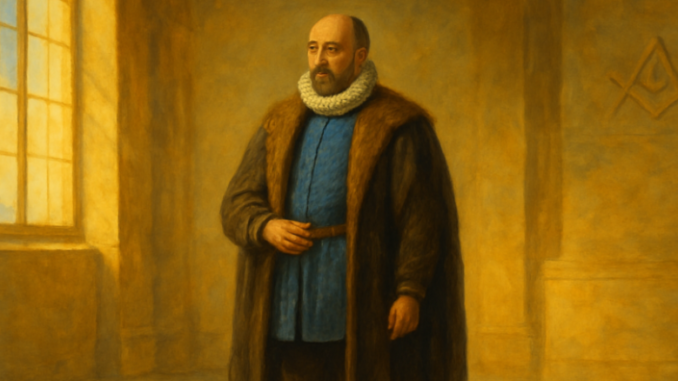
Why do we say one thing and do another? Why do we feel resolute in the morning and uncertain by nightfall? Michel de Montaigne opens the second book of his famous Essays with precisely this question. In his essay “On the Inconstancy of Our Actions,” he dissects with striking honesty the contradictions that dwell within every human being. It is a text that challenged readers in the sixteenth century just as powerfully as it challenges anyone today who is serious about self-knowledge and personal growth.
What Is This Essay Really About?
The central theme of this essay can be distilled into one sharp observation: human beings are not consistent. Montaigne argues that we like to see ourselves as unified beings with fixed convictions, but reality is far more capricious. We act bravely today and cowardly tomorrow. We are generous in one situation and miserly in the next. According to Montaigne, this is not a sign of weakness but a fundamental feature of human nature. Inconstancy — fickleness — is not the exception; it is the rule.
This is the opening essay of the second book, and that placement is telling. After an entire first book in which Montaigne explores subjects ranging from education to friendship, he begins here with a radical recalibration of how we understand ourselves. Before we can comprehend anything about the world, he seems to say, we must first acknowledge how little we truly know ourselves.
The Classical Examples Montaigne Uses to Make His Case
Montaigne draws generously from classical antiquity to strengthen his argument. He refers, among others, to Emperor Augustus, who throughout his political career could be both ruthless and merciful — sometimes within the same period. Was Augustus cruel or compassionate? Montaigne refuses to choose. That very refusal lies at the heart of his philosophy: pinning a person down to a single trait does violence to the complexity of character.
He also invokes Cato the Younger and Alexander the Great — figures that history portrays as heroes but who, on closer examination, also experienced moments of doubt, inconsistency, and even pettiness. Furthermore, Montaigne quotes extensively from the works of Plutarch and Seneca, two thinkers who likewise wrestled with the question of how a person can be virtuous when his nature is so changeable. Where Seneca preaches the Stoic path of self-mastery, Montaigne chooses a different approach: acceptance of that changeability as the starting point for genuine self-knowledge.
Montaigne’s Core Insight
The deepest layer of this essay is the conviction that human character is not a fixed structure but rather a stream that constantly shifts direction. Montaigne writes that those who judge us on the basis of a single action do us an injustice. A thief can be courageous. A hero can lie. Anyone who looks honestly at himself must admit that his own behavior varies from day to day, from hour to hour. Montaigne sees in this not a reason for despair but an invitation to humility. Only those who acknowledge their own inconsistency can begin the work of genuine self-reflection.
Montaigne teaches us that self-knowledge does not begin with discovering who we are, but with honestly recognizing how changeable we are.
This idea has a striking parallel with the philosophical tradition that also plays a vital role within Freemasonry. The injunction “Know Thyself,” inscribed at the Temple of the Oracle at Delphi and adopted by Socrates as his life’s motto, is not interpreted by Montaigne as a search for some unchangeable core. Instead, it becomes a continual confrontation with one’s own contradictions. This is a view that resonates deeply within Masonic thought: the work on the rough stone is never finished, because the stone itself is always changing shape.
Why This Essay Matters for the Seeker of Self-Knowledge
One might ask: if we are so changeable, is there any point in working on ourselves at all? Montaigne would answer: that is precisely why we must. The recognition of our inconstancy is not an endpoint but a beginning. Those who accept that they are contradictory can look at themselves more kindly and, at the same time, more sharply. They no longer need to pretend to be someone they are not.
This touches on a theme deeply embedded in Freemasonry: personal development as a lifelong process. The Mason who enters the lodge is not asked to be perfect. He is asked to be honest — first and foremost with himself. Montaigne’s essay provides a powerful philosophical foundation for that endeavor. It shows that even the great figures of history struggled with the same inner contradictions that we face today.
How Does Montaigne Compare to Other Thinkers on This Theme?
Montaigne’s view of human inconstancy does not stand alone. It finds echoes in thinkers like Blaise Pascal, who a century later wrote that man is a bundle of contradictions — half angel and half beast. Aristotle, too, spoke of the complexity of character and the difficulty of making virtue a habit. What sets Montaigne apart from both his predecessors and successors, however, is his tone. He does not moralize. He does not condemn. He observes, with a mixture of humor and compassion, and invites his reader to do the same.
That invitation makes this essay more than a historical document. It is a mirror — not a mirror that shows an idealized image, but one that reveals precisely what is there: a human being in all his caprice, with all his beauty and all his flaws. Anyone willing to look into that mirror will find not only Montaigne but also himself.
Michel de Montaigne opens his second book with an essay that is, at its core, an invitation to intellectual and personal honesty. The inconstancy of our actions is not something to be ashamed of or to suppress — it is the raw material of self-knowledge. For Freemasons and seekers alike, Montaigne’s message rings true across the centuries: the rough stone we work on is not a fixed object awaiting its final form, but a living, shifting reality that demands our attention anew each day. True growth begins not with the illusion of consistency, but with the courage to face our contradictions head-on.
Copyright text & image: devrijmetselaar.nl
Texts are based on the ideas and content of the author of devrijmetselaar.nl, reviewed, corrected, and supplemented with the assistance of OpenAI. Images are created based on the ideas of the author of devrijmetselaar.nl using OpenAI/DALL-E.
Frequently Asked Questions
What is the main argument of Montaigne's essay 'On the Inconstancy of Our Actions'?
Montaigne argues that human beings are fundamentally inconsistent and lack fixed convictions. Rather than viewing inconstancy as a weakness, he presents it as a core feature of human nature. We act bravely one day and cowardly the next, generously in one situation and miserly in another. Montaigne refuses to reduce people to single traits, insisting that contradictions and changeability are central to understanding ourselves.
Why did Montaigne place this essay at the beginning of his second book?
By positioning this essay as the opening of the second book, Montaigne signals a fundamental recalibration of self-understanding. He suggests that before we can comprehend anything about the world, we must first acknowledge how little we truly know ourselves. This placement indicates that genuine self-knowledge and recognition of our own inconsistency is the essential foundation for all other philosophical inquiry.
What classical examples does Montaigne use to support his thesis about human inconstancy?
Montaigne draws from classical antiquity to illustrate inconstancy, citing Emperor Augustus as someone who was both ruthless and merciful during his political career. He also references Cato the Younger and Alexander the Great—historical figures portrayed as heroes but who also displayed doubt, inconsistency, and pettiness. He quotes extensively from Plutarch and Seneca, philosophers who similarly explored how virtue can exist within a changeable nature.



Be the first to comment