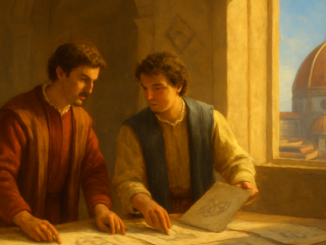
Zero-Sum Thinking and Art: Lessons from the Renaissance
In fifteenth-century Florence, something remarkable happened. While rival artists competed fiercely for commissions, a culture of mutual influence quietly emerged that would transform Western art forever. The key to this unprecedented flourishing was the breaking down of zero-sum thinking — the deeply held belief that one person’s gain must come at another’s expense. For Freemasons, this historical episode offers profound insights into the power of collaboration over competition. Guild Culture and the Zero-Sum Mindset of the Middle Ages Medieval guilds operated according to rigid hierarchies. A master craftsman would take on only a limited number of apprentices, and trade secrets were jealously guarded. The underlying logic was simple: sharing knowledge with others meant weakening your own position. This competitive mindset, in which every advance by a rival was perceived as a direct threat, defined artisan life for centuries. The building lodges of the great cathedrals were a subtle exception to this rule. Itinerant stonemasons shared their knowledge with selected brothers — not in spite of, but precisely because of the understanding that monumental structures could only be raised through cooperation. The foundations of what would later become Freemasonry were laid in this very insight: that some goals transcend individual interests. […]