Explore articles about Adam Weishaupt and the Illuminati movement. Discover historical facts and clarify common misconceptions about secret societies and their influence.
Illuminati
Why the Illuminati Were Banned and Disappeared
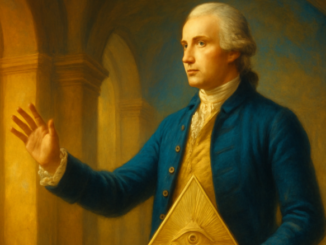
In 1785, the Elector of Bavaria, Karl Theodor, outlawed a secret society that had existed for only nine years. What started as a small circle of academics in Ingolstadt ended with raids, confiscated documents, and a wave of pamphlets that shook all of Europe. How did an intellectual fellowship grow so quickly into a perceived threat to both throne and altar? And what can the rise and fall of the Illuminati teach us today about the tension between spiritual development and worldly power? The Rapid Rise of an Enlightenment Society Adam Weishaupt, a professor of canon law at the University of Ingolstadt, founded the Order of the Perfectibilists in 1776. He later renamed the group the Illuminati — the enlightened ones. Weishaupt was captivated by the ideals of the Enlightenment: critical thinking, religious tolerance, and moral self-improvement. He saw secret societies as a vehicle for spreading these values without directly confronting those in power. Growth was modest at first. Weishaupt recruited students and fellow academics, but the real expansion came when Baron Adolph von Knigge joined in 1780. Von Knigge was an experienced Freemason with an extensive network of contacts. He restructured the order and connected it to existing Masonic […]