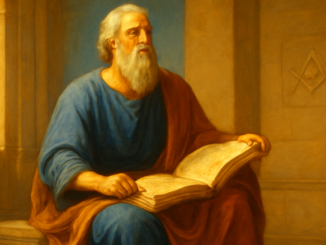
Plato’s Laws: Philosophical Roots of the Just State
What truly makes a society just? This question consumed Plato until the very end of his life, when he composed his final and longest dialogue: The Laws. Unlike The Republic, where philosopher-kings rule supreme, The Laws explores how ordinary citizens can build a virtuous community through legislation and education. The philosophical traditions that shaped this monumental work continue to resonate today — perhaps nowhere more clearly than in the principles and practices of Freemasonry. Why Did Plato Write The Laws in His Final Years? Plato began writing The Laws around the age of eighty, shortly before his death in 347 BCE. After a lifetime of philosophical exploration and political disappointment — most notably his failed attempts to advise the tyrant of Syracuse — he returned to a fundamental question: how can a community function well without perfect rulers? Unlike the idealistic vision of The Republic, The Laws takes human imperfection as its starting point. Here, law is not a necessary evil but a pedagogical instrument designed to guide citizens toward virtue. This pragmatic turn reflects Plato’s intellectual maturation. He had come to recognize that even the finest philosophers are fallible and that institutions are needed to compensate for human weakness. […]