
Open book with Montaigne's Essays symbolizing the vanity of words
Michel de Montaigne – Content & Summary

Montaigne on the Vanity of Words and Its Masonic Relevance

You’ve probably experienced it: someone delivers a seemingly impressive speech, full of grand words and polished phrases, yet afterward you find yourself wondering what was actually said. That nagging sense that words can conceal more than they reveal — that eloquence can serve as a mask for emptiness — lies at the very heart of a short but razor-sharp essay by Michel de Montaigne. In ‘Of the Vanity of Words,’ the fifty-first essay in Book One of his Essays, Montaigne confronts this discomfort head-on. His observations about hollow rhetoric remain strikingly relevant today, especially within the practice of Freemasonry. The Core of the Essay: Words Without Substance In this concise essay, Montaigne takes direct aim at rhetoric — the art of persuasive speech. He poses an uncomfortable question: what is eloquence worth when it serves neither truth nor virtue? Montaigne observes that many speakers and writers, both in his own time and in antiquity, enchanted their audiences with form while the content amounted to almost nothing. He warns that the beauty of language can mislead us. We become so impressed by the packaging that we forget to ask what’s actually inside. This is not an attack on language or literature […]
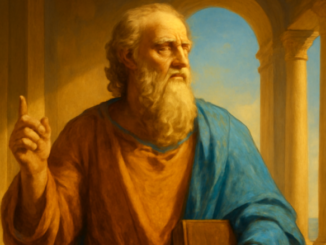
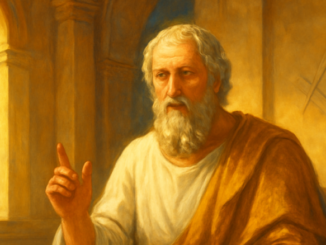
Ancient Greek temple columns symbolizing Plato's Gorgias and Freemasonry
Plato – Freemasonry & Connection

Plato’s Gorgias: Rhetoric, Justice and Freemasonry

In fifth-century Athens, a battle raged that remains profoundly relevant to this day. It was not fought over land or wealth, but over something far more fundamental: whether words should serve truth or merely serve the power to persuade. Plato captured this tension in his dialogue Gorgias, a work that strikes at the heart of what it means to live a just life. For Freemasons — who place the pursuit of truth and moral perfection at the center of their craft — this ancient conversation offers remarkably timely insights into authenticity, virtue, and the true nature of human connection. The Historical Context of a Philosophical Confrontation Around 380 BCE, Plato composed the Gorgias, named after the celebrated orator from Sicily who had visited Athens. The dialogue is set during a period when the Sophists — itinerant teachers of eloquence — wielded enormous influence over public life. They taught the art of defending any position persuasively, regardless of its truth. Gorgias himself was renowned for his ability to make the weaker argument appear the stronger. Socrates, Plato’s teacher and the protagonist of the dialogue, confronted this worldview head-on. Where the Sophists viewed rhetoric as a neutral technique, Socrates insisted that true […]

Ancient Greek philosophical dialogue symbolizing truth and Masonic justice
Plato – Philosophical Background

Plato’s Gorgias: Truth, Power, and Freemasonry’s Quest

Imagine finding yourself in a debate where your opponent has no interest in truth — only in winning. How do you respond? This is precisely the situation Socrates faces in Plato’s dialogue Gorgias. It is a text that challenges you to confront a fundamental question: what matters more, persuasive speech or righteous action? This question has echoed through the centuries and strikes at the very heart of what Freemasons pursue in their rituals and labour. The Sophists and Their Challenge to Philosophy To understand Plato’s Gorgias, you need to transport yourself to fifth-century Athens. The city was alive with intellectual activity, and one group of thinkers commanded particular attention: the Sophists. These were itinerant teachers who, for a fee, instructed young Athenians in the art of speaking and persuading. Figures such as Protagoras, Hippias, and of course Gorgias of Leontini were celebrated for their eloquence. The Sophists represented a radically new perspective. Protagoras declared that “man is the measure of all things,” suggesting that truth is relative. For them, rhetoric was not a means of discovering truth but a technique for persuading others, regardless of the content. This relativism posed the direct intellectual challenge against which Plato, through the voice […]