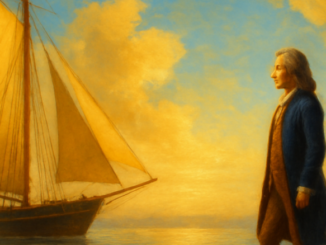
Portrait of Voltaire symbolizing tolerance and Enlightenment ideals in Freemasonry
Symbolism & Rituals

Voltaire on Tolerance: The Calas Affair and Freemasonry

What happens when a society projects its deepest fears onto an innocent family? Voltaire’s treatise on tolerance opens with one of the most harrowing cases of religious intolerance in eighteenth-century Europe: the Calas affair. This was not merely a judicial error — it was a mirror held up to humanity, revealing how swiftly prejudice can escalate into murder. For Freemasons, who regard brotherhood and tolerance as pillars of their work, Voltaire’s writing resonates as powerfully today as it did over two and a half centuries ago. The Tragic Heart of the Calas Affair In 1761, the Protestant merchant Jean Calas of Toulouse discovered his son Marc-Antoine dead in the family home. The young man had hanged himself. What followed was not a search for truth but a hysterical wave of accusations. The local population, saturated with religious tension between Catholics and Protestants, quickly concluded that the father had murdered his son to prevent him from converting to Catholicism. Without credible evidence, Jean Calas was tortured and publicly executed on the breaking wheel in March 1762. Voltaire first heard about the case through friends and was initially uncertain about Calas’s guilt. But as he gathered more testimonies and studied the facts, […]
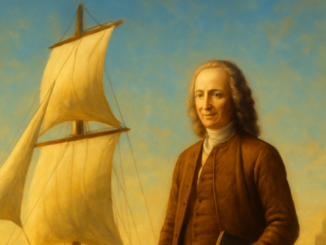
Voltaire meeting a Quaker in 18th-century England, symbolizing tolerance
Symbolism & Rituals

Voltaire on the Quakers: Philosophical Roots of Tolerance

Imagine stepping ashore in England in 1726 as a French writer, fresh from exile and the shadow of the Bastille, only to have your very first encounter be with a Quaker who refuses to remove his hat in your presence. No bow, no title — just a plain “thou.” For Voltaire, this moment was far more than a cultural oddity. It marked the beginning of a philosophical quest into the foundations of tolerance, one he would later weave into his celebrated Letters on the English. But what intellectual traditions shaped the lens through which he viewed this remarkable religious community? The Legacy of Skepticism When Voltaire composed his first letter on the Quakers, he was drawing from a deep well of philosophical skepticism. Two centuries earlier, Michel de Montaigne had already posed the essential question: who are we to pass judgment on the customs of others? In his famous essay on cannibals, Montaigne demonstrated how seemingly strange practices reveal their own internal logic upon closer inspection. Voltaire applied precisely this method to the Quakers. Rather than dismissing their refusal to swear oaths, their rejection of ecclesiastical hierarchy, or their austere dress as foolishness, he presented these as elements of a […]