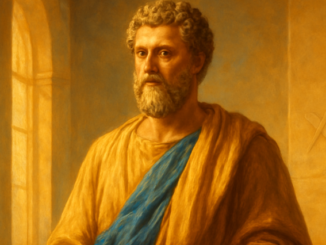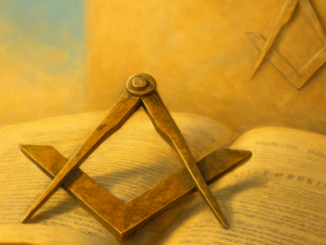
Bust of Marcus Aurelius with Stoic philosophical symbols and Masonic imagery
Marcus Aurelius – Meditations

Marcus Aurelius on Impermanence: Philosophical Roots

Imagine waking up in the morning and wondering why you should bother getting out of bed at all. The day stretches ahead — full of obligations, encounters, and perhaps worries. This is precisely the question Marcus Aurelius poses at the opening of Book II of his Meditations. But behind this seemingly simple opening lies a rich philosophical tradition reaching back to the early Stoa, one that found its way through thinkers like Epictetus and Seneca into the imperial chambers of Rome — and whose echoes can still be heard in Masonic lodges today. The Stoic Heritage Book II of the Meditations is steeped in Stoic wisdom. This philosophical school, founded around 300 BCE by Zeno of Citium in Athens, held that nature follows a rational order and that human happiness lies in living in accordance with that order. Marcus Aurelius never wrote for publication — his Meditations were a kind of philosophical diary, a private conversation with himself. Yet in every sentence you can hear the echo of centuries of philosophical contemplation. The early Stoics distinguished three disciplines: the discipline of desire, the discipline of action, and the discipline of judgment. In Book II, Marcus Aurelius focuses primarily on the […]

Vrijmetselarij - Vrijmetselarij en filosofie: ontdek hoe denken en handelen samenkomen
Philosophy & Ethics

Freemasonry and Philosophy: Where Thought Meets Action

Philosophy might conjure images of dusty lecture halls, dense textbooks, or endless debates about the nature of existence. But within Freemasonry, philosophy takes on an entirely different character. It’s not abstract theorizing — it’s a living, practical way of engaging with the world. Freemasonry and philosophy walk hand in hand, forming a powerful path toward personal growth and deeper meaning. What Role Does Philosophy Play in Freemasonry? Philosophy in Freemasonry isn’t a standalone academic exercise. It’s woven into the very fabric of the craft’s ritual and symbolic system. Every degree, every ceremony, and every symbol is steeped in philosophical insight. The goal isn’t to promote a single school of thought, but to cultivate a way of life rooted in reflection, openness, and ethical awareness. Freemasonry invites you to live philosophically — to search for meaning, to embrace doubt, and to ask questions that go beyond the surface. Most importantly, it challenges you not only to think about your answers but to embody them in the way you act and treat others. Inspired by Great Thinkers Throughout the centuries, Freemasonry has drawn inspiration from some of history’s most influential philosophical traditions. Here are a few that have left a lasting mark […]