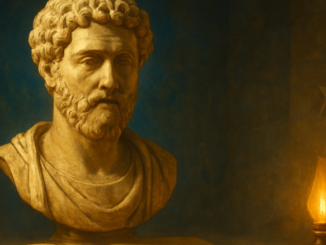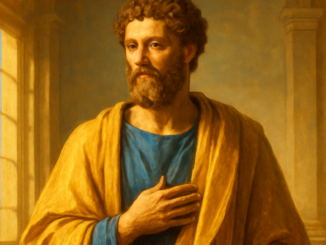
Marcus Aurelius Book IX: Death, Immortality & Freemasonry
What does it truly mean to be mortal? And how can our mortality liberate us rather than confine us? In Book IX of his Meditations, Marcus Aurelius wrestles with these fundamental questions. As Roman Emperor, he wrote these private reflections not for publication but as an inner compass amid war, disease, and political turmoil. Book IX stands out as a particularly penetrating section in which the Stoic philosopher-emperor approaches death not as an enemy, but as a teacher — a perspective that resonates deeply with the Masonic tradition. The Core Idea: What Remains When Everything Passes? The central question running through Book IX is deceptively simple: if everything is transient, what remains of value? Marcus Aurelius answers by arguing that the very recognition of our finitude compels us to make essential choices. He does not see death as a dark endpoint but as a natural transformation within the cosmic order. The emperor reminds himself that countless rulers, philosophers, and ordinary citizens preceded him in death — and that this fact should not paralyze him but spur him toward virtuous action. This perspective aligns closely with the broader Stoic tradition in which Seneca and Epictetus also wrote. For all of them, […]