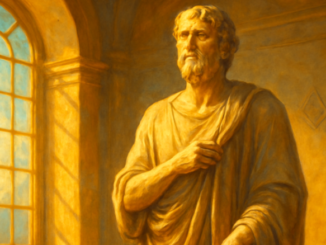
Ancient Roman bust of Marcus Aurelius symbolizing Stoic wisdom and gratitude
Marcus Aurelius – Content & Summary

Marcus Aurelius Book I: Gratitude to Teachers and Mentors

Why would a Roman emperor — the most powerful man in the known world — begin his private journal with a long list of everything he owes to other people? Book I of the Meditations of Marcus Aurelius reads as an extended letter of gratitude to family, teachers, and friends. This is not false modesty or diplomatic courtesy. It is a deliberate philosophical choice. And in that choice, an ancient vision of personal growth unfolds that remains remarkably relevant today: we are shaped by those who came before us. What Makes Book I So Remarkable? Unlike the remaining eleven books of the Meditations, which are filled with self-reflection and philosophical reasoning, Book I consists almost entirely of acknowledgments. Marcus Aurelius names seventeen individuals — from his grandfather to his philosophy tutors — and describes precisely which virtue or life lesson he learned from each one. This is no superficial politeness. It is a systematic accounting of moral debts. Why would a powerful ruler do this? The answer lies in the Stoic philosophy Marcus practiced. For the Stoics, wisdom is never a solo achievement. It is the result of a chain of transmission. Every master stands on the shoulders of those […]

Freemason in contemplation symbolizing compliance and spiritual wisdom
Spiritual Traditions

When Yielding Becomes Wisdom: Compliance in Freemasonry

Compliance is often mistaken for weakness. Those who yield, so the prejudice goes, must lack backbone. But is that really the case? Within the spiritual tradition of Freemasonry, compliance takes on an entirely different meaning — not as spineless conformity, but as a deliberate choice to place harmony above ego. This article explores that fascinating virtue, peeling back its deeper layers to reveal why bending can sometimes be the wisest thing a person can do. What Do We Really Mean by Compliance? Let’s start at the beginning. Compliance — or as the French so elegantly express it, the art of being accommodating — literally means being willing to make room for the other. It is the ability to temporarily set aside your own wishes or viewpoints for the benefit of the greater whole. But this immediately raises a question: where is the line between healthy compliance and unhealthy self-denial? This is precisely the tension that spiritual traditions, including Freemasonry, have grappled with for centuries. Marcus Aurelius wrote in his Meditations that the wise person adapts to circumstances the way water adapts to the shape of its vessel — without losing its essence. That is the key: adapting without losing yourself. […]

Open book of Montaigne's Essays with Masonic square and compasses symbol
Michel de Montaigne – Freemasonry & Connection

Montaigne on Liars: Truth as the Foundation of Brotherhood

What does it truly mean to lie? And why does that question cut so deeply into the foundations of human connection? In his ninth essay from the first book of The Essays, Michel de Montaigne examines the phenomenon of lying with a sharpness that still resonates four centuries later. His observations touch unexpectedly on the very heart of what Freemasons strive for: a brotherhood built on trust, honesty, and the tireless pursuit of truth. The Paradox of Memory Montaigne opens his essay with a remarkable confession: he possesses an exceptionally poor memory. This personal shortcoming, he reasons, has actually shielded him from the temptation to lie. For anyone who lies, the philosopher argues, must possess an excellent memory. The liar must remember what he has fabricated, to whom he has told which story, and how all the loose threads must remain woven together. Here we encounter a curious paradox. Memory — typically regarded as a virtuous instrument for preserving knowledge — becomes a tool of deception when placed in the service of the lie. Truth, by contrast, requires no construction, no maintenance, no constant vigilance. It simply exists. This observation casts new light on the Masonic idea that truth is […]

Open Volume of Sacred Law with Masonic square and candle in a lodge setting
Christianity

Micah and Freemasonry: Do Justice, Love Faithfulness

The candle flickers softly as a Brother opens the Volume of the Sacred Law. His fingers trace the pages until they rest on a passage he has read dozens of times before — yet tonight, the words seem to carry a different weight. “What does the Eternal require of you?” he reads aloud, and the question lingers in the stillness of the lodge room. The Book of Micah, written by a prophet in the eighth-century Kingdom of Judah, poses a question that has echoed through millennia. What does it truly mean to live a good life? The answer Micah offers is deceptively simple and yet infinitely demanding: do justice, love faithfulness, and walk humbly. For anyone familiar with the traditions of Freemasonry, these words resonate like echoes of deeply familiar principles. The Heart of Micah’s Message Micah prophesied during a time of profound social inequality. The wealthy enriched themselves at the expense of the poor, judges accepted bribes, and religious leaders sold their services to the highest bidder. Against this backdrop, the prophet raised his voice — not with elaborate theological arguments, but with a clear moral appeal. His most famous pronouncement appears in the sixth chapter: “He has told […]

Masonic level and gavel symbolizing patience and justice in Freemasonry
Freemasonry & Society

Patience as Foundation: What Slow Justice Teaches Freemasons

In an age where everything must happen faster, the slow grinding of the wheels of justice confronts us with an uncomfortable truth: some processes demand a kind of patience that runs directly counter to our expectations. As major court cases drag on for years, we are forced to ask what this means for our trust in societal institutions. Freemasonry, with its centuries-old emphasis on building slowly and deliberately, offers a surprisingly relevant perspective on this tension between haste and thoroughness. The Measure of Time When a court case is delayed for years, frustration is inevitable. Victims wait for acknowledgment, society demands a verdict, and our collective sense of justice feels eroded by endless postponement. Yet within this waiting lies something else entirely — the recognition that truth and justice cannot be forced by the clock. In Freemasonry, we speak of the rough ashlar that must be shaped into a perfect cube. This is not the work of days or weeks, but of years. The apprentice who chips away in haste destroys more than he creates. Seen through this lens, the slow pace of complex legal proceedings may not simply be a failure of efficiency — it may also reflect a […]

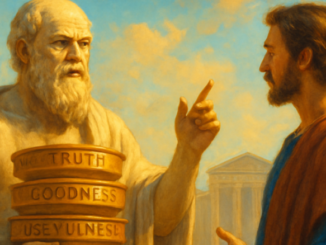
The Three Sieves of Socrates illustrated as a Masonic moral lesson
Philosophy & Ethics

The Three Sieves of Socrates: A Masonic Lesson in Speech

In Freemasonry, our meetings are a blend of serious reflection and warm fellowship. Brothers chat over coffee before the lodge opens, share a drink during the interval, and linger after the closing to enjoy each other’s company. During the formal proceedings — the lodge work itself — the tone is generally more earnest, with lectures and presentations that challenge us to think deeply. Yet even then, there is always room for a well-timed anecdote. Recently, a brother shared the parable of the Three Sieves of Socrates, and it struck a chord with everyone present. It is a short story, but one well worth reflecting upon — because its lesson is as relevant today as it was in ancient Athens. The Story of the Three Sieves Socrates, the great Greek philosopher, was walking through the streets of Athens one day when a man rushed toward him in a state of excitement. “Socrates! I must tell you something about your friend who—” “Hold on a moment,” Socrates interrupted. “Before you go any further, have you passed the story you want to tell me through the Three Sieves?” “The Three Sieves? What three sieves?” the man asked, bewildered. “Let us try,” Socrates suggested […]