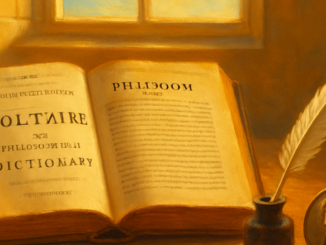
Voltaire on Freedom: Philosophical Roots of an Enlightened Mind
In 1764, François-Marie Arouet — better known as Voltaire — published his Philosophical Dictionary. The entry on freedom quickly became one of the most debated passages in the entire work. But which thinkers and intellectual currents laid the groundwork for Voltaire’s ideas? A journey through the philosophical sources of the Enlightenment reveals surprising connections to the values that Freemasonry continues to cherish to this day. The Legacy of John Locke No philosopher exerted a greater influence on Voltaire’s concept of freedom than John Locke. During his exile in England from 1726 to 1729, Voltaire immersed himself in Locke’s Essay Concerning Human Understanding. Locke’s central thesis — that the human mind is a blank slate at birth — struck Voltaire profoundly. If our ideas are not innate but arise from experience, then our education and environment shape who we become. This insight carried revolutionary implications for the question of freedom. Locke drew a careful distinction between freedom of action and freedom of will. We are free when we can do what we want, but the question of whether we are free to want what we want is fundamentally different. Voltaire wrestled with this paradox and adopted Locke’s nuance. In the Philosophical […]