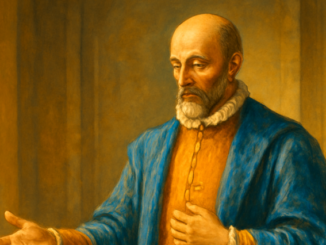
Montaigne on Honor: Philosophical Roots and Freemasonry
In the sixteenth century, Michel de Montaigne penned a brief but incisive essay on a question that still cuts to the bone: how do we handle honor? Why do we claim it, hoard it, or refuse to share it — and what does that say about our character? Centuries later, his reflections remain remarkably relevant for anyone who thinks seriously about virtue, humility, and personal growth. In this article, we trace the philosophical sources that nourished Montaigne when he wrote his forty-first essay, “On Not Sharing One’s Honor.” We follow the threads of Stoicism, Skepticism, and Renaissance humanism, and discover how these traditions continue to echo in the ethical practice of Freemasonry. What Drove Montaigne to Write About Honor? Michel de Montaigne lived in an era of religious wars, political intrigue, and a nobility that guarded its status with fierce determination. Honor was not an abstract concept — it was social capital that could make or break families. Yet in Essay 41 of his first book, Montaigne raised an uncomfortable question: does a prince or leader truly deserve all the honor attributed to him? Or does that honor rightly belong to the advisors, soldiers, and craftsmen who do the actual […]