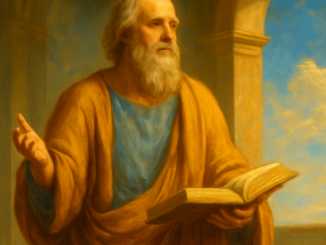
Plato’s Phaedrus: Beauty, the Soul, and Inner Growth
Imagine walking through a park when an ancient oak catches your eye. Something about that tree moves you, though you can’t quite explain what. These moments of beauty — fleeting yet profound — are exactly the starting point of one of Plato’s most poetic dialogues: the Phaedrus. In this remarkable work, the Greek philosopher explores how beauty stirs the soul and propels us toward inner growth. For anyone engaged in self-knowledge and personal development — and for Freemasons in particular — this ancient text offers surprisingly practical wisdom. The Setting: Philosophy in Nature The Phaedrus takes place outside the city walls of Athens, along the banks of the river Ilissos. Socrates and his young companion Phaedrus seek shade beneath a plane tree. This rural setting is no accident. Plato deliberately places the conversation in nature to show how beauty surrounds us everywhere and has the power to open the mind. Phaedrus has just heard a speech about love and wants to share it with Socrates. What follows is a profound investigation into the nature of the soul, the workings of love, and the power of true eloquence. The Soul as a Winged Chariot The most famous image from the Phaedrus […]