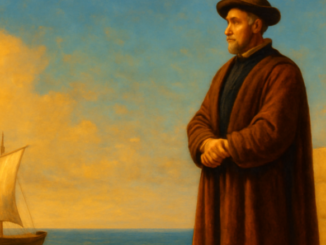
Montaigne on Procrastination: Philosophical Roots of Essay 2.4
Picture a man seated at a heavy oak writing desk in a tower room overlooking the courtyard of his estate in the Dordogne. The year is somewhere around 1580. Michel de Montaigne leafs through a worn copy of Plutarch, underlining passages with ink and muttering about generals who delayed their decisions until it was too late. From those seemingly casual moments of note-taking emerged an essay that still resonates with anyone who struggles with the urge to put things off. But which thinkers and traditions were whispering in Montaigne’s ear when he composed this short but powerful piece? Plutarch as Spark and Starting Point At the heart of the fourth essay from the second book of Montaigne’s Essays lies a warning: those who continually postpone action eventually lose their grip on their own fate. Montaigne drew heavily on the work of Plutarch, the Greek biographer and moral philosopher of the first century. Plutarch’s Lives of the Noble Greeks and Romans offered Montaigne a treasure trove of historical examples in which indecision and delay led to catastrophic consequences. Where Plutarch confronted his readers with commanders who lost battles through hesitation, Montaigne recognized a universal human pattern — the tendency to push […]