Explore how to cultivate your garden through Voltaire’s philosophical works and their connections to Freemasonry’s timeless wisdom and spiritual teachings.
Symbolism & Rituals
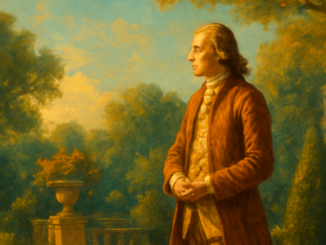
Voltaire’s Candide: The Garden as a Key to the Art of Living
After an odyssey of disasters, wars, and bitter disillusionment, Candide finally arrives at a small garden. There he speaks the famous words: “We must cultivate our garden.” This deceptively simple conclusion to Voltaire’s satirical masterpiece contains a philosophy of life that is both profoundly practical and deeply meaningful. What does it truly mean to tend your own garden? And how can this insight be applied concretely in your life today? Candide’s Journey: A Whirlwind Overview Voltaire wrote Candide in 1759 as a razor-sharp attack on the philosophical optimism of his era — specifically the doctrine that we live in “the best of all possible worlds.” The protagonist, Candide, grows up under the tutelage of the philosopher Pangloss, who instills this optimism in him with unwavering conviction. Voltaire then proceeds to plunge his hero into a relentless cascade of misfortunes: war, earthquake, the Inquisition, slavery, and betrayal. Every time Candide believes things cannot possibly get worse, reality proves him wrong. The story takes the reader from Lisbon to South America, from Paris to Constantinople. Along the way, Candide encounters a gallery of characters who each embody the absurdity of human existence in their own way. Cunégonde, his beloved, loses both her […]