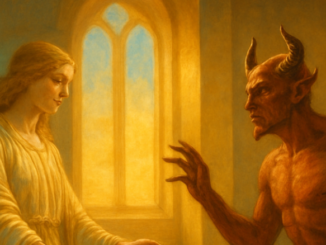
Ambigrams in Angels & Demons: Fiction vs. Real Symbolism
Imagine a word that reads exactly the same when you flip it upside down — symmetrical, mysterious, and seemingly impossible. In Dan Brown’s bestselling thriller Angels & Demons, these typographic designs called ambigrams play a starring role as alleged secret symbols of an ancient brotherhood. But what does the novel actually claim? And how do those claims hold up against what we genuinely know about symbols, secret societies, and Freemasonry? What Exactly Are Ambigrams? Let’s start at the beginning. The word “ambigram” derives from the Latin ambi (both sides) and gramma (letter). An ambigram is a typographic design that can be read in more than one way — most commonly by rotating it 180 degrees. It is an art form that truly came into its own during the twentieth century, developed by graphic designers and calligraphers experimenting with symmetry and legibility. Here’s the critical question: if ambigrams are a modern invention, how could they possibly be the secret signs of an eighteenth-century secret society? That contradiction takes us straight to the heart of what the novel claims. What Does the Novel Actually Claim? In Angels & Demons, ambigrams are presented as authentic, historical symbols of the Illuminati — the Bavarian […]