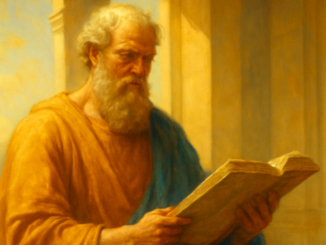
Plato’s Phaedrus: Philosophical Roots of Beauty and the Soul
What if beauty is not merely something we perceive, but a memory of something we once knew? Plato’s dialogue Phaedrus poses this question with a force that has echoed through Western philosophy for over two millennia. But where did Plato’s vision actually come from? What thinkers and traditions formed the intellectual soil from which his ideas about the soul, beauty, and divine madness grew? In this article, we explore the philosophical roots of the Phaedrus and discover why this ancient work still resonates profoundly with anyone searching for deeper truth — including those who walk the path of Freemasonry. Why Did Plato Write About the Soul and Beauty? To understand Plato’s Phaedrus, we first need to understand the world in which he thought and wrote. Fourth-century Athens was a vibrant center of intellectual debate. Sophists like Gorgias and Protagoras had called absolute truths into question. They taught that the power to persuade mattered more than truth itself. Plato saw a danger in this: if everything is relative, what remains worth striving for? His teacher Socrates had shown him that something does exist beyond mere human opinion. There are Forms — Ideas — that are eternal and unchanging. The Phaedrus became […]