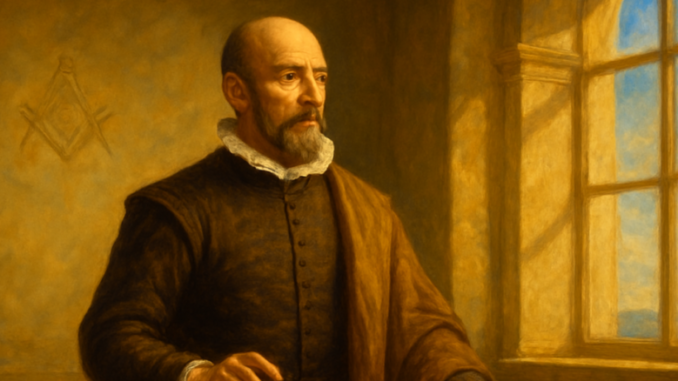
A spoon. A simple piece of cutlery we raise to our mouths without a second thought. But what if you grew up in a culture where eating with your hands was the only respectable way to dine? In his twenty-third essay, Michel de Montaigne invites us to pause and reflect on such everyday habits — and to discover what they reveal about the human condition. In ‘Of Custom,’ he unfolds a rich collection of examples that compels us to question everything we consider normal.
The Core Idea of the Essay
In this essay, Montaigne examines the vast diversity of human customs and habits — from eating practices to funeral rites, from dress codes to forms of greeting. His central thesis is as simple as it is unsettling: what we experience as natural and self-evident is almost always the product of habit and upbringing. The power of custom is so great that we are barely able to look at it critically.
Montaigne draws from classical sources such as Herodotus, Pliny, and Seneca, but also from travel accounts of his own time about newly discovered peoples in the Americas and Africa. He places the customs of these distant cultures alongside those of sixteenth-century France — not to pass judgment, but to show just how arbitrary our own norms truly are.
A Kaleidoscope of Examples
The essay offers a dazzling array of examples. Montaigne describes peoples who cremate their dead beside peoples who bury them, and still others who consume them as an act of reverence. He writes about cultures where nudity provokes no shame and others where showing a single bare leg is considered scandalous. These examples are not intended as exotic curiosities — they are mirrors that cast our own behaviour in a different light.
Among the customs he highlights are eating habits, such as the use of cutlery versus eating with the hands; funeral rituals ranging from cremation and burial to ritual consumption; clothing norms and what different societies consider proper or improper; and forms of greeting, whether kissing, bowing, or shaking hands. Each example serves the same purpose: to shake us loose from the assumption that our way is the only way.
Custom as Second Nature — and Sometimes First
Montaigne frequently cites the classical adage that custom is a second nature. But he pushes the idea further: sometimes custom is stronger than our first nature. We are so deeply shaped by the practices in which we were raised that we no longer recognise them as choices. They feel like the only possible way of living, when in reality they are merely one variation in an infinite spectrum of human possibilities.
Custom is not a law of nature, but a veil that blocks our view of other possibilities.
This observation carries far-reaching implications. If our deepest convictions are merely learned, how can we ever arrive at truth? Montaigne offers no definitive answer, but he invites us into a practice of continual self-questioning — a discipline that resonates powerfully with anyone on a path of philosophical or spiritual development.
The Symbol of the Mirror
When we read this essay through the lens of symbolic thinking, a deeper layer reveals itself. The collection of customs Montaigne presents functions as a mirror — not one that reflects our outward appearance, but one that makes our inner assumptions visible. Every unfamiliar custom we encounter implicitly poses the question: why do you do it differently? And is your way truly better, or merely more familiar?
In the tradition of Freemasonry, the mirror plays an equally important role as a symbol of self-knowledge. The Brother is encouraged to examine himself, to recognise his own prejudices, and to work toward personal improvement. Montaigne’s essay on customs can be read as a philosophical exercise in precisely this form of self-examination. It is an invitation to hold up the mirror and look honestly at what we see.
The Rough Stone of Our Assumptions
Another symbol that resonates here is that of the rough ashlar. In Freemasonry, the rough stone represents the unworked individual — complete with imperfections and unconscious patterns. The work upon the stone is the work upon oneself. Montaigne’s essay reveals how much our habits and assumptions form part of that roughness. We often believe our convictions are the result of rational thought, when in reality they have been grooved into us through repetition and environment.
The question then becomes: which of our habits deserve to be preserved, and which are merely ballast? Montaigne offers no prescriptions, but he hands us the tools for this reflection. He invites us, as it were, to take up the chisel and examine which layers can be carved away without damaging the core of our personality. It is demanding work, but it is the very work that transforms the rough stone into something more refined.
Relativity Without Cynicism
It is tempting to read Montaigne’s relativism as nihilism — as if he were claiming that nothing matters. But that is a misunderstanding. Montaigne does not argue for abandoning all standards. Instead, he pleads for humility about their absolute validity. He asks us to take our own customs seriously, but not to elevate them to universal truths.
This attitude of curious openness, combined with personal integrity, is precisely what makes Montaigne such a valuable guide for anyone seeking wisdom. He does not tear down for the sake of destruction; he loosens the soil so that deeper understanding can take root. For Freemasons and philosophical seekers alike, this balance between conviction and humility is a lifelong aspiration.
In ‘Of Custom,’ Michel de Montaigne gives us an instrument for self-reflection. By holding up the mirror of other cultures, he invites us to examine our own assumptions with fresh eyes. The essay reminds us that custom is a powerful force — one that can both enrich and blind us. The challenge is to choose consciously which habits we embrace and which we dare to question. In this sense, the twenty-third essay is far more than a collection of curiosities: it is a call to the ongoing work upon ourselves — the very work that lies at the heart of both philosophy and Freemasonry.
Copyright text & image: devrijmetselaar.nl
Texts are based on the ideas and content of the author of devrijmetselaar.nl, reviewed, corrected, and supplemented with the assistance of OpenAI. Images are created based on the ideas of the author of devrijmetselaar.nl using OpenAI/DALL-E.
Frequently Asked Questions
What is the main thesis of Montaigne's essay 'Of Custom'?
Montaigne's central thesis is that what we experience as natural and self-evident is almost always the product of habit and upbringing. He argues that the power of custom is so great that we are barely able to look at it critically, and that our own norms are far more arbitrary than we typically assume.
What types of examples does Montaigne use to illustrate his points about custom?
Montaigne uses a diverse range of examples including eating practices (cutlery versus hands), funeral rites (cremation, burial, and ritual consumption), clothing norms and what different cultures consider proper or improper, and various forms of greeting such as kissing, bowing, or shaking hands. He draws from classical sources and contemporary travel accounts of newly discovered peoples in the Americas and Africa.
How does Montaigne view the relationship between custom and human nature?
While Montaigne acknowledges the classical adage that custom is a second nature, he goes further by arguing that custom is sometimes stronger than our first nature. He contends that we are so deeply shaped by the practices in which we were raised that we no longer recognize them as choices, but instead experience them as the only possible way of living.

Be the first to comment