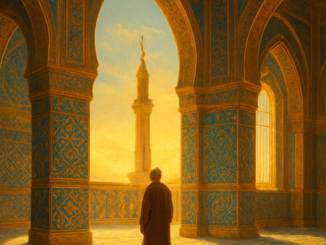
Open Quran alongside Masonic rough ashlar symbolizing repentance and transformation
Islam

Repentance in the Quran: Inner Transformation and Freemasonry

What does it truly mean to repent? Not as a fleeting pang of guilt, but as a profound inner turning that transforms your entire being? The ninth surah of the Quran, known as At-Tawbah — The Repentance — confronts the reader with precisely this question. Its themes of self-examination, broken promises, and the courageous return to one’s deepest values carry striking parallels with the spiritual journey at the heart of Freemasonry. Why Does This Surah Break With Tradition? The very first thing that sets At-Tawbah apart is its opening — or rather, the absence of one. It is the only surah in the entire Quran that does not begin with the customary invocation, “In the name of God, the Most Gracious, the Most Merciful.” Islamic scholars have debated this omission for centuries. Some believe the gravity of its content warrants the departure. Others view it as a continuation of the preceding surah. Whatever the explanation, the effect is immediate: the reader senses that something weighty is about to be discussed, something that tolerates no gentle preamble. The surah was revealed during a turbulent period, shortly before the death of the Prophet Muhammad. It addresses loyalty, broken covenants, and the possibility […]
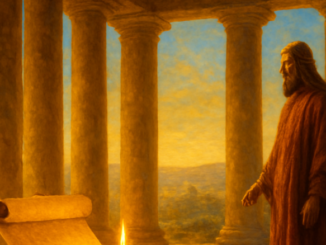
Ancient temple vision symbolizing Ezekiel's connection to Masonic philosophy
Christianity

Ezekiel and Freemasonry: Visions as Inner Building Blocks

What can the enigmatic visions of a sixth-century BCE prophet possibly teach us today? The Book of Ezekiel brims with images that stir the imagination: wheels within wheels, a valley of dry bones, and a temple described down to the smallest measurement. For those who read with a Masonic eye, these ancient texts open up a world of symbolism that turns out to be remarkably relevant. Let’s enter into conversation with this ancient book and discover what it has to offer the modern Freemason. Who Was Ezekiel, and Why Should Freemasons Care? Ezekiel was a priest who was carried into exile in Babylon around 597 BCE, along with many other inhabitants of Judah. There, far from the destroyed Temple in Jerusalem, he received a series of extraordinary visions that he recorded in meticulous detail. But why should a modern person — and especially someone interested in Freemasonry — spend time with these ancient texts? The answer lies in the universal themes woven throughout the book. Ezekiel speaks of destruction and rebuilding, of personal responsibility, of the possibility of starting anew. These are themes that sit at the very heart of Freemasonry: the idea that a human being is like a […]