Vrijmetselarij - Voltaire on Virtue: Lessons from the Philosophical Dictionary
Symbolism & Rituals

Voltaire on Virtue: Lessons from the Philosophical Dictionary

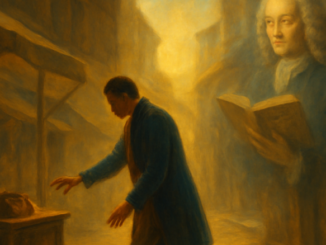
Imagine you are faced with a choice where no one is watching, no one is checking up on you, and you could easily profit at someone else’s expense. What do you do? This is precisely the question Voltaire raises in his famous entry on virtue in the Philosophical Dictionary. His answer is surprisingly practical — and more than 250 years later, it remains directly applicable to everyday life and to the principles at the heart of Freemasonry. What Is Virtue According to Voltaire? Voltaire does not define virtue as an abstract ideal or a religious commandment. For him, virtue is something essentially practical: doing good for your fellow human beings. In his dictionary entry, he draws a clear distinction between what he calls “theological virtues” and “civic virtues.” The first category encompasses religious obligations that vary from one faith to another. The second — the category Voltaire is most interested in — consists of concrete actions that promote harmonious coexistence. He states bluntly that a hermit who fasts and prays is not, strictly speaking, a virtuous person in any social sense. Only when someone actively contributes to the well-being of others — when someone honors their commitments, deals honestly in […]
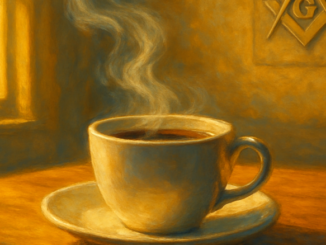
Steaming cup of tea in a Masonic lodge setting symbolizing temperance
Philosophy & Ethics

Too-Hot Coffee and Temperance: An Ethical Lesson from the Lodge

The lodge falls silent as the master of ceremonies places a steaming cup of tea before a newly initiated brother. The scent of bergamot rises from the near-boiling liquid. The young man reaches for it immediately, but an older brother calmly places a hand on his arm: “Wait. Let it cool first.” In that simple gesture lies a lesson far deeper than preventing a burned tongue. When Haste Becomes Harmful Recent medical research confirms what many have long suspected: regularly drinking very hot liquids — above 65 degrees Celsius (149°F) — can triple the risk of esophageal cancer. The heat damages the delicate lining of the esophagus, and repeated injury leads to cellular changes that can eventually become malignant. The science is clear: impatience with something as mundane as drinking coffee or tea can have life-threatening consequences. To most people, this sounds like an overreaction. A cup of tea is harmless, surely? But that very underestimation is the problem. We have grown accustomed to instant gratification — to the immediate fulfillment of our desires. Modern life encourages this at every turn: fast service, instant delivery, zero wait time. Yet nature, and our own bodies, operate on a different rhythm. Sometimes […]

Rough ashlar stone symbolizing personal growth and transformation in Freemasonry
Philosophy & Ethics

Addiction Through the Eyes of a Freemason: Two Perspectives

You probably know someone who struggles with addiction. Or perhaps you recognize patterns in yourself that you wish weren’t there. Society tends to have a swift verdict ready for those who fall into addiction — and why they did. But what happens when you look at the same situation through a different lens? Not one that condemns, but one that seeks to understand? Freemasonry offers precisely that kind of perspective — not as a substitute for professional help, but as an ethical compass that encourages us to look at one of the most profoundly human struggles with greater compassion and insight. Society’s Judgment on Addiction In modern society, addiction is frequently viewed through a moral lens. The addicted person is seen as someone who has failed, someone who was weak, someone who made the wrong choices. This perspective is understandable when individual responsibility is the central value. After all, you chose to start smoking, drinking, or gambling. You could have stopped before it was too late. But this judgment comes at a steep cost. It breeds shame and isolation. People struggling with addiction avoid seeking help out of fear of being condemned. Families keep silent about what happens behind closed […]

Statue of Marcus Aurelius symbolizing Stoic duty and Masonic character
Marcus Aurelius – Meditations

Marcus Aurelius Book V: The Philosophical Roots of Duty

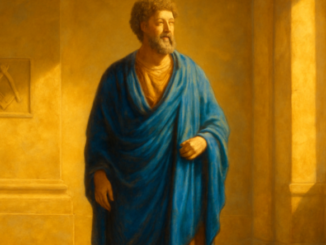
Why would a Roman emperor force himself out of bed before sunrise, even when every fiber of his body resisted? This question confronts us when reading Book V of the Meditations of Marcus Aurelius. The answer lies not in imperial discipline alone, but in ancient philosophical traditions that laid the groundwork for his thinking about duty and strength of character — traditions that continue to resonate deeply within Freemasonry. The Core of Stoic Duty Stoic philosophy, founded by Zeno of Citium around 300 BCE, forms the bedrock upon which Marcus Aurelius built his reflections. The Stoics taught that every human being fulfills a specific role within the cosmic order. Duty, in this view, is not an external constraint imposed from above — it is the natural consequence of understanding your place in the greater whole. When Marcus Aurelius speaks in Book V about rising from bed as a duty, he is invoking this deeper principle: you were born to act in accordance with your nature as a rational, social being. The early Stoics, including Chrysippus and Cleanthes, developed the concept of kathêkon, often translated as “appropriate action” or “duty.” This idea differs from modern notions of obligation because it is […]

Ancient philosophical symbols and Masonic tools representing the ethical foundation
Philosophy & Ethics

Freemasonry and Philosophy: The Ethical Foundation

Freemasonry and philosophy are inseparable. To truly understand the Craft, one must explore the philosophical roots that sustain it — because, at its core, the lodge is a space where people gather to reflect on the great questions of human existence. What does it mean to act rightly? How do we live in harmony with others? What does it take to become a truly good person? The philosophy of Freemasonry is not some abstract academic construct. It is a living, shared pursuit of ethical and moral development. In this article, we explore the historical background of this deep connection, the key concepts that underpin Masonic ethics, and the ways in which these ideas continue to resonate in the modern world. Historical Background: Philosophy as the Foundation of the Lodge Modern Freemasonry as we know it emerged in the early eighteenth century, most notably with the founding of the Grand Lodge of London in 1717. But the intellectual soil from which it grew had been cultivated for centuries. The late seventeenth and early eighteenth centuries were steeped in the ideals of the Enlightenment — a philosophical movement that placed reason, individual liberty, and universal brotherhood at the center of human progress. […]

Open book with Masonic symbols representing Montaigne and Freemasonry wisdom
Freemasonry & Connection

Montaigne on Negotiation: Wisdom for Uncertain Hours

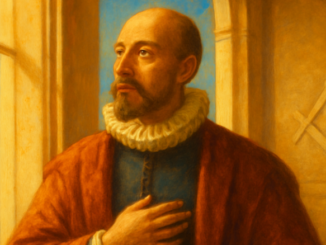
Imagine you are about to have a difficult conversation. Perhaps it involves a conflict, a business deal, or a personal matter that has been simmering for too long. You feel the tension, the uncertainty about the outcome, and somewhere beneath it all, the vulnerability of the moment. Michel de Montaigne, the sixteenth-century philosopher celebrated for his deeply personal essays, wrote about precisely these kinds of moments. In his essay ‘That the Hour of Negotiation Is Dangerous,’ he examines why the period of deliberation can be so perilous — and what it demands of our integrity. His insights connect in surprising ways to values that lie at the very heart of Freemasonry. The Vulnerable In-Between In this essay, Montaigne describes how the period of negotiation represents a uniquely dangerous phase. Not because conversations themselves are harmful, but because during this interim the usual rules seem temporarily suspended. Opposing parties come together under a flag of provisional peace. There is no agreement yet, but open hostility has ceased. Within that apparent calm lies the real danger: trust can be exploited, words can be twisted, and anyone who lets down their guard may pay a heavy price. Montaigne draws on historical examples of […]

Vrijmetselarij - Freemasonry and Religion – A Bridge, Not a Wall
Spiritual Traditions

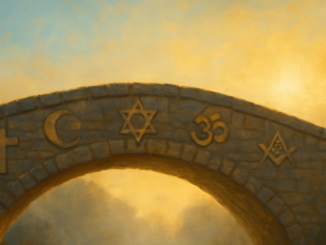
Freemasonry and Religion – A Bridge, Not a Wall

In a world where religion often draws dividing lines, Freemasonry offers something rare: a space where differences are not obstacles but invitations to dialogue. Freemasonry is not a religion. Nor is it a counter-movement. It is a centuries-old brotherhood where people — believers and non-believers alike — come together to work on themselves, their values, and their contribution to the world. This naturally raises questions. If Freemasonry isn’t a religion, why does spiritual symbolism play such a central role? And how can a community that prescribes no particular belief still be so profoundly meaningful and morally grounded? Let’s take a closer look at the unique relationship between Freemasonry and religion — and what it means for your personal development and ethical growth. No Dogma, But Genuine Depth Freemasonry makes no demands on your faith. Whether you are Christian, Muslim, Jewish, Hindu, humanist, or agnostic — as long as you believe in something greater than yourself, you are welcome. That “higher power” doesn’t need a name. What matters is that you recognize that humanity is not the center of everything, but part of a larger whole. There is no theological debate, no creed to recite, no prescribed path. Instead, Freemasonry offers […]