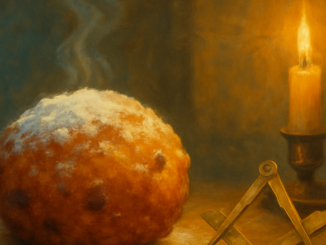
The Oliebol: Tradition, Symbolism and Masonic Brotherhood
There is no Dutch New Year’s Eve without the irresistible aroma of freshly fried oliebollen — golden, round balls of dough that mark the turn of the year. This humble pastry is a symbol of tradition, abundance, and togetherness. For Freemasons, however, the oliebol can carry an even deeper meaning: a celebration of brotherhood and the cyclical nature of life itself. A Rich History The oliebol — literally “oil ball” — traces its roots back to at least the 17th century in the Netherlands. During the cold, dark winter months, this nourishing fried dough provided warmth and energy in harsh times. In Freemasonry, where symbolism plays a central role, the round shape of the oliebol can remind us of the circle of life and the eternal quest for perfection. Just as Freemasons work on the rough ashlar to shape it into a perfect cube, the oliebol invites us to transform the ordinary — a simple batter of flour, yeast, and milk — into something extraordinary. It is a small but powerful metaphor for the transformative work at the heart of the Craft. The Ritual of Baking Baking oliebollen is remarkably similar to performing a ritual. The batter must be carefully […]