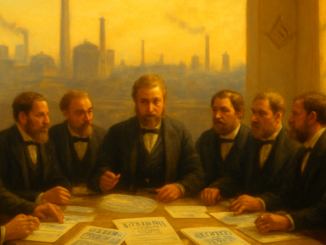
The History of Freemasonry in the 19th Century
The 19th century was an era of sweeping transformation. The Industrial Revolution, the rise of nation-states, and the march toward democracy reshaped the world as we know it. Throughout this turbulent period, Freemasonry played a significant role as a community of ideas, social reform, and international cooperation. Freemasonry and the Industrial Revolution As industrialization took hold across Europe and North America, new social classes emerged and the demand for social justice grew louder. Many Masonic lodges found themselves at the forefront of initiatives that championed social reform. Members leveraged their networks to advocate for improved working conditions, expanded access to education, and the establishment of charitable institutions. It was also during this period that women first began to gain a foothold in Freemasonry, albeit often through so-called “adoptive lodges” that operated under the supervision of male Grand Lodges. While inclusivity was slowly increasing, most lodges remained closed to women — a tension that would continue well into the following century. Political Involvement and National Movements The 19th century also witnessed a growing political influence of Freemasonry. In countries like France and Italy, lodges were closely involved in the struggle for national unification and the promotion of republican ideals. Prominent Freemasons […]