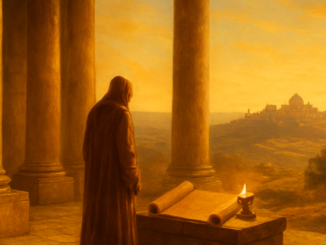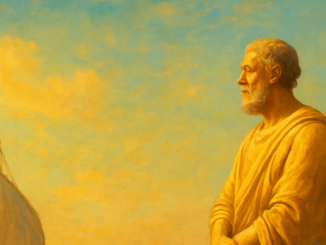
Ancient Roman philosopher Seneca reflecting on steadfastness and Stoic virtue
Lucius Annaeus Seneca – Letters to Lucilius

Seneca on Steadfastness: The Philosophical Roots Explored

In 41 AD, Lucius Annaeus Seneca — Rome’s most powerful orator — was banished to Corsica. Stripped of everything he knew, he produced some of his sharpest philosophical works during this exile. His essay on the steadfastness of the wise man, dedicated to his friend Serenus, may be the most revealing of them all. It was not a text born in an intellectual vacuum. It drew on centuries of philosophical debate around a single, piercing question: can a truly wise person ever be harmed? The sources Seneca wove together form a surprisingly rich mosaic of intellectual traditions — traditions that still resonate within any brotherhood dedicated to inner growth. The Stoic Foundation: Invulnerability as Virtue The philosophical bedrock of Seneca’s argument lies in Stoicism, the school of thought founded around 300 BC by Zeno of Citium in the painted colonnade of Athens. Zeno articulated a radical idea: the only true good is virtue, and the only true evil is its absence. Everything in between — wealth, illness, honor, disgrace — belongs to what the Stoics called “indifferent things.” This distinction forms the spine of Seneca’s claim that the wise person cannot be insulted or damaged. Anyone who builds happiness exclusively […]

Open Quran beside Masonic tools symbolizing steadfastness and inner struggle
Islam

Surah Muhammad: Steadfastness and the Inner Struggle

In the quiet of an evening lodge, a Freemason sits alone after the ritual has ended. He leafs through an old book on world religions and stumbles upon a passage from the Quran. The words strike a chord: they speak of steadfastness, of persevering on a path despite opposition. He recognizes something of his own inner quest. How can a text from an entirely different tradition feel so familiar? What Is Surah Muhammad? Surah Muhammad is the forty-seventh chapter of the Quran, bearing the name of the Prophet himself. It was revealed in Medina during a period when the early Muslim community was under considerable pressure and steadfastness was essential for survival. The text addresses themes such as maintaining faith under difficult circumstances, the consequences of sincerity versus hypocrisy, and the promise of inner peace for those who persevere on the righteous path. Unlike some of the Meccan surahs, which tend to be poetic and contemplative, this Medinan text has a more practical tone. It speaks directly to the community, drawing a clear line between genuine devotion and superficial compliance. For the devout Muslim, this surah provides an anchor in times of trial. But what might someone outside this tradition […]

Rough ashlar being shaped into a perfect cube symbolising steadfastness
History

Twenty-Three Years of Criticism: Steadfastness as the Art of Living

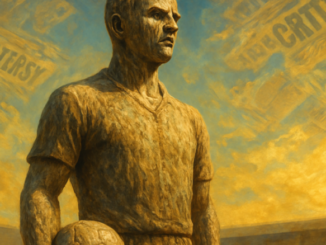
Twenty-three years. It is a number that carries tremendous weight when it refers to criticism — relentless judgment from millions. A veteran of the football pitch spoke these words after a historic match, not as a complaint, but as a simple statement of fact. Within that plain observation lies a profound truth that reaches far beyond the sporting arena and touches one of humanity’s oldest questions: how do we build our character when the world never stops measuring us? The Number as a Mirror of Time Twenty-three years span nearly a quarter of a century. In that time, children become adults, kingdoms rise and fall, and the tectonic plates of collective consciousness shift beneath our feet. When someone says that criticism has been his constant companion for twenty-three years, he is not merely describing opposition. He is describing a shadow as faithful as the light that drives him forward. In the building art of the inner life, we know the principle of the rough ashlar that must be hewn into a perfect cube. Every blow of the hammer, every critical touch, contributes to the refinement of the material. But what happens when those blows never cease? When the chisel keeps […]

Daniel standing calmly in the lions' den symbolizing Masonic steadfastness
Christianity

Daniel and the Lions’ Den: Steadfastness in Practice

You’re about to make a difficult decision. Colleagues expect you to go along with the crowd, friends don’t understand your hesitation, and somewhere deep inside, you know what the right thing to do is — but it may cost you dearly. The Book of Daniel speaks directly to moments like these. This ancient Old Testament text doesn’t offer abstract theology; it presents concrete examples of people who followed their inner compass under immense pressure. For Freemasons, these stories resonate with one of the Craft’s central questions: how do you build a character that remains standing when the world around you is shaking? The Heart of the Book of Daniel The Book of Daniel tells the story of a young man from Judah who is taken as an exile to Babylon. There he is educated at the royal court, given a new name, and immersed in a culture that is entirely different from his own traditions. Despite tremendous pressure to conform completely, Daniel holds fast to his inner principles. The book consists of two parts: stories of steadfastness under trial, and apocalyptic visions of the future. The most well-known stories are that of the fiery furnace — in which three of […]

Stone fortress wall symbolizing Masonic steadfastness and inner strength
Freemasonry & Connection

When Your Walls Fall: Montaigne and the Art of Steadfastness

Imagine you’re under pressure. Maybe it’s a conflict at work, a fracture in a friendship, or a season when everything seems to be crumbling around you. You feel besieged — surrounded by circumstances you can’t fully control. In moments like these, a single question emerges: how do you stand your ground without losing yourself? Michel de Montaigne, the sixteenth-century philosopher, wrestled with exactly this question in his short but powerful essay on the commander of a besieged fortress. His reflections offer surprisingly practical guidance for anyone seeking steadfastness and human connection in times of adversity. The Heart of the Dilemma In this essay, Montaigne describes a situation that appears military on the surface but is universal at its core. A commander of a besieged fortress must choose: when do you negotiate, when do you hold firm, and when do you yield? It’s not just about walls of stone — it’s about the inner walls we build when we feel threatened. The philosopher asks what honor, courage, and wisdom truly mean when the pressure becomes unbearable. You may never have commanded a garrison, but you’ve almost certainly faced your own version of this dilemma. Think of a moment when you had […]