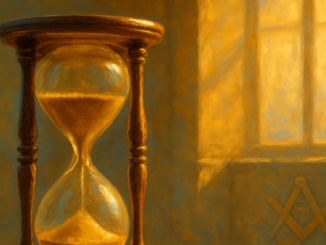
End of Life and the Art of Living: Two Perspectives
France recently passed a law permitting assisted dying under strict conditions — a decision that strikes at the very heart of how a society thinks about life, death, and human dignity. As public debate intensifies, this moment invites deeper reflection: how did people in earlier centuries approach the end of life, and how does that compare to our modern outlook? Freemasonry, rooted in centuries-old traditions of self-examination, offers a uniquely illuminating perspective on this timeless question. The Past: Death as a Daily Companion For our ancestors, death was not a topic to be avoided. In the medieval world, the end of life was ever-present: infant mortality was staggeringly high, epidemics swept through communities without regard for wealth or status, and average life expectancy was a fraction of what we know today. This reality produced a culture that did not hide from death but placed it squarely at the center of daily awareness. The ars moriendi — the art of dying — flourished as a literary genre in the fifteenth century. Countless manuals appeared to prepare people for a “good death.” This good death had nothing to do with pain management or medical intervention. It was about spiritual readiness. People died […]