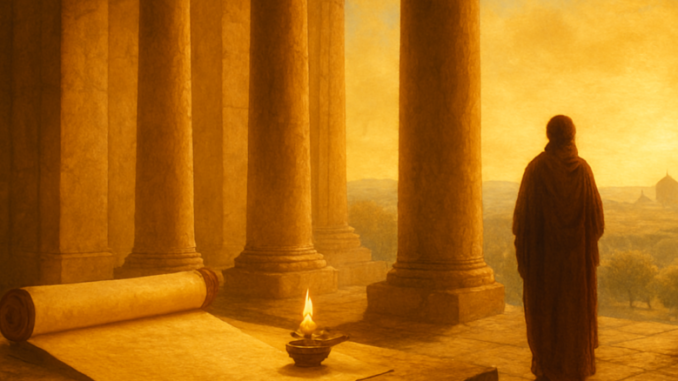
A kingdom that once flourished collapses into ruin. The temple built with such devotion is consumed by flames. What remains is exile — a foreign land, lost glory, and the ashes of what once was. Second Kings tells this story of downfall, but those who look deeper will discover a mirror for the human soul. Viewed through two lenses — that of the Bible reader and that of the Freemason — a wealth of meaning unfolds that reaches far beyond historical fact alone.
The Story Through the Eyes of Tradition
For those who read Second Kings as part of biblical history, a dramatic epic unfolds. The book spans more than two centuries, during which the kingdom of Israel fractures and both the northern and southern kingdoms are eventually overrun by powerful neighboring empires. Kings succeed one another — some righteous, many corrupt. The Temple of Solomon, once the radiant heart of worship, is plundered and destroyed.
From this perspective, Second Kings is a cautionary tale about the consequences of unfaithfulness. Kings who stray from the path of wisdom bring calamity upon their people. The prophets — Elijah and Elisha among them — call for repentance, but their voices often go unheard. It is a story of cause and effect, of choices whose consequences ripple across generations.
The Symbolism Through Masonic Eyes
The Freemason reads this book with different eyes — not as literal history, but as a symbolic blueprint for the inner life. The temple that is destroyed is not merely a building of stone; it represents the inner sanctuary that every human being carries within. When that sanctuary is neglected, when a person loses their moral compass, inner destruction looms.
The exile that follows the fall of Jerusalem speaks to the Freemason as a universal human theme. Who has not experienced that feeling of inner banishment — of estrangement from one’s own deepest self? The road to Babylon becomes a metaphor for those periods in life when we drift far from our center, from that which gives our existence true meaning.
Two Readings, One Truth
What stands out when we place both perspectives side by side is that they do not contradict each other — they enrich each other. The traditional reader sees in the prophets men of God calling for repentance. The Freemason recognizes in them the inner voice of conscience, warning when a person strays from the straight path.
The temple does not fall because of enemy armies alone — it falls because of neglect from within.
This insight connects both readings. Whether one believes in an external divine order or in an inner moral light, the message remains the same: neglecting the sacred leads to decay. And yet, even in the darkest exile, hope glimmers. For the person who has watched their inner temple collapse still carries the blueprint within — the potential to build again.
The Symbolism of Fire and Destruction
One of the most powerful images in Second Kings is the fire that consumes the temple. In Masonic symbolism, fire is profoundly ambiguous. It destroys, but it also purifies. It burns away the old, but it makes room for the new. The destruction of the temple can thus be read as a necessary phase in the cycle of breakdown and rebuilding that every person undergoes in the course of a lifetime.
Anyone who has experienced deep personal loss will recognize this paradox. What felt like total annihilation sometimes turned out, in hindsight, to be the catalyst for a deeper and more meaningful way of living. The Freemason learns in the lodge that the journey toward light always leads through darkness. Second Kings embodies this truth in dramatic imagery.
Brotherhood in Times of Decline
Another theme shared by both perspectives is that of community and brotherhood. In Second Kings, we see how a people fractures when the bonds between them weaken. Kings rule for personal gain, tribes turn against one another. The Freemason recognizes in this the vital importance of brotherhood as the cement that holds society together.
Without mutual connection, a community loses its foundation. Individual self-interest that overshadows the bonds of brotherhood leads inevitably to decline. And restoration always begins with the mending of broken ties.
The lodge serves as a space where this brotherhood is practiced — a place where men and women learn to transcend the ego in service of something greater than themselves. Second Kings reminds us how fragile that unity is, and how precious.
What Both Worlds Teach Us
The Bible reader and the Freemason approach the same story from different angles, yet they meet at its core. Both acknowledge that human beings are inclined to wander, that greatness is impermanent, and that restoration remains possible as long as the will to rebuild endures. The temple may lie in ruins, but the blueprint is never truly lost.
Second Kings is not a cheerful book. It confronts us with the shadow side of human nature, with the consequences of neglect and division. But that is precisely where its value lies. For the person who acknowledges the depth of the fall also understands the height to which one can rise when the work of rebuilding begins anew.
Whether one reads with the eyes of faith or those of the symbolic seeker, Second Kings speaks to something universal within us. It reminds us of the fragility of everything we build, but also of the indestructible core that remains present in each of us. The temple may fall, the exile may last for years, but the Mason who keeps the blueprint in his heart will always find the way back to the light.
Copyright text & image: devrijmetselaar.nl
Texts are based on the ideas and content of the author of devrijmetselaar.nl, reviewed, corrected, and supplemented with the assistance of OpenAI. Images are created based on the ideas of the author of devrijmetselaar.nl using OpenAI/DALL-E.
Frequently Asked Questions
How do Freemasons interpret Second Kings differently from traditional biblical readers?
Freemasons view Second Kings as a symbolic blueprint for inner spiritual development rather than literal history. While traditional readers see it as a cautionary tale about external consequences of unfaithfulness, Masons recognize the destroyed temple as representing the inner sanctuary within each person, and exile as metaphorical estrangement from one's deepest self. This symbolic reading allows Freemasons to extract profound personal and moral lessons applicable to their own spiritual journey.
What does the fall of the temple represent in Freemasonry?
In Masonic symbolism, the temple's destruction represents the collapse of one's inner moral sanctuary when spiritual principles are neglected. Rather than viewing it as merely a historical event, Freemasons see it as a universal human experience of moral and spiritual decay that occurs when a person loses their way. The symbolism teaches that rebuilding—returning to one's center and moral compass—is always possible, carrying within us the blueprint for restoration.
How do both biblical and Masonic interpretations of Second Kings complement each other?
The traditional and Masonic readings do not contradict but rather enrich one another, united by a common truth: neglecting the sacred leads to decay, whether viewed as divine order or inner moral light. Both perspectives recognize the prophets as voices calling for righteousness—external divine messengers in tradition, inner conscience in Masonic thought. This unified message demonstrates that spiritual principles remain constant regardless of interpretation, offering hope that even in darkness, the blueprint for renewal remains within reach.
What is the Masonic meaning of exile in Second Kings?
For Freemasons, the exile to Babylon represents those periods in life when a person drifts far from their spiritual center and moral foundation. It symbolizes the feeling of inner banishment or estrangement from one's truest self—a universal human experience that the Masonic path seeks to address and overcome. Understanding exile as an inner journey rather than merely an external event helps Masons recognize and navigate their own spiritual challenges toward eventual restoration.
Can the story of Second Kings teach modern Freemasons anything relevant today?
Yes, Second Kings offers timeless lessons about the consequences of neglecting one's spiritual principles and the importance of maintaining moral integrity. For modern Freemasons, the text serves as a reminder that inner vigilance and dedication to their sacred principles prevents spiritual decay, and that the potential for personal renewal and rebuilding always exists. This makes Second Kings a valuable guide for contemporary Masonic study and personal development.

Be the first to comment