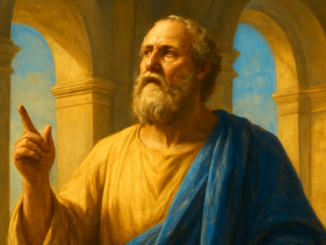
Ancient Greek dialogue scene symbolizing the Masonic search for knowledge
Plato – Content & Summary

Plato’s Theaetetus: What Is Knowledge and Why Does It Matter?

In 369 BC, Plato wrote a dialogue that continues to captivate philosophers and seekers to this day. The Theaetetus poses a deceptively simple question: what is knowledge? What unfolds is a masterful conversation between Socrates and the young mathematician Theaetetus, in which every proposed definition ultimately crumbles under the weight of critical inquiry. This dialogue not only demonstrates the power of Socratic questioning but also reveals a fundamental truth that Freemasons recognize in their own pursuit of light. The Historical Context of the Dialogue The Theaetetus is set in 399 BC, shortly before the trial of Socrates that would end with his death sentence. Plato deliberately chose this dramatic moment as the backdrop for the dialogue. The young Theaetetus, a brilliant mathematics student from Athens, meets Socrates in the palaestra — the training ground where Greek youth exercised both body and mind. The conversation begins when Theodorus, Theaetetus’s mathematics teacher, introduces the young man to Socrates as someone of exceptional talent. What follows is one of the most systematic investigations into the nature of knowledge from antiquity. Plato likely composed this dialogue around 369 BC, during his more mature period as a philosopher. The text reflects a profound meditation on […]
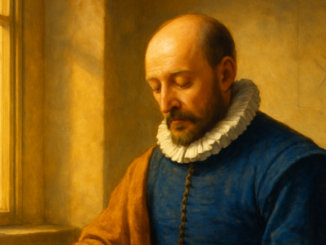
Open book with Masonic symbols representing Montaigne's philosophy and Freemasonry
Freemasonry & Connection

Montaigne on Idleness: The Restless Mind and the Search for Light

When the mind has no direction, Michel de Montaigne wrote in the sixteenth century, it thrashes about like a horse without a rider. This brief but powerful essay from his famous collection touches on a paradox that both the philosopher and the Freemason will recognize: rest without purpose brings not peace, but turmoil. What can two traditions — separated by centuries and vastly different in form — teach each other about the value of directed silence? The Philosopher Speaks: A Mind Without Reins In his essay “Of Idleness,” Montaigne describes how he withdrew to his country estate after a busy life, fully expecting his mind to settle into peaceful contemplation. The opposite happened. Without the discipline of daily occupation, his thoughts began to race like a runaway horse. Strange images, half-formed ideas, and unfinished reflections piled up like weeds in an untended garden. The philosopher concluded that the mind, much like the body, requires exercise to remain healthy. Crucially, this was not an indictment of rest itself, but of aimless idleness. Montaigne drew a sharp distinction between doing nothing and being without purpose. The former can be restorative; the latter undermines the clarity of the soul. To tame his wild […]