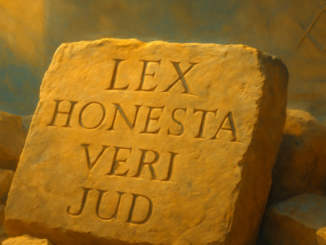
Rough ashlar and perfect cube symbolizing Masonic moral transformation
Philosophy & Ethics

Responsibility and Punishment: Ancient Lessons on Human Failing

In July 2026, news broke of a tragic traffic accident in Suriname in which five people lost their lives at the hands of a driver who had no license. The court sentenced him to prison. But behind the headlines lies a deeper story — one about human responsibility, guilt, and the possibility of moral reconstruction. These are questions that have occupied humanity for centuries, and they hold a central place in the teachings of Freemasonry. The Roman Foundation of Personal Accountability In ancient Rome, legal scholars developed a concept that continues to shape our justice systems to this day: culpa — guilt through negligence. Roman jurists distinguished between different degrees of fault. A person who knowingly took a risk beyond their control bore a heavier responsibility than someone who caused harm by pure accident. A driver who knows he is not authorized to operate a vehicle, yet gets behind the wheel anyway, falls squarely into the first category. The Lex Aquilia, dating from 286 BC, established that anyone who causes damage to another through their own actions must compensate for that damage. But the Romans also understood that money alone cannot suffice when human lives are lost. That is why […]
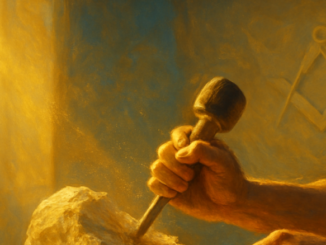
Rough ashlar stone being shaped symbolizing Masonic character building
Personal Development & Leadership

Personality and Choices: What a Verdict Teaches About Character

Sometimes you come across a news story that stays with you all day — not because of the shocking details, but because of the questions it raises. A court hands down a nine-year prison sentence, and you find yourself wondering: how does a person end up there? What happens within someone’s personality that leads them down a path ending in a courtroom? These questions go far beyond the legal realm. They touch on something fundamental about who we are and who we have the potential to become. The Rough Stone Within Each of Us In Freemasonry, we work with the symbol of the rough ashlar — the unfinished stone. This is no arbitrary metaphor. The rough stone represents the human being as they enter the world: full of potential, but also full of imperfections, sharp edges, and hidden cracks. The Freemason’s task is to work that stone — to chisel, smooth, and polish it. Not to achieve perfection, because that is an illusion, but to become more conscious of your own shape and the choices you make. When you read about a tragic event where lives have been permanently altered by violence, an uncomfortable question surfaces: what happened to the […]

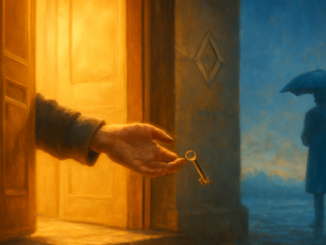
Open lodge door symbolizing Masonic hospitality and welcoming the stranger
Freemasonry & Society

Hospitality as a Life Skill: What the Lodge Teaches About Welcome

You probably know the feeling: you see a situation that calls for action, but you wait for someone else to step up. Or you quietly convince yourself that your contribution wouldn’t matter in the grand scheme of things. When communities fall short in providing shelter and welcome to those in need, it touches on something far deeper than policy or politics. It raises a fundamental question: how do we relate to the stranger at our door? Freemasonry, perhaps surprisingly, offers deeply practical guidance on this — rooted in centuries-old rituals of hospitality. The Threshold as a Sacred Boundary In Freemasonry, the threshold carries powerful symbolic weight. Anyone who enters a lodge building consciously crosses a boundary between the outside world and a space of reflection. But that threshold works in two directions: it protects what lies within, and it determines who is welcome. The question of whom we let in is therefore not a bureaucratic matter — it is an ethical exercise. Historically, operative lodges maintained strict customs around hospitality. Traveling craftsmen could count on shelter from fellow brothers in distant cities. This wasn’t charity born from pity — it was a practical system of mutual support. You helped the […]