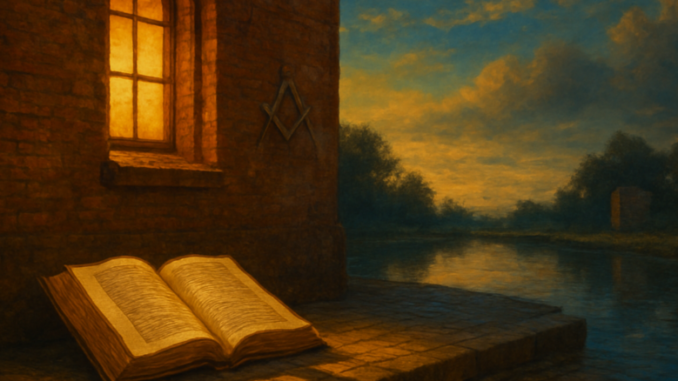
Anyone who explores the pursuit of gnosis in the Netherlands quickly discovers that the search for inner knowledge takes many forms. Some find their way through Gnostic communities, others through Freemasonry. Both traditions share a deep longing: to uncover the truth behind the veil. Yet their methods and philosophies differ considerably. In this article, we place two spiritual worlds side by side — not to judge, but to understand what they have in common and what we can learn from both.
The Gnostic Tradition in the Netherlands: Knowledge as Liberation
The word gnosis comes from Greek and literally means knowledge. But this is not ordinary knowledge gleaned from textbooks. It refers to a direct, inner experience of the divine. Since the early twentieth century, the Netherlands has harboured a vibrant interest in this spiritual current. Various communities and study groups devote themselves to ancient Gnostic texts, seeking to make their wisdom applicable to everyday life.
At the heart of Gnostic thought lies the idea that the material world is a reflection of a higher reality. Every human being carries a divine spark within, yet has forgotten it. By acquiring inner knowledge — by awakening — one can return to one’s origin. This process of self-knowledge is regarded as true salvation.
The Freemason as Seeker: Symbolism and Ritual
Freemasonry, too, has a long history of spiritual seeking. Where the Gnostic turns to sacred texts and direct revelation, the Freemason works primarily with symbols and rituals. The building of the temple, the plumb line, the compasses, and the square are not lifeless signs but living images that invite the searching mind toward self-reflection.
Within the lodge, a Freemason progresses through various degrees, each with its own ceremonies and lessons. These degrees symbolise stages of spiritual growth. It is not knowledge transmission in the conventional sense, but an experiential path. The Freemason discovers not so much by reading or listening, but by undergoing. The ritual speaks to the heart, not merely to the intellect.
Where Gnosis and Freemasonry Converge
At first glance, Gnostic circles and Masonic lodges seem like entirely different worlds. Yet they share a fundamental conviction: true wisdom comes from within. Both traditions distrust superficial dogmatism. Both invite personal investigation and the posing of questions that reach beyond the mundane.
Know thyself, as the ancient oracle declared. Both the Gnostic and the Freemason take this injunction to heart.
In the Netherlands, there have always been interactions between these two currents throughout the centuries. Some Freemasons immersed themselves in Gnostic texts. Some Gnostics found in the lodge a community of kindred spirits. This is no coincidence. Both paths lead to the same crossroads: the encounter with the deepest self.
Two Methods of Seeking Inner Knowledge Compared
The Gnostic typically seeks direct experience through meditation, the study of sacred texts, and sometimes through initiation within a Gnostic community. The emphasis lies on personal contact with the divine, outside established religious structures.
The Freemason, by contrast, works within a brotherhood. The collective ritual is essential. The lodge forms a sacred space where brethren search together, question together, and share silence together. The symbolism of building an inner temple connects personal growth with a sense of community.
The Gnostic emphasises personal revelation. The Freemason stresses the importance of brotherhood and ritual. Both see self-knowledge as the key to spiritual growth. And both respect the mystery, carefully avoiding dogmatic answers.
The Importance of Doubt and Wonder
A striking similarity between these two paths is their attitude toward certainty. Neither the Gnostic nor the Freemason claims to possess absolute truth. Both cherish the question above the answer. Doubt is not weakness but a sign of intellectual and spiritual honesty. In an age of quick opinions and harsh judgements, this is a remarkably refreshing stance.
What We Can Learn from These Two Paths
By placing gnosis alongside Freemasonry in the Dutch context, we see that spiritual quests can take many forms. Neither path is superior to the other. Both offer a framework for those who want more than the superficial — for those who seek depth behind everyday reality.
Perhaps the most important lesson is that the journey inward always remains personal. Whether someone finds inspiration in ancient Gnostic wisdom or in the symbolism of the lodge, it ultimately comes down to the same movement: the return to the core, to that within us which waits to be discovered.
The search for inner knowledge has a rich tradition in the Netherlands. Gnostic communities and Masonic lodges each offer their own path toward enlightenment. They share the conviction that true wisdom does not come from without, but from within. For those willing to seek, to question, and to listen, both doors stand open — not as competitors, but as kindred paths through the landscape of the human spirit.
Copyright text & image: devrijmetselaar.nl
Texts are based on the ideas and content of the author of devrijmetselaar.nl, reviewed, corrected, and supplemented with the assistance of OpenAI. Images are created based on the ideas of the author of devrijmetselaar.nl using OpenAI/DALL-E.
Frequently Asked Questions
What is the main difference between Gnostic practice and Freemasonry in the Netherlands?
While Gnostics primarily seek inner knowledge through direct experience, meditation, and sacred texts, Freemasons use symbols and rituals as living images to guide spiritual growth. Both traditions pursue inner truth, but Freemasonry's experiential path through ritual degrees offers a unique community-based approach to self-discovery that complements other spiritual seekings.
Can someone be both Gnostic and a Freemason?
Yes, throughout Dutch history, many individuals have found value in both traditions. Some Freemasons have studied Gnostic texts, while some Gnostics have discovered in Masonic lodges a community of like-minded spiritual seekers. Both paths ultimately lead to the same goal of encountering one's deepest self.
What do Gnostic and Masonic traditions have in common?
Both traditions share the conviction that true wisdom comes from within and reject superficial dogmatism in favor of personal investigation and questioning. They both honor the ancient principle 'Know thyself' and invite seekers to uncover the truth behind the veil through their own direct experience and inner work.
How does Freemasonry use symbols and rituals to teach spiritual lessons?
Freemasonry employs living symbols such as the temple, plumb line, compasses, and square that invite the searching mind toward self-reflection. Through progression in various degrees, each with its own ceremonies, Freemasons discover wisdom experientially—the rituals speak to the heart and soul, not merely to the intellect, creating a transformative journey of spiritual growth.
Is Freemasonry a form of gnosis or inner knowledge?
While Freemasonry shares the pursuit of inner knowledge with Gnostic traditions, it takes a different path. Rather than seeking direct experience through texts and meditation, Freemasonry facilitates inner knowledge through ritual, symbolism, and progressive degrees within a lodge community, making it a distinctive and valued approach to spiritual awakening.

Be the first to comment