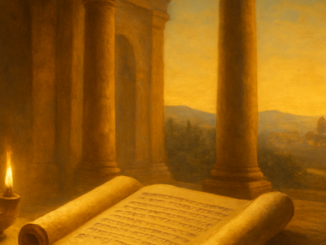
Ancient ruins of Nineveh symbolizing the fall of tyranny and Masonic justice
Christianity

Nahum and the Fall of Nineveh: Lessons on Justice

In 612 BCE, the mighty Assyrian Empire collapsed. Nineveh, its grand capital and the nerve center of an unparalleled military power, was razed to the ground by a coalition of Babylonians and Medes. This seismic historical event lies at the heart of one of the shortest yet most intense books in the Old Testament: the Book of Nahum. Spanning only three chapters, this prophetic text raises profound questions about justice, the fall of tyranny, and the possibility of moral reconstruction — questions that resonate deeply within the traditions of Freemasonry. The Historical Context of Nahum For nearly three centuries, the Assyrian Empire dominated the ancient Near East. The city of Nineveh, situated on the banks of the Tigris River in what is now northern Iraq, was renowned for its imposing walls, lavish palaces, and vast libraries. Yet the Assyrians were equally infamous for their ruthless methods of warfare. Conquered peoples were deported en masse, cities were burned to ash, and enemies were publicly humiliated. For the smaller kingdoms of Israel and Judah, Assyria represented a constant and existential threat. The prophet Nahum — whose name fittingly means “comforter” or “one who brings consolation” — likely composed his vision shortly before […]

Open Volume of Sacred Law with Masonic square and candle in a lodge setting
Christianity

Micah and Freemasonry: Do Justice, Love Faithfulness

The candle flickers softly as a Brother opens the Volume of the Sacred Law. His fingers trace the pages until they rest on a passage he has read dozens of times before — yet tonight, the words seem to carry a different weight. “What does the Eternal require of you?” he reads aloud, and the question lingers in the stillness of the lodge room. The Book of Micah, written by a prophet in the eighth-century Kingdom of Judah, poses a question that has echoed through millennia. What does it truly mean to live a good life? The answer Micah offers is deceptively simple and yet infinitely demanding: do justice, love faithfulness, and walk humbly. For anyone familiar with the traditions of Freemasonry, these words resonate like echoes of deeply familiar principles. The Heart of Micah’s Message Micah prophesied during a time of profound social inequality. The wealthy enriched themselves at the expense of the poor, judges accepted bribes, and religious leaders sold their services to the highest bidder. Against this backdrop, the prophet raised his voice — not with elaborate theological arguments, but with a clear moral appeal. His most famous pronouncement appears in the sixth chapter: “He has told […]

A plumb line hanging against rough stone symbolizing Masonic integrity
Christianity

Amos and the Voice of Justice: A Prophet for Builders

You probably know the feeling: you see something going wrong around you, but you hesitate to speak up. Who are you to raise your voice? You’re no expert, no leader, no authority. And yet, something keeps gnawing at you. That very tension lies at the heart of the Book of Amos — a text written over 2,700 years ago that still resonates with anyone who wrestles with the question: when should I speak, and when should I remain silent? A Herdsman Becomes a Prophet Amos was no priest, no scholar, and no man of rank. He describes himself as a herdsman and a dresser of sycamore figs from the small village of Tekoa. He had no formal training in sacred scripture and held no position in the temple. Yet he traveled to the northern kingdom of Israel to speak words that have echoed through the centuries. His message was uncomfortable: he called out those in power for their injustice, their greed, and their neglect of the most vulnerable members of society. Why should this matter to you? Perhaps you recognize that familiar hesitation — the reluctance to speak up when you see something that isn’t right. The nagging doubt about […]