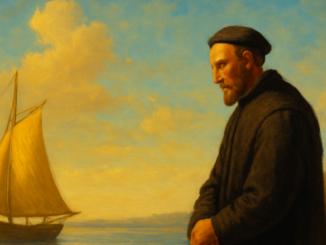
Montaigne on Inconstancy: Man as an Unfinished Symbol
There is an ancient symbol familiar to most Freemasons: the rough ashlar. It represents the human being in an unworked state — raw, unpolished, and full of contradictions. When we turn to the very first essay in Michel de Montaigne‘s celebrated Essais, that image becomes almost tangible. In his reflections on the inconstancy of our actions, the sixteenth-century philosopher holds up a mirror in which we recognise ourselves as beings who constantly shift, act in contradiction with themselves, and in doing so reveal something profoundly human. The Core Idea: Man as a Riddle to Himself Montaigne opens his essay with a sharp observation. Anyone who tries to judge another person by their actions runs into a fundamental problem: our deeds constantly contradict one another. The same individual who acts with courage today may prove a coward tomorrow. The person who gives generously now may cling to possessions later. For Montaigne, this is not a moral failing — it is simply the human condition laid bare. He resists the temptation to sort people into fixed categories. Labels like “brave” or “greedy” do not do justice to reality. We are not statues of virtue or vice, but living beings who move, stumble, […]