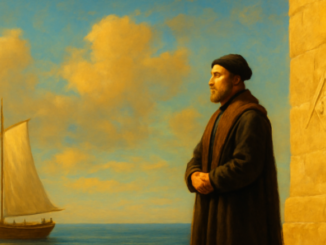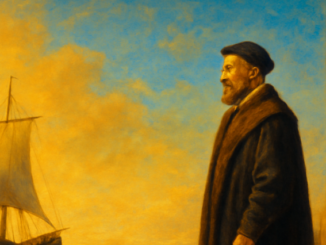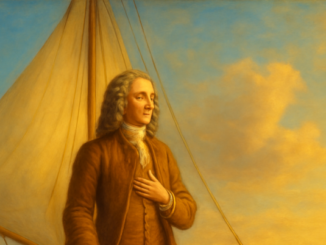
Voltaire portrait beside Masonic symbols representing tolerance and wisdom
Symbolism & Rituals

Voltaire on Tolerance as a Virtue: Wisdom for Freemasons

Tolerance is often treated as a passive attitude today — a matter of letting others do as they please so long as they don’t bother you. Voltaire saw things very differently. For him, tolerance was an active virtue demanding courage, self-reflection, and wisdom. When we place his ideas alongside the Masonic tradition, a remarkably rich conversation emerges about what it truly means to be tolerant. The Outsider Sees Tolerance as Weakness Let’s be honest: for many people in the eighteenth century, tolerance was seen as a sign of indifference or even cowardice. The reasoning went that anyone who took their own convictions seriously could not possibly bear others thinking radically differently. Voltaire knew this criticism all too well. In his time, religious minorities were persecuted, dissenters were banished, and books were burned. The social norm was not tolerance but conformity. From this perspective, tolerance was suspicious. It implied that you didn’t truly believe in anything — that you lacked principles. Intolerance was often dressed up as virtue: one was simply protecting truth against error. Those who showed tolerance, it was claimed, had chosen no side and therefore had nothing meaningful to offer. Voltaire’s Reversal: Tolerance Requires Strength Voltaire turned this […]


Open book with Masonic symbols representing Montaigne's educational philosophy
Michel de Montaigne – Freemasonry & Connection

Montaigne on Education: Lessons for the Seeking Freemason

Imagine a child who is not taught to obey, but to think independently. A child who is not stuffed with facts, but invited to ask questions. In the sixteenth century, Michel de Montaigne wrote an essay outlining precisely this vision of education. What he put to paper over four hundred years ago touches on something every Freemason recognizes: the conviction that true growth begins with the development of an independent mind and a virtuous character. In this article, we explore how Montaigne’s pedagogical ideas connect with the core values of Freemasonry. The Heart of Montaigne’s Educational Philosophy In his essay ‘On the Education of Children,’ Montaigne pushes back against the educational practices of his era, which he considered mechanical and superficial. Teachers crammed students full of trivia without paying attention to understanding or application. Montaigne argued for something radically different: an education that sharpens judgment rather than merely filling the memory. The child must learn to weigh, compare, and draw conclusions independently. This is not a passive process, but an active quest for insight. What does this look like in practice? Montaigne advises that an educator should confront the child with a variety of viewpoints and encourage them to choose […]

A closed bridge shrouded in mist symbolizing Masonic self-reflection
Spiritual Traditions

The Closed Bridge as a Mirror for the Soul: A Masonic View

Imagine you’re driving down the highway, heading to a meeting, an appointment, or someone you love. Then a sign appears: the bridge ahead is closed. At least 48 hours. As a precaution. Your plans crumble, frustration rises. But what if this forced stop is more than an inconvenience? What if every blocked road in life is an invitation to turn inward? The Paradox of Precaution as Wisdom The word “precaution” carries a curious duality. On one hand, it implies fear of what lies ahead. On the other, it speaks of prudence — the ability to see beyond immediate utility. The decision to close a bridge is not a sign of weakness but of deeper insight: some structures deserve inspection before they collapse. This principle already echoed through the writings of Marcus Aurelius, who wrote in his Meditations about the importance of self-examination before the soul develops cracks. The Stoic emperors understood that prevention is not cowardice — it is wisdom. The same wisdom runs through Freemasonry, where ritual silence precedes every piece of work. Before the gavel falls, there is reflection. Stillness as a Spiritual Necessity Modern culture has an uneasy relationship with standing still. We are perpetually on the […]

Open book of Montaigne's essays beside Masonic square and compasses symbol
Michel de Montaigne – Freemasonry & Connection

Montaigne on Custom: Freemasonry and the Power of Connection

Custom is a second nature, wrote Michel de Montaigne in the sixteenth century, and it is no less powerful than the first. But what happens when we follow this thought into the realm of brotherhood, shared ritual, and traditions that span generations? Freemasonry, with its centuries-old practices and symbolic language, offers a remarkable framework for exploring Montaigne’s insights about custom and law — not as dogma, but as an invitation to reflect on what binds us, what shapes us, and what we are willing to change. The Paradox of Custom Montaigne confronts us with an unsettling truth: we believe ourselves free in our judgments, yet our customs have shaped us long before we ever began to think critically. In his essay “Of Custom, and Not Easily Changing an Accepted Law,” he examines how deeply cultural practices take root within us. He gathers examples from distant lands and bygone eras to demonstrate that what seems self-evident to one person can be utterly unthinkable to another. Marriage customs, eating habits, attitudes toward death — all of it is sculpted by habit. This is where Montaigne touches on something essential to Freemasonry. The lodge is, after all, a space where men from vastly […]

Rough ashlar stone and chisel symbolizing Masonic self-improvement journey
Personal Development & Leadership

Reckless Actions and the Courage to Admit Your Mistakes

You probably recognize the moment: you say or do something without thinking, and only afterward does it dawn on you how hurtful or inappropriate it was. That painful flash of recognition, followed by the inevitable question — what now? A recent news story about a well-known actor who publicly apologized for mocking a sign language interpreter touches on this deeply universal human theme. The celebrity himself isn’t what matters here. What matters is the question his behavior raises: what does it truly mean to acknowledge your mistakes, and how does doing so shape you into a better person? The Rough Ashlar We All Are In Freemasonry, the rough ashlar plays a central role as a symbol for the individual at the beginning of their inner journey. You enter the lodge as unworked material — full of irregularities, sharp edges, and hidden flaws. The goal is never to deny or conceal these imperfections, but to recognize them and patiently work on them. Every mistake, every thoughtless action, every moment of weakness is like an imperfection in that stone. When someone publicly mocks another person — especially someone performing an essential service for deaf and hard-of-hearing members of the community — it […]

Antique bronze balance scales symbolizing profit and loss in Masonic philosophy
Michel de Montaigne – Freemasonry & Connection

Montaigne on Profit and Loss: Beyond the Masonic Path

A pair of bronze scales, joined at a central pivot point. When one side descends, the other rises. This everyday object — once found in every market hall and apothecary shop — became for Michel de Montaigne the symbol of a disturbing truth about human exchange. In his short but powerful essay ‘That the Profit of One Man Is the Damage of Another,’ the sixteenth-century philosopher forces us to ask whether human dealings can ever be truly reciprocal. For Freemasons, who place brotherhood and connection at the heart of their craft, this essay opens a profound reflection on the nature of genuine community. The Scales as a Mirror of Existence Montaigne opens his essay by referencing the Athenian lawgiver Solon, who — according to Demades — argued that no profit is possible without a corresponding loss elsewhere. The scales serve here not merely as a measuring device but as a metaphor for the human condition. Every transaction, every exchange, every acquisition seems inevitably tied to a loss on the other side. Montaigne cites the Roman poet Lucretius, who described how nature itself operates on this very principle: what grows does so at the expense of something else that perishes. This […]

Open book with Masonic symbols representing Montaigne's philosophy on mortality
Michel de Montaigne – Freemasonry & Connection

Montaigne on Death: Philosophy as a Source of Brotherhood

In 1580, Michel de Montaigne published his nineteenth essay under a provocative title: That to Philosophize Is to Learn to Die. Borrowed from Cicero, these words were not born of morbid fascination but served as an invitation to live more deeply. For this sixteenth-century thinker, contemplating death was never an endpoint — it was a starting point for meaning, human connection, and moral growth. These are precisely the elements that lie at the heart of Freemasonry. The Historical Context of Montaigne’s Meditation Montaigne composed his essays during an era of religious wars, plague epidemics, and political upheaval. France was torn apart by violent conflicts between Catholics and Huguenots. Death was not an abstract concept but a daily reality knocking on everyone’s door. Against this turbulent backdrop, Montaigne retreated to the tower of his château and began writing about what occupied his mind most urgently: how to live when the end is uncertain yet inevitable. He drew inspiration from the Stoic philosophers — Seneca and Epictetus in particular — and from Cicero, who argued that philosophy is essentially a preparation for death. But Montaigne did not adopt this idea wholesale. He transformed it into something far more personal. The fear of […]

Ancient Stoic philosophy meeting Freemasonry symbolism of true connection
Lucius Annaeus Seneca – Freemasonry & Connection

Seneca on the Crowd: Freemasonry and True Connection

Why did Lucius Annaeus Seneca so emphatically warn his student Lucilius against the crowd? And what does this two-thousand-year-old wisdom have to do with the way Freemasons shape their brotherhood? In his seventh letter to Lucilius, the Roman philosopher writes something that seems, at first glance, to contradict the very idea of human connection: withdraw from the masses. But is that truly what he means — or does a deeper truth lie beneath the surface, one that speaks directly to how we can live together authentically? What Does Seneca Actually Mean by ‘the Crowd’? When Seneca writes about the crowd, he is not simply talking about large groups of people. He is pointing to a specific phenomenon: the unthinking mass in which individual judgment dissolves. In the Roman arena, he watched civilized citizens transform into bloodthirsty spectators. The crowd, he argues, amplifies our worst impulses and weakens our best. His warning is not against gathering together as such, but against surrendering your own moral compass to the whims of the group. This distinction is crucial. Seneca is not calling for hermitage. He is calling for awareness. Who do you spend your time with? What influence does that company have on […]

Symbolic Masonic tools with light representing Montaigne's philosophy of connection
Michel de Montaigne – Freemasonry & Connection

Montaigne on Laughter and Tears: Connection in Freemasonry

A tear can express joy. A smile can conceal sorrow. Michel de Montaigne understood this paradox of the human soul when he observed that we do not laugh and cry about the same thing. Hidden within this sixteenth-century essay lies a timeless truth that resonates deeply with Masonic thought: genuine connection between people requires us to look beyond the surface of expressions and gestures, into one another’s inner landscape. The Surface Deceives Montaigne opens his essay with a seemingly simple observation: the same event can evoke opposite emotions in different people. More than that, within the same person, laughter and tears can lie remarkably close together — sometimes even occurring simultaneously. What does this mean for how we understand one another? Montaigne suggests that we judge far too quickly based on what we see. The tear on someone’s cheek does not tell the whole story. The smile on someone’s lips may well be a mask. This insight touches on a fundamental Masonic principle: the distinction between the exoteric and the esoteric, between the outer form and the inner truth. In the lodge, we learn that symbols carry multiple layers of meaning. A square is not merely a tool. A level […]

Rough ashlar stone in candlelight symbolizing Masonic self-reflection
Michel de Montaigne – Freemasonry & Connection

Montaigne on Fear: Lessons for Today’s Freemason

You’re about to make a major decision. Your stomach tightens, your thoughts race. Fear is a primal force that every human being knows intimately — whether you lived in sixteenth-century France or in the modern world today. Michel de Montaigne, the French thinker celebrated for his profoundly introspective essays, devoted an entire chapter to this very subject. His insights turn out to be remarkably relevant, especially for those committed to personal growth and brotherhood. So what can Freemasons learn from his reflections on fear? How Fear Works According to Montaigne In his essay “Of Fear,” Montaigne describes how anxiety influences our behavior in unpredictable ways. He recounts stories of soldiers who froze on the battlefield, of people who fled without knowing where they were going. Fear can paralyze us, but it can also drive us to reckless action. Montaigne observes that fear often causes more damage than the danger itself. It is not the threat that breaks us — it is our reaction to it. This insight applies directly to everyday life. How many opportunities do we let slip away out of fear of rejection? How many conversations do we avoid because we dread conflict? Montaigne invites us to face […]

Ancient stone bust of Marcus Aurelius symbolizing Stoic philosophy and inner peace
Marcus Aurelius – Meditations

Marcus Aurelius Book III: Philosophical Roots of Inner Peace

You wake up in the morning and the day is already overflowing with obligations, expectations, and unexpected twists. How do you maintain your inner calm amid all that chaos? This was the very question that occupied Marcus Aurelius when, as Roman Emperor, he wrote the personal notes we now know as the Meditations. In his third book, he turns his focus specifically to reason and the inner life. But where did these ideas come from? Which thinkers and philosophical traditions shaped his mind? By understanding the philosophical background, we can apply his insights more concretely in our own lives. The Stoic Tradition as Foundation Marcus Aurelius did not write in a vacuum. He stood on the shoulders of centuries of Stoic wisdom. This philosophical school, founded by Zeno of Citium around 300 BCE, had built a rich tradition by the second century. The core of Stoicism revolves around one supremely practical insight: we have no control over external events, but we do have control over our response to them. This is not an abstract philosophical principle — it is a daily exercise. In Book III, Marcus Aurelius applies this by continually pointing to the importance of reason as an inner […]

Ancient Roman bust of Marcus Aurelius symbolizing Stoic wisdom and Freemasonry
Marcus Aurelius – Freemasonry & Connection

Marcus Aurelius and Impermanence: What Truly Connects Us?

Why would a Roman emperor from the second century still have something meaningful to say about human connection? And what does his reflection on the brevity of life have to do with the brotherhood that Freemasons strive for? In the second book of his Meditations, Marcus Aurelius confronts himself with an uncomfortable truth: everything passes, including ourselves. Yet within that very acknowledgment lies a surprising lesson about what truly binds us together as human beings. What Does Marcus Aurelius Actually Mean by Impermanence? Let us first consider what the emperor actually writes. In Book II of the Meditations, Marcus Aurelius describes how everything we know passes like waves on a river. Our bodies decay, our names are forgotten, and even the memory of our deeds eventually fades. This may sound bleak, but for the Stoic, it is no cause for despair. It is an invitation to clarity. The impermanence Marcus Aurelius describes is not nihilism. It is a call to distinguish between what is truly valuable and what is merely appearance. Fame, possessions, power — these are fleeting things. But virtue, character, and the way we treat others carry a different quality. Not because they last forever, but because they […]

Firefighting helicopters over Athens illustrating Masonic themes of sacrifice and service
Spiritual Traditions

When Rescuers Fall: Spiritual Lessons from Athens

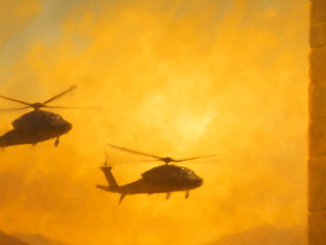
On a summer day above Athens, two firefighting helicopters collided while battling wildfires. A Danish and a Greek pilot lost their lives trying to save others. This tragic event touches something fundamental — the question of what it truly means to place yourself in service of a greater whole. For Freemasons, this moment of sacrifice raises spiritual questions deeply rooted in the tradition of the Craft. The Paradox of Sacrifice Firefighters, rescue workers, and pilots who battle wildfires live a daily reality most of us will never experience. They choose to run toward danger while everyone else runs away. That choice is not abstract. It is a concrete, physical act that demands courage, training, and something harder to name — an inner conviction that protecting others matters more than protecting yourself. In Freemasonry, we speak of shaping the rough ashlar. That shaping does not happen in isolation. It happens in relation to others, in the understanding that personal development gains meaning when it serves the community. The two pilots above Athens, each from a different country, worked together toward the same goal. Their nationality was irrelevant. What mattered was their shared commitment. What Service Really Means in Practice Spirituality in […]

Open book of Montaigne's Essays with Masonic rough ashlar and square symbolism
Michel de Montaigne – Content & Summary

Montaigne on Good and Evil: The Power of Our Judgment

What if pain is not an objective evil, but merely what we make of it? In his fourteenth essay from the first book of the Essays, Michel de Montaigne examines a bold proposition: our perception of good and evil does not depend on things themselves, but on the judgments we form about them. Rooted in the Stoic philosophy of thinkers like Epictetus and Marcus Aurelius, this insight strikes at the very heart of human freedom. If we can truly become masters of our own judgments, a path opens toward inner peace — even in the midst of turmoil. The Core Idea of the Essay Montaigne opens this essay with a reference to a classical dictum he attributes to Epictetus: it is not things that disturb us, but our judgments about those things. This thought forms the backbone of the entire argument. Montaigne explores how the very same event can be experienced in completely different ways by different people. What is unbearable suffering for one person turns out to be a challenge — or even a source of pride — for another. The question then arises: where does evil truly reside? In the event itself, or in the lens through which […]

Dramatic sky with lightning and sunlight symbolizing Masonic inner balance
Spiritual Traditions

Heat and Storms: What Weather Extremes Teach About Balance

Scorching daytime heat, violent thunderstorms, and nights that finally bring relief — it’s a weather pattern most of us simply endure. We crank up the air conditioning, flee from the first rumble of thunder, and breathe a sigh of relief when the cool air arrives. But what if we looked at this cycle not merely as a meteorological event, but as a mirror for our inner lives? In Freemasonry, nature has served as a teacher for centuries, and extreme weather offers a perfect opportunity to put that ancient wisdom into practice. Heat as a Test of Patience We all know the feeling: once temperatures climb past ninety degrees, we become irritable, our patience thins, and minor annoyances suddenly feel monumental. Extreme heat has a way of testing character like few other things can. In Freemasonry, we speak of working the rough ashlar — the slow, deliberate process of smoothing away our sharp edges. Intense heat acts as a kind of trial by fire, exposing exactly those unfinished corners we’d rather not see. Next time the temperature soars, pay conscious attention to how you respond. Do you snap at your partner? Lose your composure in the checkout line? These moments aren’t […]

Mammoth bones exposed along the Danube River banks during low water levels
Freemasonry & Society

Mammoth Bones in the Danube: What the Depths Reveal About Us

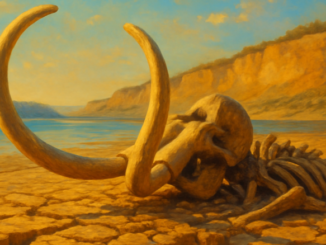
Imagine walking along the banks of the Danube River in Bulgaria and spotting something protruding from the mud — something that last saw the light of day tens of thousands of years ago. Mammoth bones, exposed by historically low water levels this summer. It’s the kind of discovery that stops you in your tracks and makes you wonder: what lies hidden beneath the surface of our world, our society, and ourselves? And what happens when those hidden layers are unexpectedly revealed? When the River Reveals Its Secrets The Danube has flowed through the heart of Europe for millennia, carrying far more than water. It carries history, culture, and apparently the remains of creatures that roamed these plains long before the first human ever set foot on its banks. This summer’s extreme drought dropped water levels so dramatically that these ancient relics became visible once more. It’s a striking image: what normally stays hidden beneath the current of daily life suddenly surfaces when conditions change. You may recognise this feeling from your own experience. There are moments in life when something forces you to look deeper than you’re accustomed to — a crisis, a loss, an unexpected event. Suddenly you see […]

Open book of Montaigne's essays beside Masonic square and compasses symbolizing reflection
Michel de Montaigne – Freemasonry & Connection

Montaigne and Connection: Steadfastness as a Bridge to Others

Picture yourself standing in a room full of strangers. Everyone is wearing a mask — not a literal one, but the invisible masks of social expectation. How often do you find yourself trying to impress rather than genuinely connect? In the sixteenth century, Michel de Montaigne wrote a penetrating essay on constancy that cuts straight to the heart of this question. His insights remain strikingly relevant for anyone reflecting on authentic human connection, and they resonate deeply with what Freemasons have pursued within their brotherhood for centuries. The Paradox of Unyielding Resolve In the twelfth essay of his first book, Montaigne examines what it truly means to be steadfast. He reveals how easily we confuse genuine inner stability with the outward appearance of immovability. That exterior can be deeply deceptive. Montaigne describes how people sometimes seem resolute out of pride or fear, while internally they are crumbling. True constancy, he argues, springs from self-knowledge and the acceptance of our human limitations. This distinction matters enormously for anyone thinking about connection with others. When you know and accept your own weaknesses, there is no need to perform. You can allow yourself to be vulnerable without losing your foundation. Montaigne saw this […]

Masonic symbols of compasses and square representing interpretation and meaning
Philosophy & Ethics

The Art of Interpretation: Finding Meaning in Life and Lodge

In 1784, Immanuel Kant penned his famous essay on the meaning of Enlightenment. His answer was simple yet profound: it is the capacity to think for oneself, to refuse to accept the world at face value and instead seek to understand it actively. What Kant described touches on something essential — the art of interpretation, or the process of giving meaning to what we experience and observe. Both in our everyday lives and within the walls of a Masonic lodge, this act of interpretation plays a central role, though it takes on distinctly different forms in each setting. What Interpretation Really Means Interpretation is the process through which we transform raw experiences, facts, and observations into something comprehensible and meaningful. It goes far beyond mere explanation. When we interpret, we connect what we perceive with our own values, our life history, and our worldview. The Greek philosopher Aristotle spoke about the necessity of knowing not only what something is, but also why it matters. Interpretation, then, is an active endeavor — it demands reflection and a willingness to pause at what often seems self-evident. In daily life, we interpret constantly, often without realizing it. A glance from a colleague, an […]

Open book with candle light symbolizing Montaigne and Masonic search for truth
Michel de Montaigne – Freemasonry & Connection

Montaigne on Prophecy and the Masonic Search for Truth

Imagine standing at a crossroads. To your left, someone whispers that the stars determine your fate. To your right, another promises that dreams reveal your future. And straight ahead lies a path with no signposts, illuminated only by your own inner light. Michel de Montaigne stood at precisely this crossroads centuries ago. His essay on prophecy is far more than a historical document — it is an invitation to reflect on how we relate to uncertainty, to truth, and to our own capacity to discern what truly matters. The Skepticism of a Searching Mind In his eleventh essay of the first book, Montaigne examines the phenomenon of prophecy with the curiosity that defines his entire body of work. He discusses divination, dream interpretation, and omens — not to condemn or embrace them, but to investigate. He quotes Cicero, who observed that out of a thousand predictions, perhaps two come true, and that people conveniently forget the failures. Montaigne wonders why humans are so eager to believe in a predetermined fate when daily experience teaches them, again and again, that the future refuses to be captured. This attitude of critical inquiry without prejudgment feels remarkably modern. Montaigne does not reject the […]

A rough ashlar stone beside a perfect cube symbolizing personal growth in Freemasonry
Personal Development & Leadership

When Big Plans Pause: Character in Times of Uncertainty

Imagine you’re about to take a major step in life. Everything is in place, the future stretches out clearly before you. And then, suddenly, everything grinds to a halt. An unexpected obstacle forces you into a standstill. This is exactly what recently happened to major media corporations when a multi-billion-dollar acquisition was paused due to legal complications. But what does such a moment of forced stillness actually reveal about who we are? And how do we handle uncertainty when our carefully laid plans are abruptly disrupted? The Test of Waiting When large organizations are forced to put their ambitions on hold, something fascinating happens beneath the surface. Behind the press releases and legal proceedings lies a deeper human drama. Executives, employees, and investors are all confronted with their own reactions to uncertainty. And it is precisely in those reactions that something essential about personality reveals itself. You may recognize this from your own life. The moment a job application is put on hold, a move is postponed, or a relationship enters uncertain waters. In these moments, your true character surfaces — not who you are when everything is going well, but who you are when the ground beneath your feet […]