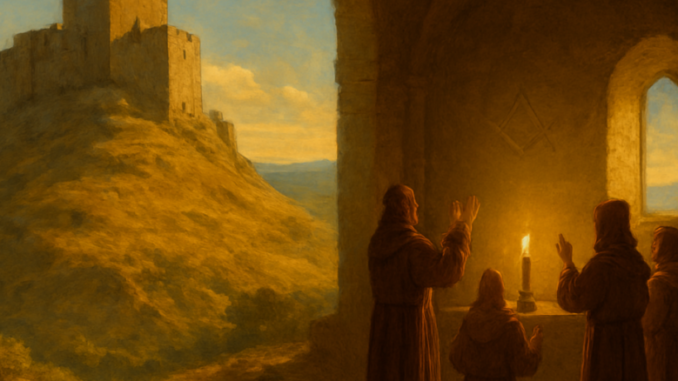
The Cathars were a unique and mysterious religious group that emerged in the 12th century in Southern Europe, particularly in the Languedoc region of modern-day France. Known for their simple lifestyle and spiritual beliefs, they were regarded as heretics by the Catholic Church. Despite persecution, their ideas and practices have fascinated historians and spiritual seekers for centuries.
What Did the Cathars Believe?
The Cathars’ beliefs were deeply spiritual and based on the idea of dualism. They believed the world was a battlefield between two forces: the good, represented by the spiritual world, and the evil, represented by the material world. For them, the physical world, including the human body, was created by an evil power they called the “false god” or “demiurge.”
In contrast, the soul was seen as a spark of divine light trapped in the material world. The Cathars believed their mission was to free the soul from its physical prison and return it to its spiritual origin. This belief shaped their practices and way of life.
How Did the Cathars Live?
The Cathars were known for their ascetic lifestyle. They rejected wealth, luxury, and material possessions, which they believed bound them to the physical world. Instead, they focused on living simply and spiritually.
Leaders of the Cathars, known as “Perfects,” served as spiritual guides and role models. They lived celibate lives, avoided eating meat, and often fasted. Ordinary followers, called “Believers,” could marry and lead more conventional lives but were encouraged to follow Cathar principles as much as possible.
Why Were the Cathars Considered Heretics?
The Cathars’ beliefs were in direct conflict with the teachings of the Catholic Church. They rejected many Catholic doctrines, including the authority of the Pope, the practice of baptism, and the idea of transubstantiation (the belief that bread and wine during Mass become the body and blood of Christ).
Additionally, they criticized the Church for its wealth and power. They argued that the Church had strayed from the teachings of Jesus. This criticism, combined with their growing popularity, led the Catholic Church to see the Cathars as a threat.
The Albigensian Crusade
In the early 13th century, Pope Innocent III launched the Albigensian Crusade to eradicate the Cathars. This brutal campaign devastated the Languedoc region. Towns were destroyed, and thousands of Cathars and their supporters were killed.
One infamous event took place in 1209 in the town of Béziers. When asked how to distinguish Cathars from Catholics, a crusader leader reportedly said, “Kill them all; God will know His own.” The massacre left the town in ruins and marked a dark chapter in the history of religious conflict.
The Inquisition and the End of the Cathars
After the crusade, the Catholic Church established the Inquisition to track down remaining Cathars. This campaign of interrogation and punishment further weakened the movement. By the end of the 14th century, they had largely disappeared, though their ideas continued to influence other spiritual movements.
What Can We Learn from the Cathars Today?
The Cathars’ emphasis on simplicity, inner truth, and spiritual freedom resonates with modern seekers. Their story reminds us of the importance of questioning established norms and seeking a personal connection with the divine.
In today’s materialistic world, the values of the Cathars offer an alternative perspective. Reflecting on their beliefs and practices can inspire us to live more authentically and align our actions with our deeper values.
Conclusion
The Cathars may have been a small and persecuted group, but their legacy lives on. Their courage to stand by their beliefs, even in the face of immense opposition, is a testament to the power of faith and conviction. By studying their history, we gain not only a better understanding of medieval Europe but also valuable insights into the enduring human quest for meaning and truth.
Copyright text & image: devrijmetselaar.nl
Texts are based on the ideas and content of the author of devrijmetselaar.nl, reviewed, corrected, and supplemented with the assistance of OpenAI. Images are created based on the ideas of the author of devrijmetselaar.nl using OpenAI/DALL-E.
Frequently Asked Questions
What is the connection between the Cathars and Freemasonry?
While the Cathars predated modern Freemasonry by several centuries, some scholars and esoteric traditions suggest that Cathar spiritual principles—particularly their emphasis on inner divine light and spiritual enlightenment—may have influenced later mystical movements including Freemasonry. Both traditions share a common thread of seeking spiritual truth beyond conventional religious authority and emphasizing the individual's direct connection to the divine.
Did Freemasons preserve Cathar teachings?
Some historical researchers propose that Masonic lodges, particularly in Southern France, may have preserved and transmitted certain esoteric Cathar concepts through their ritual work and symbolic teachings. Freemasonry's focus on spiritual illumination and its use of symbolic degrees bear some philosophical similarities to the Cathar quest for divine enlightenment, suggesting a possible cultural continuity.
How do Cathar beliefs compare to Masonic principles?
Both the Cathars and Freemasons valued the pursuit of spiritual truth and inner wisdom over material wealth and worldly power. Like Masons, the Cathars organized themselves into initiatory levels (Believers and Perfects) and emphasized personal moral development and spiritual transformation as paths to understanding the divine.
Why do Freemasons study the history of the Cathars?
Freemasons study the Cathars as part of their broader exploration of mystical and esoteric history, recognizing them as an important example of spiritual seekers who valued enlightenment and resisted institutional corruption. This historical knowledge enriches Masonic understanding of humanity's ongoing quest for truth and spiritual liberation across different cultures and time periods.

Be the first to comment