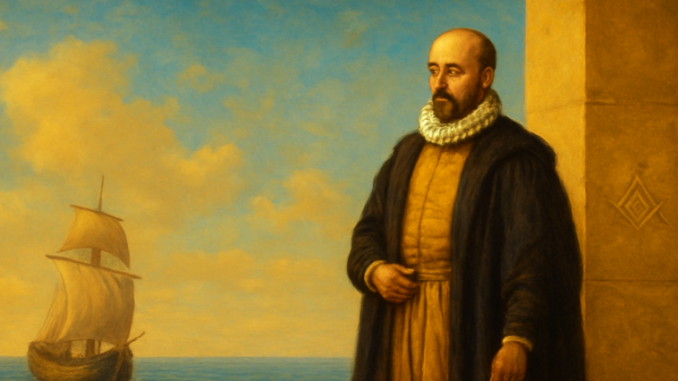
Why do we slam a door after stubbing our toe? Why do we shout at a frozen computer as though it were deliberately conspiring against us? In the fourth essay of the first book of his Essays, Michel de Montaigne explores this peculiar human behavior: our tendency to direct emotions at objects that have absolutely nothing to do with what actually troubles us. It is a short but penetrating piece that reveals something essential about the human psyche — and offers surprising insights for anyone committed to genuine self-knowledge.
The Core Idea: Emotions Cannot Hang in a Void
Montaigne opens with a paradox most of us will recognize immediately. The human soul, he argues, cannot let its passions dangle in empty space. Once an emotion has been aroused, it insists on finding an outlet — a target, a destination, an object. But what happens when the real object of our anger, grief, or frustration is out of reach? The soul invents a surrogate. It fabricates a false object onto which it can project its feelings.
Crucially, Montaigne does not treat this as a sign of weakness or irrationality. He suggests it is simply how human emotions work. Our passions demand somewhere to go. The soul cannot tolerate a vacuum and will fill it — even with a fiction — rather than endure the unbearable weight of directionless feeling.
Lessons from Antiquity: Kings Who Flogged the Sea
As he so often does, Montaigne draws liberally from classical history to illustrate his point. He recalls stories of warlords and kings who, unable to reach their enemies, vented their fury on lifeless objects. There is the famous account of a ruler who had the sea whipped because it destroyed his fleet. There are soldiers who shattered their own swords after a losing battle. On the surface, these anecdotes seem absurd, yet Montaigne treats them with striking compassion.
The soul cannot remain idle once set in motion, he suggests. It must discharge its force somewhere, even if the target is wildly inappropriate. This is not madness — it is simply what passions do when they have nowhere else to land.
Montaigne also describes how people in mourning sometimes turn away from loved ones, or seek comfort in objects that remind them of the deceased — a piece of clothing, a letter, a particular place. The emotion searches for an anchor, even when the true object of love or loss no longer exists in the world.
Philosophical Depth Behind the Everyday
What makes this essay remarkable is how Montaigne uses a seemingly trivial phenomenon to raise profound questions about self-knowledge and emotional honesty. If we can so easily redirect our feelings toward false objects, how certain can we be that we truly understand our own emotions? Perhaps the anger we feel toward a colleague is really frustrated ambition. Perhaps the irritation over a minor inconvenience is a mask for deeper grief we have not yet faced.
Nowhere does Montaigne insist we should eliminate this behavior. He observes it with his characteristic blend of curiosity and compassion. The question he implicitly poses is not how we can stop projecting emotions, but rather how we can become aware that we are doing it. Self-knowledge begins with recognizing our own patterns — and that recognition requires a willingness to look honestly at what is actually happening inside us.
Resonance with Masonic Thought
This essay resonates powerfully with the philosophical foundations of Freemasonry. Working on the rough ashlar — that central metaphor for self-improvement — demands exactly the kind of self-examination Montaigne describes. A Mason who does not know where his true flaws lie will chip away at the wrong places. Emotions that stray toward false objects are like a chisel striking the wrong stone: the effort is real, but the result misses the mark entirely.
Several Masonic principles align directly with Montaigne’s observations:
Self-knowledge as the foundation for all further growth. Without understanding the true source of our emotions, every subsequent effort at improvement rests on unstable ground.
Distinguishing appearance from reality in our inner life. The Lodge teaches us to look beyond surfaces — and this applies to our emotional world as much as to moral reasoning.
Honesty with ourselves as a precondition for honesty with others. If we cannot trace our own passions to their real origins, how can we be truly sincere with our brethren?
Compassion for human shortcomings without ignoring them. Montaigne’s gentle observation mirrors the Masonic ideal of meeting imperfection not with judgment, but with a constructive desire to improve.
Brotherly interaction in the Lodge requires this kind of emotional clarity. A brother who projects his frustrations onto fellow members without understanding what is really driving those feelings disrupts the harmony of the whole. The ritual work of Freemasonry offers a framework for arriving at such insights — a space for reflection where the soul can trace its wandering passions back to their true sources.
What This Essay Still Teaches Us Today
Nearly five centuries after Montaigne wrote it, this essay remains strikingly relevant. In an age when we are flooded daily with stimuli and our attention is constantly hijacked, it may be harder than ever to trace our emotions back to their real origins. Social media algorithms are designed to provoke emotional reactions — reactions often aimed at targets far removed from what truly matters to us. We rage at strangers online while the real source of our discomfort sits quietly unexamined.
Montaigne’s observation invites us to pause — to interrupt the automatic reaction before we lash out at the wrong object. We can ask ourselves: where does this emotion actually come from? Not to suppress it, but to understand it. That honest inquiry is the beginning of wisdom.
This fourth essay is compact but powerful. Montaigne shows us that even our most irrational moments reveal something meaningful about how the human soul operates. The question that lingers is not merely whether we are directing our emotions at the right objects, but whether we have the courage to investigate where those emotions truly want to go. In that investigation lies a path toward deeper self-understanding — a path that benefits both the individual seeker and the brotherly community of which he is a part.
Copyright text & image: devrijmetselaar.nl
Texts are based on the ideas and content of the author of devrijmetselaar.nl, reviewed, corrected, and supplemented with the assistance of OpenAI. Images are created based on the ideas of the author of devrijmetselaar.nl using OpenAI/DALL-E.
Frequently Asked Questions
How does Montaigne's essay on false objects relate to Masonic self-improvement?
Montaigne's exploration of emotional honesty directly supports Freemasonry's core commitment to self-knowledge and personal development. By understanding how we misdirect our emotions onto false objects, Masons can better examine their true motivations and work toward genuine self-mastery, a fundamental principle of the Craft. This practice of honest introspection aligns perfectly with the Masonic journey toward enlightenment and improvement of character.
Why would Freemasons study classical philosophy like Montaigne's essays?
Freemasonry has long valued philosophical inquiry and the wisdom of great thinkers as tools for spiritual and intellectual development. Studying works like Montaigne's Essays helps Masons deepen their understanding of human nature and morality, enriching their practice of the virtues central to the Craft. This engagement with philosophical texts strengthens the contemplative and educational aspects that make Freemasonry a path of continuous learning.
How can recognizing false emotional objects improve my Masonic practice?
By becoming aware that we often project emotions onto unworthy targets, Masons can cultivate greater self-awareness and emotional discipline—key virtues in the fraternity. This awareness helps members respond to conflicts with brothers more rationally and compassionately, understanding that apparent disagreements may mask deeper issues. Such insight supports the Masonic ideal of harmony and promotes more authentic relationships within the Lodge.
Does Freemasonry teach that emotions are bad or should be suppressed?
No; like Montaigne, Freemasonry recognizes emotions as natural and powerful aspects of human experience rather than obstacles to overcome. The Craft teaches members to understand and direct their passions wisely through reason and virtue, not to deny or eliminate them. This balanced approach—honoring emotions while mastering their expression—is central to the Masonic pursuit of harmony between body, mind, and spirit.


Be the first to comment