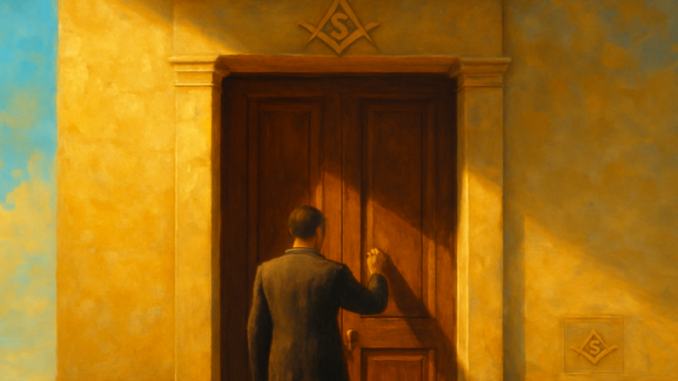
Freemasonry is one of the world’s oldest and most widely recognised fraternal organisations, with millions of members across the globe united by shared values of brotherhood, moral development, and charitable purpose. For many people, the idea of joining Freemasonry carries a sense of mystery and tradition — and rightly so. The organisation has a rich, centuries-old heritage that continues to shape its rituals and culture today. Yet despite its reputation for secrecy, the process of becoming a Freemason is more accessible and straightforward than most outsiders imagine. This page offers a thorough and honest exploration of how to join Freemasonry: what it involves, what candidates can expect, and why so many men around the world have chosen to walk through that symbolic door.
A Brief History of Freemasonry
To understand how to join Freemasonry today, it helps to understand where the organisation came from. Freemasonry as a formal institution traces its origins to the founding of the first Grand Lodge in London in 1717, when four London lodges came together at the Goose and Gridiron Alehouse in St Paul’s Churchyard. This event is widely considered the birth of modern speculative Freemasonry — “speculative” in the sense that the organisation adopted the symbolic tools and terminology of operative stonemasons not for practical building purposes, but as philosophical and moral metaphors.
The roots of Freemasonry, however, stretch back even further. Many historians point to the medieval guilds of stonemasons, who built the great cathedrals and castles of Europe. These craftsmen had their own customs, signs of recognition, and systems of initiation that distinguished apprentices from master craftsmen. Over time, as cathedral-building declined, the lodges began admitting “accepted” members — gentlemen and intellectuals who were drawn to the philosophical and fraternal aspects of the guild tradition rather than the trade itself. This transition from “operative” to “speculative” masonry is considered a defining moment in the order’s evolution.
By the eighteenth century, Freemasonry had spread rapidly across Europe and the Americas. Notable figures who were Freemasons include Benjamin Franklin, George Washington, Wolfgang Amadeus Mozart, and Voltaire. In the Netherlands — where devrijmetselaar.nl is based — Freemasonry has been active since the early eighteenth century, with the first Dutch lodge established in The Hague in 1734. The organisation has had a consistent, positive presence in Dutch society ever since, contributing to intellectual discourse, philanthropy, and civic life.
What Is Freemasonry, Really?
Before exploring how to join Freemasonry, it is worth clarifying what the organisation actually is — and what it is not. Freemasonry is a fraternal organisation that uses allegory, symbolism, and ritual to teach moral and philosophical lessons. Its central themes include the pursuit of truth, the importance of brotherly love, relief (meaning charity and care for others), and personal integrity.
Freemasonry is explicitly non-political and non-sectarian. It does not campaign for political causes or align itself with any particular religion, though it does require that members believe in a Supreme Being — a requirement that reflects the organisation’s historically spiritual (but not denominational) character. The specific nature of that belief is left entirely to the individual member.
What unites Freemasons across different lodges and countries is a shared system of degrees, rituals, and values. The organisation is structured around the lodge — the basic unit of Freemasonry — where members meet regularly to conduct ritual work, hold philosophical discussions, engage in charitable activities, and share fellowship. Each lodge operates under the authority of a Grand Lodge, which oversees lodges within a particular jurisdiction.
Who Can Join Freemasonry?
Basic Requirements
The question of who is eligible is central to understanding how to join Freemasonry. Requirements vary somewhat by jurisdiction and Grand Lodge, but several core criteria apply almost universally. In most traditional jurisdictions — including those in the Netherlands and much of Continental Europe — membership is open to adult men. Some jurisdictions, however, have created co-masonic or female lodges that welcome women or admit members regardless of gender. It is worth researching the specific Grand Lodge in your country to understand the applicable rules.
Beyond gender (where applicable), the most universal requirements are as follows:
- Age: Candidates must typically be at least 18 or 21 years of age, depending on the jurisdiction.
- Belief in a Supreme Being: Freemasonry is not a religion, but it does require that candidates hold a belief in a higher power. Atheists are generally not accepted under most traditional Grand Lodges, though some more liberal jurisdictions differ on this point.
- Good moral character: Candidates are expected to be of sound reputation and good character. The lodge will typically investigate a candidate’s background before admitting them.
- Free will: Membership must be sought freely and voluntarily. No one should be pressured or coerced into joining.
- Financial independence: Candidates must be able to support themselves and their families. Freemasonry should not create financial hardship.
What Freemasonry Is Not Looking For
It is equally important to clarify what Freemasonry does not seek in its candidates. Joining for social status, business networking alone, or personal gain is considered contrary to the spirit of the organisation. Masonic tradition holds that a candidate should approach the lodge with sincere curiosity and a genuine desire for self-improvement and brotherhood. Candidates who join with purely materialistic motivations often find that Freemasonry is not what they expected — and that is by design.
The Process of Joining Freemasonry
Making Contact
One of the most common misconceptions about Freemasonry is that you must be invited to join. While it is true that historically candidates were often introduced by existing members, most lodges today welcome direct enquiries from interested individuals. In practice, many people learn about Freemasonry through a friend, family member, or colleague who is already a member — but this is not a strict requirement.
The first step in learning how to join Freemasonry is simply to make contact with a local lodge or Grand Lodge. In the Netherlands, the Grand East of the Netherlands (Grootoosten der Nederlanden) serves as the governing body for most lodges and can direct prospective members to lodges in their region. Many lodges also host open evenings, information meetings, or public events that give interested individuals a chance to meet members and learn more about the organisation without any commitment.
The Petition or Application
Once a candidate has identified a lodge they wish to join and has had preliminary conversations with members, they will typically be asked to complete a formal petition or application for membership. This document collects personal information and asks the candidate to attest to meeting the basic membership requirements. In many lodges, the petition must be sponsored by one or more existing members who can vouch for the candidate’s character.
The petition is then read at a lodge meeting and a committee of members is appointed to meet with the candidate — often in his own home — to get to know him better. This interview process is not an interrogation; it is a friendly conversation designed to ensure that both the candidate and the lodge are a good fit for one another.
The Ballot
After the committee reports back to the lodge, members vote by secret ballot on whether to admit the candidate. This voting process is taken seriously in Freemasonry. Traditionally, a single negative vote (sometimes called a “black ball”) is sufficient to reject a candidate — though the exact rules vary by jurisdiction. This requirement for near-unanimous acceptance reflects the Masonic emphasis on harmony and brotherhood within the lodge. If a candidate is rejected, he is typically told only that the ballot was not favourable, without specific reasons given, in order to protect the privacy of the voting process.
Initiation: The First Degree
If the ballot is favourable, the candidate is invited to undergo initiation into the First Degree of Freemasonry, known as the degree of Entered Apprentice. This ceremony is the candidate’s formal entry into the organisation and marks one of the most memorable moments in any Freemason’s life.
The initiation ceremony is conducted within the lodge room, with the lodge “tyled” (meaning closed to outsiders) and all members present in their regalia. The ritual involves symbolic elements drawn from the stonemason tradition and includes obligations (solemn promises), symbolic gestures, and instruction in the basic principles and symbols of Freemasonry. The tone is serious and moving, designed to leave a lasting impression on the new member.
It is worth noting that the candidate enters the ceremony without prior knowledge of what will occur. This “darkness to light” journey — moving from ignorance toward knowledge — is a central metaphor of Masonic initiation. Candidates are advised beforehand that the ritual is not physically harmful or humiliating in any way.
The Three Degrees of Craft Freemasonry
Entered Apprentice
The First Degree, or Entered Apprentice, represents the beginning of the Masonic journey. At this stage, the new member begins to learn the language, symbols, and obligations of Freemasonry. The degree draws heavily on the allegorical figure of a young stonemason beginning his trade, learning the foundational tools and principles of his craft. In Masonic symbolism, these tools — the gavel, the chisel, the gauge — represent moral and intellectual virtues rather than physical instruments.
Fellow Craft
The Second Degree, or Fellow Craft, represents intellectual growth and the expansion of the Freemason’s knowledge. This degree traditionally emphasises the liberal arts and sciences — a reflection of the Enlightenment values that were deeply embedded in early speculative Freemasonry. The Fellow Craft is encouraged to broaden his understanding of himself and the world, using the tools of reason and study.
Master Mason
The Third Degree — that of Master Mason — is the highest degree in Craft Freemasonry and is considered the cornerstone of the entire Masonic system. The ritual of the Third Degree centres on the legendary story of Hiram Abiff, the chief architect of Solomon’s Temple, whose fidelity unto death became a powerful symbol of integrity, loyalty, and resurrection. Upon receiving the Third Degree, a Freemason is considered a full member of the brotherhood and may participate fully in the life of the lodge.
Beyond the three Craft degrees, many Masonic jurisdictions offer additional “appendant bodies” — organisations that confer further degrees for those who wish to explore deeper layers of Masonic philosophy and symbolism. Examples include the Ancient and Accepted Scottish Rite, the York Rite, and in the Netherlands, the Rite of Memphis-Misraïm. These additional degrees are entirely optional and represent further opportunities for learning and fraternal engagement.
Life Inside a Masonic Lodge
Regular Meetings
Once initiated, a Freemason becomes part of his lodge’s ongoing life. Lodges typically meet on a regular schedule — often monthly — to conduct ritual work for new candidates, discuss lodge business, and enjoy the company of fellow members. Meetings usually follow a structured format, opening and closing with established ritual, and may include educational presentations, charitable planning, or the conferral of degrees.
Festive Board
Many lodges conclude their meetings with a “festive board” — a shared meal or dinner where members gather informally, raise toasts, sing, and enjoy conversation. This social dimension is an important part of Masonic culture and reinforces the bonds of brotherhood that the organisation places at its centre. The festive board has its own traditions and customs that vary by jurisdiction and lodge.
Charitable Work
Charity has always been a fundamental expression of Masonic values. Freemasons around the world contribute millions to charitable causes each year, supporting hospitals, educational institutions, disaster relief efforts, and community organisations. Members are encouraged to participate in charitable activities both collectively through the lodge and individually in their own communities.
Personal Development
Beyond ritual and charity, Freemasonry offers its members a framework for ongoing personal development. Through the symbolism of the degrees, the study of Masonic philosophy, and the guidance of more experienced brethren, members are encouraged to reflect on their own character, improve their relationships with others, and strive toward the ideal of a better person. This emphasis on inner work is what distinguishes Freemasonry from many other social organisations.
Freemasonry in the Netherlands
In the Dutch context, Freemasonry has a particularly rich and honourable history. The Grand East of the Netherlands, founded in 1756, is one of the oldest Grand Lodges in the world and has maintained a tradition of intellectual openness and civic engagement throughout its history. Dutch Freemasonry has historically attracted writers, scientists, politicians, and artists who were drawn to its tolerant, humanist spirit.
Today, there are lodges active throughout the Netherlands, from Amsterdam and Rotterdam to smaller cities and towns. Dutch lodges typically work in the Dutch language and follow the rituals and protocols established by the Grand East. Prospective members in the Netherlands can contact the Grand East directly or visit devrijmetselaar.nl for information on lodges in their area.
Common Myths and Misconceptions
No discussion of how to join Freemasonry would be complete without addressing some of the persistent myths that surround the organisation. While it is true that Freemasonry has historically maintained a degree of privacy around its rituals and internal workings, the organisation is not a secret society in the conspiratorial sense. Its existence is fully public, its charitable activities are openly reported, and its basic principles are well documented.
The myth that Freemasons use their membership for corrupt business dealings or political influence is not supported by evidence and is contrary to the explicit rules of most Grand Lodges, which forbid members from using their Masonic connections for personal commercial gain. Similarly, the idea that Freemasonry is in conflict with religion is largely a historical artefact from periods of political tension; most mainstream religious denominations today take no official position against Masonic membership, and many devout individuals are active Freemasons.
Frequently Asked Questions
Do I need to know a Freemason before I can join?
Not necessarily. While having a contact within a lodge can smooth the introduction process, most lodges today are open to enquiries from interested individuals who have no prior Masonic connections. You can reach out to your national Grand Lodge or visit an open evening hosted by a local lodge to begin the process. The important thing is to express genuine interest and be prepared to get to know the members over time before formally applying.
How long does it take to become a full Freemason?
The timeline varies depending on the lodge and jurisdiction. After submitting a petition and completing the interview process, a candidate may wait several weeks or months before the ballot takes place. The three degrees of Craft Freemasonry are typically conferred over a period of months to a year or more, with time between each degree for the candidate to reflect on and study what he has received. There is no set schedule — the process is meant to be meaningful rather than rushed.
Is Freemasonry expensive to join?
Freemasonry does involve financial commitments in the form of initiation fees and annual membership dues. These vary significantly by lodge and country. In the Netherlands and much of Europe, fees are generally reasonable and are designed to cover the costs of running the lodge, purchasing regalia, and contributing to charitable funds. Lodges are aware that finances vary among members and are typically understanding of individual circumstances. The organisation is not intended to be a burden on its members.
Can I join Freemasonry if I am not religious?
This depends on the jurisdiction. Most traditional Grand Lodges, including those affiliated with the United Grand Lodge of England and the Grand East of the Netherlands, require that candidates hold a belief in a Supreme Being. This requirement is intended to underscore the moral and spiritual seriousness of the Masonic obligations, not to impose any specific theology. Members of virtually all major world religions — Christianity, Islam, Judaism, Hinduism, Buddhism, and others — are welcome. Some more liberal jurisdictions, particularly in France and Belgium (such as the Grand Orient de France), do not require this belief and admit members regardless of their religious views.
What should I expect from my first lodge visit?
If you are invited to visit a lodge as a prospective member or guest, you can expect a warm and welcoming atmosphere. Members will introduce themselves, explain aspects of the lodge’s history and activities, and answer your questions openly. You will not be pressured to join or to participate in anything you are not comfortable with. Many lodges hold informal information evenings specifically for interested visitors that do not involve any ritual whatsoever — simply conversation, food, and fellowship. This is an excellent opportunity to form your own impression of the organisation and decide whether it is right for you.
Taking the Next Step
If this overview has sparked genuine interest in learning how to join Freemasonry, the best next step is to reach out. Whether you contact a local lodge directly, attend an open evening, or simply begin reading more about the organisation’s history and philosophy, taking that first step is all that is required. Freemasonry does not recruit in the traditional sense — it invites those who are genuinely drawn to its values to come forward of their own accord. As the old Masonic expression goes, the door is open to those who knock.
At devrijmetselaar.nl, you will find resources, contact information, and guidance for those interested in Freemasonry in the Netherlands. Whether you are entirely new to the subject or have been curious for years, there is no better time than now to explore what this centuries-old brotherhood has to offer.
Read more about this topic
- All articles in this category: Joining & The Path Within
- How to Become a Freemason: The Complete Guide
- Joining Freemasonry: How Does It Work?
- How to Become a Freemason: From First Interest to Initiation
- The Life Story for the Committee of Inquiry in Freemasonry
- The Master's Home Visit: A Key Step in Joining Freemasonry
Frequently Asked Questions
What is the difference between operative and speculative Freemasonry?
Operative Freemasonry refers to medieval stonemason guilds who used their trade tools and initiation systems for practical building purposes. Speculative Freemasonry, which began formally in 1717, adopted these same symbols and terminology but as philosophical and moral metaphors rather than for actual construction work. Modern Freemasonry is speculative in nature, focusing on brotherhood, moral development, and charitable purpose.
Is the process of joining Freemasonry really as mysterious and difficult as it seems?
Despite Freemasonry's reputation for secrecy and tradition, the process of becoming a Freemason is more accessible and straightforward than most outsiders imagine. While the organisation does maintain certain traditions and rituals rooted in its centuries-old heritage, the actual path to membership is designed to be open to qualified candidates who share the organisation's values of brotherhood and moral development.
When was modern Freemasonry formally established, and how did it spread?
Modern speculative Freemasonry was formally established in 1717 when four London lodges met at the Goose and Gridiron Alehouse in St Paul's Churchyard to form the first Grand Lodge. By the eighteenth century, Freemasonry had spread rapidly across Europe and the Americas, with notable members including Benjamin Franklin, George Washington, and Wolfgang Amadeus Mozart. In the Netherlands, the first lodge was established in The Hague in 1734.

Be the first to comment