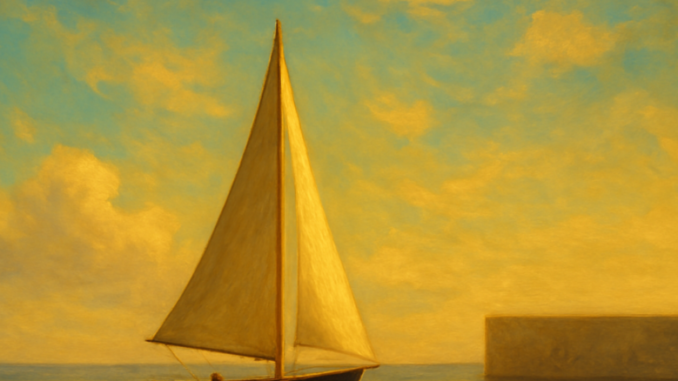
There are moments when the weight of the world feels unbearable — moments when you wonder whether humanity is simply destined for misery. Blaise Pascal, the brilliant seventeenth-century thinker, wrote from exactly that conviction. But what happens when another mind reads those same texts and arrives at radically different conclusions? Voltaire took up the challenge, and in his Philosophical Letters he delivered a response that not only ignited one of the great intellectual debates in Western thought but also articulated a philosophy of life that runs remarkably close to the heart of Freemasonry.
Two Thinkers, Two Visions of the Human Condition
Pascal saw humanity as a species torn between greatness and insignificance, trapped in a universe that appears deaf and blind to our existence. His famous Pensées breathe an atmosphere of existential unease: without God, man is lost, and even with faith, existence remains a precarious balancing act. When Voltaire read these fragments, he felt resistance rising within him — not because he underestimated Pascal’s intelligence, but because he held a fundamentally different view of what it means to be human.
Where Pascal emphasized human weakness, Voltaire saw possibility. Where Pascal warned against the vanity of worldly pursuits, Voltaire celebrated the value of work, science, and social connection. This was not shallow optimism but a deliberate philosophical stance — one that leaves room for growth, for improvement, for building something greater than yourself.
Voltaire’s Critique: Faith in Human Dignity
In his twenty-fifth philosophical letter, Voltaire dissects Pascal’s pessimism with surgical precision. He accuses Pascal of reducing humanity to a helpless creature, while history demonstrates what people are capable of when they cooperate and apply their reason. Voltaire does not write from arrogance but from a deep trust in human dignity and the power of community.
“Man is not born to mourn his fate, but to improve his circumstances through knowledge, virtue, and fraternal connection.”
This conviction forms the backbone of Voltaire’s critique. He does not deny that life can be difficult, but he refuses to accept that suffering is the final answer. Instead, he advocates for action, for engagement with the world, for cultivating relationships that elevate us. Voltaire’s philosophy is one of agency — not passive resignation, but active participation in the improvement of the human condition.
Brotherhood as an Answer to Existential Loneliness
This is where Voltaire’s thinking touches the very essence of Freemasonry. The Lodge is a place where people come together to work on themselves — but never in isolation. Brotherhood is not an abstract concept; it is a lived practice. You are surrounded by others who are undertaking the same search, asking the same questions, and wrestling with the same doubts. Pascal’s lonely figure, anxiously staring into the infinite silence of the universe, finds in Freemasonry a community that supports and sustains him.
Voltaire himself would have recognized this. He was initiated into the Parisian Lodge Les Neuf Sœurs (The Nine Sisters) shortly before his death. Although his membership was brief, the philosophy of the Craft fitted seamlessly with his own convictions: the value of reason, the importance of tolerance, and the belief in progress through cooperation. In the Lodge, the Enlightenment ideals that Voltaire championed throughout his life found their natural home.
Seeking Light Rather Than Fearing Darkness
One of the central themes in Freemasonry is the journey from darkness to light. The Entered Apprentice begins his path blindfolded, symbolizing the ignorance in which every person exists before consciously embarking on inner development. The light he receives is not a magical revelation but the result of study, reflection, and moral labor.
Voltaire’s response to Pascal follows this same trajectory. He refuses to remain standing in the darkness of doubt and despair. Instead, he chooses to follow the light of reason, however uncertain the path may sometimes be. This is not naive trust but a deliberate choice to embrace hope as a guiding principle. It is the same choice that every Freemason makes when he steps into the Lodge: the decision that the pursuit of light — of knowledge, of truth, of moral clarity — is worth the effort, even when the destination remains unclear.
Self-Reflection Without Self-Punishment
Pascal insisted on intense self-reflection, but his method carried something painful within it: a person had to acknowledge his own insignificance in order to reach God. Voltaire accepted the importance of self-examination but rejected the self-flagellation. Reflecting on your own shortcomings need not be an exercise in torment. It can also be a constructive process, aimed at improvement rather than humiliation.
In Freemasonry, you find precisely this balance. The rough ashlar that every Freemason symbolically works upon represents his own imperfection. But the goal is not to condemn yourself for that imperfection. The goal is, with patience and perseverance, to become a better version of yourself. Not perfect — better. The working tools of the Craft are not instruments of punishment but instruments of transformation. The gavel chips away what is superfluous; the chisel refines what remains. It is work done in a spirit of hope, not despair.
The Wager and the Workshop
Pascal’s famous wager argues that it is better to believe in God because if you are wrong you lose nothing, and if you are right you gain everything. Voltaire found this argument too calculating, too lacking in sincerity. Faith, he argued, should not be a gamble but an inner conviction born of genuine reflection.
Freemasonry does not require adherence to any specific creed, but it does ask for belief in something that transcends the material world — the Grand Architect of the Universe, however one may conceive of that presence. This is not a wager but a foundation upon which to build a life. Not out of fear of punishment or hope of reward, but from a sincere search for truth and connection. It is faith as a starting point for moral action, not as an insurance policy against cosmic uncertainty.
Key Takeaways for the Modern Freemason
The dialogue between Voltaire and Pascal offers several enduring lessons that resonate deeply with Masonic philosophy:
Human dignity over human weakness. Voltaire emphasizes what we are capable of, not what we lack. Freemasonry similarly calls on its members to recognize the potential within themselves and others — to see the finished ashlar hidden within the rough stone.
Brotherhood as antidote to loneliness. Pascal’s isolated individual finds companionship in the Lodge, where shared ritual and mutual support transform existential solitude into purposeful community.
Self-reflection as a path to improvement, not self-punishment. The Masonic journey encourages honest self-examination, but always in the service of growth — never as an end unto itself.
The pursuit of light is an active choice. Neither Voltaire nor Freemasonry advocates passive waiting. The journey from darkness to light requires effort, courage, and the willingness to keep moving forward even when the road is uncertain.
Voltaire’s dialogue with Pascal is far more than a historical debate between two great minds. It is an invitation to examine your own position. Do you choose the loneliness of doubt, or the warmth of connection? Do you keep staring into the darkness, or do you set out in search of light? Freemasonry does not pretend to have all the answers, but it offers something that Pascal’s solitary thinker never had: a brotherhood of fellow seekers, a set of tools for the work, and the enduring conviction that the journey itself — uncertain, demanding, and deeply human — is worth every step.
Copyright text & image: devrijmetselaar.nl
Texts are based on the ideas and content of the author of devrijmetselaar.nl, reviewed, corrected, and supplemented with the assistance of OpenAI. Images are created based on the ideas of the author of devrijmetselaar.nl using OpenAI/DALL-E.
Frequently Asked Questions
What were the main philosophical differences between Voltaire and Pascal regarding human nature?
Pascal viewed humanity as trapped between greatness and insignificance, emphasizing human weakness and existential despair without God. Voltaire, conversely, saw possibility and potential in humanity, believing that through reason, work, science, and social connection, people could improve their circumstances and build something greater than themselves. While Pascal warned against the vanity of worldly pursuits, Voltaire celebrated human dignity and the power of community cooperation.
How did Voltaire respond to Pascal's pessimism in the Philosophical Letters?
In his twenty-fifth philosophical letter, Voltaire critiques Pascal's pessimism by arguing that history demonstrates human capability when people cooperate and apply reason. Voltaire does not deny that life can be difficult, but refuses to accept suffering as the final answer. Instead, he advocates for action, engagement with the world, and cultivation of relationships. His response emphasizes human agency and active participation in improving the human condition rather than passive resignation.
What is the connection between Voltaire's philosophy and Freemasonry?
Voltaire's philosophy of optimism, human dignity, and fraternal connection runs remarkably close to the heart of Freemasonry. His belief that people can improve their circumstances through knowledge, virtue, and fraternal cooperation aligns with Masonic principles of brotherhood, mutual improvement, and the elevation of humanity through collective effort and enlightenment rather than despair or isolation.

Be the first to comment