
Ancient scroll and oil lamp symbolizing Seneca's Stoic wisdom on true wealth
Lucius Annaeus Seneca – Content & Summary

Seneca’s Letter XCVIII: True Wealth and the Masonic Path

It is early evening. A man sits at a simple wooden table, the glow of an oil lamp flickering across a scroll of parchment. He writes to a friend — not about affairs of state or rhetorical exercises, but about a question that has occupied his mind for years: does possession truly make a person happy? The man is Lucius Annaeus Seneca, and the letter he writes that evening is now known as Letter XCVIII from his collection Letters to Lucilius. It is a text that has lost none of its power, precisely because the temptation of material wealth has never disappeared. The Heart of the Letter: Possessions Are Only on Loan In Letter XCVIII, Seneca addresses his student and friend Lucilius with a message that is both comforting and confronting. His central thesis is that material wealth is not inherently reprehensible, but the wise person must never forget that possessions are merely on loan. Fortune — or Fortuna, as the Romans called her — can reclaim everything she has given in the blink of an eye. The person who truly understands this possesses their goods without being possessed by them. Seneca draws a clear distinction between two attitudes toward […]
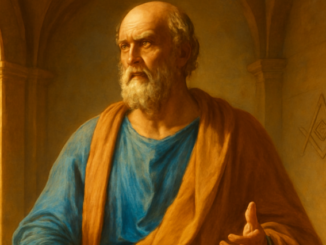

Ancient Roman wax tablet and toga evoking Seneca's philosophical letters
Lucius Annaeus Seneca – Content & Summary

Seneca Letter 98: True Wealth and the Stoic Path to Freedom

Picture a man in a simple toga, seated in the evening shadow of a Roman courtyard. While senators around him flaunt their estates and retinues of slaves, he picks up a wax tablet and writes to a friend that all such splendor is as fleeting as morning mist. That man is Lucius Annaeus Seneca, and what he commits to writing in his ninety-eighth letter to Lucilius touches on a question that still occupies many minds today: what is true wealth, and how do we distinguish it from mere appearance? The Heart of the Letter: Possessions as Illusion In Letter 98, Seneca addresses his student Lucilius with a direct message: material possessions offer no real security. He argues that most people anchor their happiness to what they own, while all of those things can be taken from them at any moment. Money, land, and luxury are gifts of fortune — and fortune is, by definition, unreliable. The Stoic philosopher urges Lucilius not to cling to what lies beyond his control, but instead to cultivate his inner faculties. There, in virtue and wisdom, lies the only wealth that no one can steal. Seneca draws a sharp distinction between using possessions and serving […]

Ancient scroll symbolizing Seneca's Stoic wisdom on true wealth and freedom
Lucius Annaeus Seneca – Content & Summary

Seneca’s Letter XCVIII: True Wealth and Inner Freedom

In the year 65 AD, Lucius Annaeus Seneca wrote a letter from his villa to his friend Lucilius — a letter that has lost none of its power in nearly two thousand years. In Letter XCVIII, the Stoic philosopher takes on a question that has occupied humanity for centuries: what is true wealth? Seneca’s answer is as simple as it is radical. Real wealth does not lie in what you possess, but in what you can do without. This letter, part of the eighth book of his Letters to Lucilius, offers a clear and timeless starting point for anyone reflecting on the relationship between possessions, happiness, and inner freedom. The Historical Context of the Letter When Seneca composed Letter XCVIII, he was in a remarkable phase of his life. He had withdrawn from political life at the court of Emperor Nero and was living in relative seclusion. The man who had once been among the wealthiest citizens of Rome — a man who owned palaces and estates — had turned his gaze inward. It was precisely from this vantage point, as someone who had known material abundance and was willing to let it go, that he spoke with authority about […]