Rough stone being shaped into a perfect ashlar symbolizing constancy
Michel de Montaigne – Philosophical Background

Montaigne on Constancy: The Philosophical Roots Revealed

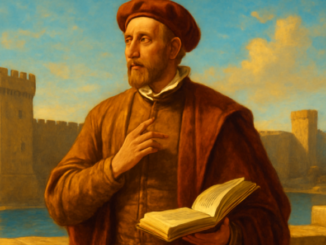
A stone that stands unmoved while the storm rages around it. This image, as familiar in the builder’s craft as in philosophy, strikes at the heart of what Michel de Montaigne explores in the twelfth essay of his first book: human constancy. But which thinkers whispered those ideas into his ear? Which philosophical traditions formed the foundation upon which he built his reflections on steadfastness? The answers lie hidden in a rich intellectual heritage reaching back to antiquity. The Stoic Foundation When Montaigne writes about constancy, he is unmistakably walking through the colonnades of the Stoa. Stoic philosophy, founded by Zeno of Citium in the third century BC, placed the imperturbability of the human mind at its center. For the Stoics, true virtue lay in accepting what lies beyond our control while mastering our own reactions. This idea forms the backbone of Montaigne’s approach to the subject. Particularly influential was the work of Seneca, the Roman philosopher and statesman whose letters and essays Montaigne studied with great enthusiasm. Seneca’s De Constantia Sapientis (On the Constancy of the Wise Man) addresses precisely the theme Montaigne would later rework. The wise man, Seneca argued, cannot truly be insulted or harmed, for his […]
Rough ashlar stone symbolizing personal growth in Freemasonry
Personal Development & Leadership

Bologna and the Wounded Soul: On Rage and Personality

When dozens of officers are injured during protests, when streets burn with collective outrage, an uncomfortable question arises: what happens to the human personality when a sense of justice tips over into destruction? The events in Bologna following a fatal arrest compel us not only to reflect on social tensions, but also on the fragile architecture of our own character. The Paradox of Righteous Anger Here lies a paradox that has fascinated philosophers throughout the ages: the person who rises up for justice can, in that very pursuit, become unjust. Those who protest against violence can themselves become violent. Those who cry out for humanity can lose their own humanity in the heat of the moment. This is not a judgment on protesters or authorities — it is an observation about the human condition itself. The ancient Greeks had a concept called thumos, roughly translated as “spiritedness” or “wrath.” Plato placed this element of the soul between reason and appetite — a force that could be both constructive and destructive. Thumos could drive someone to courageous deeds, but also to blind fury. The question was never whether this force existed, but how it could be mastered. Personality as Architecture In […]

Open book with Masonic square and compasses symbolizing truth and self-reflection
Michel de Montaigne – The Essays

Montaigne on Liars: Philosophical Roots of Truthfulness

Have you ever wondered why a lie can sting so deeply, even when its content is entirely trivial? There’s something fundamentally violated when someone knowingly speaks an untruth — and you feel it in your bones. Michel de Montaigne, the sixteenth-century French essayist, grappled with the very same question. In his ninth essay, “On Liars,” he explores not merely what lying is, but why it is so reprehensible. To understand how he arrived at his insights, we need to look at the philosophical traditions that shaped his thinking: Stoicism, Skepticism, and Renaissance Humanism. The Stoic Legacy: Truth as Virtue Montaigne’s deep aversion to lying is firmly rooted in Stoic philosophy. Thinkers like Seneca and Epictetus regarded truthfulness not as a social convenience, but as a cardinal virtue. For the Stoics, human beings were fundamentally rational creatures, and lying represented a betrayal of that rationality. When you lie, they reasoned, you disturb the natural order of the logos — the universal reason that binds all things together. Seneca, whose letters Montaigne studied with great devotion, wrote extensively about the relationship between one’s words and one’s character. A man who lies, Seneca argued, cannot truly know himself. This is precisely the insight […]

Open book with Montaigne essays and Masonic square and compasses symbol
Michel de Montaigne – The Essays

Montaigne on Negotiation: Philosophical Sources Explored

When you face a difficult choice, where do you turn for guidance? In the sixteenth century, a French nobleman asked himself the very same question. Michel de Montaigne wrote his fifth essay about military commanders who had to decide whether to negotiate during a siege. Behind this seemingly practical question lies a rich philosophical tradition that remains surprisingly useful today — not least for those who walk the path of self-improvement and moral reflection. The Question Beneath the Question At first glance, Montaigne is dealing with a military problem: is it honorable for a commander to launch a sortie while negotiations are underway? But read a little deeper, and you discover a timeless ethical puzzle. How do you act with integrity when circumstances are uncertain? When does caution become wisdom, and when does it slide into cowardice? These questions connect directly to everyday life. Imagine you are in conversation with someone about a conflict, and you suddenly discover new information that changes the game entirely. Do you use that knowledge? Do you hold back? The dilemma of the besieged commander is recognizable to anyone who has ever had to choose between tactical advantage and personal integrity. Stoic Roots of the […]

Montaigne's tower study with candles and manuscripts symbolizing self-reflection
Michel de Montaigne – The Essays

Montaigne and the Philosophy of Feelings That Transcend Us

It is a cool evening in 1572. In his tower study in Bordeaux, a man sits hunched over yellowed manuscripts. Candle wax drips onto passages of Seneca, the margins filled with his own annotations. He asks himself: why do we grieve for people we barely knew? Why do our feelings reach beyond our immediate experience? This seemingly simple question would grow into one of the most penetrating essays of the Renaissance. Michel de Montaigne drew upon a rich philosophical heritage for this third essay — a heritage that continues to inspire Freemasons in their pursuit of self-knowledge to this day. The Stoic Legacy: Emotions Under the Microscope Montaigne’s inquiry into the reach of human feeling is deeply rooted in Stoic philosophy. Seneca, the Roman philosopher and statesman, was his most important teacher from across the centuries. In his letters to Lucilius, Seneca explored at length how emotions can overwhelm us and how we might deal with them wisely. The Stoic ideal of apatheia — freedom from disruptive passions — fascinated Montaigne, but he did not embrace it fully. Instead, he used it as a starting point for his own, more nuanced view of emotional life. The Stoics taught that our […]