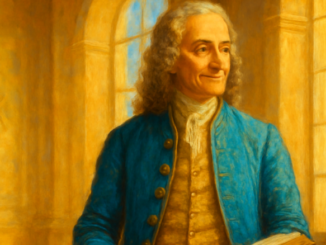
Voltaire on Virtue: The Philosophical Roots of His Thinking
In 1764, Voltaire published his Philosophical Dictionary, a collection of sharp essays tackling the great questions of human existence. His entry on virtue reveals a thinker deeply rooted in classical philosophy yet looking forward to a new kind of morality. What intellectual traditions shaped his thinking? And why do his ideas continue to resonate within Freemasonry centuries later? The Legacy of Stoicism Voltaire grew up intellectually immersed in the works of Seneca, Epictetus, and Marcus Aurelius. These Stoic thinkers had a profound influence on his conception of virtue. For the Stoics, virtue was not an abstract ideal but a practical way of life. They taught that a person could shape their character through rational self-discipline, regardless of external circumstances. In his essay on virtue, Voltaire echoes this conviction. He rejects the notion that virtue is innate or that it can only be obtained through divine grace. Instead, he emphasizes that every individual can develop their moral compass through personal effort. This message resonated powerfully in the eighteenth century, a time when the autonomy of the individual was becoming an increasingly central concern. Locke and the Empirical Approach to Morality Beyond the classical philosophers, Voltaire was profoundly influenced by John Locke, […]