Explore Enlightenment philosophy’s profound influence on Freemasonry, reason, and modern thought through critical analysis and historical perspectives.
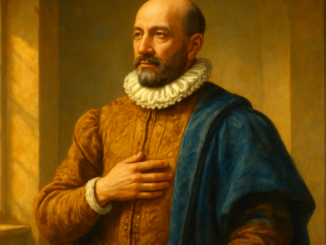
Michel de Montaigne – Freemasonry & Connection
Montaigne on Equality: How the Renaissance Shaped Brotherhood
In 1580, Michel de Montaigne published a remarkable essay that exposed the apparent inequality between people as little more than an illusion of outward appearances. Nearly a century and a half later, the first Masonic lodges would emerge in London, rooted in the very same conviction: that beneath the surface of rank, wealth, and lineage lies a fundamental equality shared by all. What connects this sixteenth-century thinker to a tradition that would not reach its full expression until much later? The answer lies not in direct influence, but in a shared quest to discover what truly makes us human. A Castle Lord Who Sought His Equals Michel de Montaigne was no revolutionary in the conventional sense. As a nobleman and lord of a château in southwestern France, he belonged to the privileged class of his era. Yet in his essay “On the Equality Among Us,” he turned his back on the conventions of his social standing. He observed how kings, popes, and emperors draped themselves in splendor and ceremony, but how those very same people — stripped bare by illness, nakedness, or fear — were utterly indistinguishable from the poorest peasant. For the sixteenth century, this was a radical observation: […]