Leonardo da Vinci's The Last Supper and its connection to Freemasonry
Symbolism & Rituals

Leonardo da Vinci and Freemasonry: Is Dan Brown Right?

In 1495, Leonardo da Vinci began work on one of the most discussed paintings in Western history: The Last Supper, a mural in the Dominican convent of Santa Maria delle Grazie in Milan. More than five centuries later, that same painting became the centerpiece of a worldwide obsession, fueled by Dan Brown’s bestselling thriller The Da Vinci Code. The novel suggests that Leonardo embedded hidden messages in his artwork — codes allegedly linked to secret societies and suppressed truths. But how much of this actually holds up when examined through the lens of real Masonic tradition? What Dan Brown Claims About Leonardo’s Hidden Language The Da Vinci Code presents Leonardo da Vinci as an initiate who deliberately concealed coded messages within his paintings. A central premise of Brown’s novel is that The Last Supper is not simply a depiction of a biblical scene, but contains an encrypted reference to a female figure and a secret society entrusted with guarding this knowledge. Brown places Leonardo in a lineage of alleged Grand Masters of a secret brotherhood, alongside figures such as Isaac Newton and Victor Hugo. This narrative struck a nerve. Millions of readers around the world began looking at museums, churches, […]
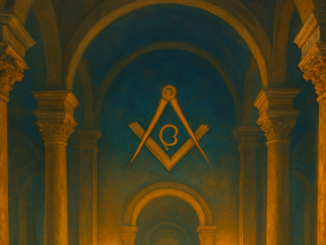
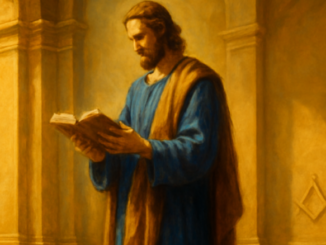
Leonardo da Vinci's Last Supper painting examined through a Masonic lens
Symbolism & Rituals

Leonardo da Vinci and Dan Brown: Fact or Fiction?

Few novels have stirred up as much speculation about hidden meanings in art as Dan Brown’s The Da Vinci Code. The book portrays Leonardo da Vinci as a master who embedded secret messages in his paintings — invisible to the untrained eye, yet legible to initiates. But how much of this is actually supported by evidence? And how does the novelist’s gaze compare to that of the Freemason, who is equally accustomed to looking beneath the surface of images? In this article, we place two perspectives side by side: that of the art historian and that of the Masonic tradition. Dan Brown’s Claims About Leonardo da Vinci In The Da Vinci Code, several bold assertions are made about Leonardo’s work. The most prominent of these centre on The Last Supper, the famous mural in Milan. According to the novel, the figure seated to the right of Christ is not the apostle John but Mary Magdalene. Brown further claims that Leonardo deliberately painted a V-shape between Christ and this figure as a reference to the sacred feminine. Beyond that, the novel suggests Leonardo was a member of a secret society known as the Priory of Sion, using his art to pass […]

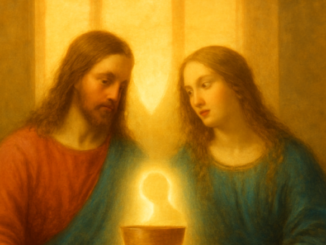
Leonardo da Vinci The Last Supper with symbolic Freemasonry elements
Symbolism & Rituals

Leonardo da Vinci in The Da Vinci Code: What Does It Claim?

A painting is never just pigment on canvas. Anyone who gazes long enough at Leonardo da Vinci’s The Last Supper senses something vibrating beneath the surface — something that resists easy articulation. It is precisely this ineffable feeling that Dan Brown’s novel The Da Vinci Code taps into. The book claims that Leonardo deliberately embedded hidden messages in his masterpieces, secrets understood for centuries by initiates and overlooked by the rest of the world. But what exactly does the novel assert, and what deeper layers emerge when we examine those claims through the lens of Freemasonry? The Painting as a Cipher In The Da Vinci Code, Dan Brown presents Leonardo da Vinci as a deliberate encoder. According to the story, the Florentine master planted hidden clues in works like The Last Supper and the Mona Lisa. These are not subtle aesthetic choices or stylistic quirks — they are carefully constructed visual codes designed to reveal an alternative reading of Christian history. The figure seated next to Christ in The Last Supper is said to be not a male apostle but Mary Magdalene. The V-shape formed between the two figures supposedly represents a feminine symbol. The absence of a chalice on […]

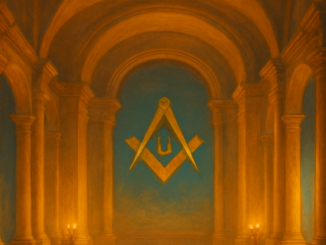
Masonic square and compasses with a chalice symbolizing the Holy Grail
Symbolism & Rituals

Mary Magdalene and the Grail: What Freemasonry Really Teaches

Ever since Dan Brown’s The Da Vinci Code captivated millions of readers, people have wondered whether Mary Magdalene truly represents the Holy Grail — and whether secret societies have been guarding this knowledge for centuries. The novel implies that Freemasons and related organizations are involved in concealing an explosive secret about the bloodline of Jesus. But what does Freemasonry actually teach? And how can modern seekers separate fascinating fiction from genuine, usable wisdom? The Theory from the Novel: A Brief Overview In The Da Vinci Code, Dan Brown presents the idea that the Holy Grail is not a chalice but a person: Mary Magdalene. According to this theory, she was the wife of Jesus and the mother of his children. The book suggests that secret societies — including the Priory of Sion — protected this knowledge through the ages. Freemasonry is mentioned in the same breath as a possible guardian of hidden truths. It is a compelling narrative that speaks to our deep human hunger for hidden knowledge and deeper meaning. But if you genuinely want to understand what Freemasonry is about, it is essential to separate fiction from reality. Not to strip away the magic, but to find something […]

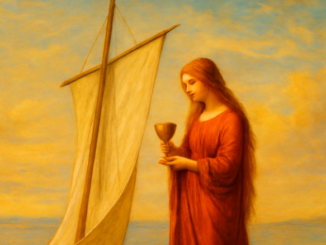
Ancient chalice symbolizing the Holy Grail alongside Masonic and historical imagery
Symbolism & Rituals

Mary Magdalene and the Holy Grail: Fiction or Fact?

Perhaps you’ve experienced it too: you’re halfway through Dan Brown’s The Da Vinci Code, and you find yourself wondering — could any of this actually be true? The claim that Mary Magdalene was the wife of Jesus and that the Holy Grail actually represents their bloodline is so ingeniously constructed that it almost sounds plausible. But how much of this theory holds up under scrutiny? In this article, we examine the historical facts, the exaggerations, and the pure fiction behind one of the most talked-about claims in popular culture. Dan Brown’s Central Claim In The Da Vinci Code, Dan Brown presents the theory that Mary Magdalene was not merely a follower of Jesus, but his wife. According to the novel, she fled to France after the crucifixion while pregnant, and their bloodline continued through the centuries. The Holy Grail, then, is not a chalice at all — it is a metaphor for the womb of Mary Magdalene and the royal lineage that descended from her. It’s a bold hypothesis that has captivated millions of readers around the world. But how does it measure up against what historians and biblical scholars actually know? What the Historical Sources Actually Say The canonical […]

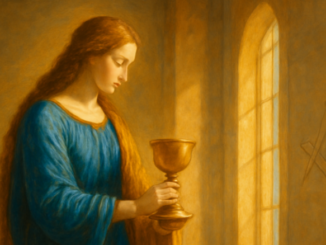
Vrijmetselarij - Maria Magdalena en de Heilige Graal volgens The Da Vinci Code
Symbolism & Rituals

Mary Magdalene and the Holy Grail in The Da Vinci Code

You probably know the image well: a chalice shrouded in mystery, the object of centuries-long quests. But what if the Holy Grail isn’t a cup at all? In his worldwide bestseller The Da Vinci Code, Dan Brown presents a radically different reading of this symbol — one that places Mary Magdalene at its very center. What exactly does the book claim, and how can seekers of truth approach these ideas in a meaningful, practical way? The Central Claim of the Book The Da Vinci Code, written by Dan Brown and published in 2003, revolves around a spectacular thesis: the Holy Grail is not a physical cup said to have caught the blood of Christ, but a metaphor for Mary Magdalene herself. According to the narrative Brown presents, she was not merely a follower of Jesus but his wife and the bearer of his bloodline. The Grail, then, refers to the lineage continued through her. Brown weaves this claim through his plot by way of a secret society that has allegedly guarded this truth for centuries. He points to the works of Leonardo da Vinci — most notably The Last Supper — arguing that the figure seated next to Jesus is […]

Masonic square and compasses contrasted with fictional secret society symbols
Symbolism & Rituals

The Priory of Sion: Fiction Unmasked from a Masonic Perspective

It’s a quiet evening after lodge. A brother settles into his chair, coffee in hand, and asks with a half-smile: “So, that Priory of Sion from Dan Brown’s book — is that basically the same thing as Freemasonry?” The question lingers. It’s one many Freemasons have heard before, because ever since The Da Vinci Code hit bookshelves, all secret societies tend to get lumped together in the public imagination. But does that picture hold up? And what can Freemasons learn from the stubborn confusion between fiction and reality? The Origins of a Modern Myth In The Da Vinci Code, Dan Brown presents the Priory of Sion as an ancient secret society dating back to the Crusades. According to the novel, this organization guards an explosive secret about the bloodline of Jesus Christ. Illustrious figures from art and science are listed as its supposed Grand Masters: Leonardo da Vinci, Isaac Newton, Victor Hugo. It sounds fascinating — almost too good to be true. And that is precisely the point. The historical reality is far more mundane. The Priory of Sion was founded in 1956 in the small French town of Annemasse by Pierre Plantard, a man with a highly questionable reputation. […]

Ancient documents and magnifying glass symbolizing the Priory of Sion fact-check
Symbolism & Rituals

The Priory of Sion: Fact or Fiction? A Fact-Check

When Dan Brown published The Da Vinci Code in 2003, it became an international phenomenon almost overnight. Central to its plot was a centuries-old secret society called the Priory of Sion, allegedly founded in 1099 and led by grand masters including Leonardo da Vinci and Isaac Newton. The novel even opened with a page titled “Facts,” lending an air of historical authority to these claims. Millions of readers took them at face value. But what do historians and archivists actually have to say? It is time for a thorough fact-check. The Origin: Not Medieval, but Twentieth Century The real history of the Priory of Sion does not begin in 1099. It begins in 1956. That year, a Frenchman named Pierre Plantard registered an organization called the Prieuré de Sion with the French registry of associations. According to the official filing, its purpose was remarkably modest: a local civic group focused on housing improvement in the Annemasse region. There was no mention of crusaders, Knights Templar, or guardians of a sacred bloodline. Plantard himself turned out to be a figure with a deeply troubled past. French researchers have established that during the 1940s he was involved with antisemitic organizations under the […]

Ancient manuscript and magnifying glass symbolizing the Priory of Sion mystery
Symbolism & Rituals

The Priory of Sion in The Da Vinci Code: Fact or Fiction?

You may have read the book or watched the movie: Dan Brown’s The Da Vinci Code spins a breathtaking tale about a secret organization that has supposedly guarded an explosive secret for centuries. The Priory of Sion sits at the very heart of the story. But what exactly does the book claim? And more importantly, how can you, as a critical reader, evaluate such claims for yourself? In this article, we unravel the central assertions of this bestselling novel and give you practical tools to separate fact from fiction. What Does The Da Vinci Code Claim About the Priory of Sion? In The Da Vinci Code, Dan Brown portrays the Priory of Sion as an ancient secret brotherhood dating back to the era of the Crusades. According to the story, this organization was founded to protect an explosive secret: the alleged bloodline of Jesus Christ and Mary Magdalene. The book suggests that famous historical figures such as Leonardo da Vinci, Isaac Newton, and Sandro Botticelli served as Grand Masters of the Priory. Brown presents a fascinating theory within his novel: through secret documents and symbols, the Priory supposedly passed this secret down through the centuries. Artworks, architecture, and hidden codes […]

The Da Vinci Code movie scene featuring symbolism and secret society themes
Culture & Media

The Da Vinci Code (2006): Symbolism, Secrets & Freemasonry

The Da Vinci Code (2006), directed by Ron Howard, is a thrilling adaptation of Dan Brown’s blockbuster novel. The film takes viewers on a gripping journey through hidden symbolism, ancient secrets, and the shadowy world of secret societies. Starring Tom Hanks as professor Robert Langdon and Audrey Tautou as cryptologist Sophie Neveu, it masterfully weaves together history and mystery in a way that continues to captivate audiences nearly two decades after its release. The Story: Unlocking Hidden Truths When the curator of the Louvre, Jacques Saunière, is mysteriously murdered, he leaves behind a trail of cryptic clues. Robert Langdon and Sophie Neveu are drawn into a dangerous quest to uncover a hidden truth — one that could shake the very foundations of Christianity. Their journey takes them through iconic locations and layers of historical secrets, revealing hidden symbolism and the workings of ancient secret societies. The tension escalates as they come into contact with powerful organizations such as the Priory of Sion and Opus Dei, each with their own agenda and centuries-old mission. Freemasonry Connections in The Da Vinci Code While the film focuses specifically on the Priory of Sion, there are unmistakable parallels with Freemasonry. Themes such as hidden […]