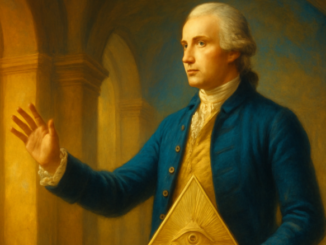
Historical illustration representing the Bavarian Illuminati and Freemasonry
Illuminati

The Bavarian Illuminati: Facts and Misconceptions

On a cold winter evening in 1776, a young professor in Ingolstadt sat by candlelight, committing his thoughts to paper. Adam Weishaupt, just twenty-eight years old, dreamed of founding a society that would spread the ideals of the Enlightenment among like-minded thinkers. What he began that evening would still capture imaginations two centuries later — though often tangled up in wild speculation and fundamental misunderstandings. A Professor With a Vision Adam Weishaupt held a professorship in canon law at the University of Ingolstadt in Bavaria. Frustrated by what he perceived as religious narrow-mindedness and political oppression, he founded a secret society on May 1, 1776. He initially called it the Order of the Perfectibilists, later renaming it the Order of the Illuminati. Its goals were ambitious: to promote rational thinking, combat superstition, and cultivate moral improvement among its members. The structure of Weishaupt’s order was layered, with multiple degrees of initiation. Members often knew each other only by code names. Weishaupt himself adopted the name Spartacus, after the Roman gladiator who led a slave revolt. This secrecy was not a sign of sinister intent — it was a practical necessity in a Bavaria where freethinking could carry serious consequences. The […]

Owl of Minerva symbol representing the Bavarian Illuminati and Enlightenment
Illuminati

The Bavarian Illuminati: Adam Weishaupt and the Light of 1776

On the evening of May 1, 1776, a small group of students gathered in the Bavarian city of Ingolstadt. Led by twenty-five-year-old professor Adam Weishaupt, they founded a society that would influence the course of the European Enlightenment — and leave an indelible mark on the Western imagination. The Order of the Illuminati was a child of its time, born from the same spirit of reason and spiritual self-improvement that animated Freemasonry. But what do we actually know about this movement, and where does myth take over from history? The Spark: Ingolstadt, 1776 Adam Weishaupt was born in 1748 in Ingolstadt, a city where the Jesuit order held enormous sway over education. When the Jesuits were suppressed in 1773, the young Weishaupt became professor of canon law at the university — the first non-Jesuit ever to hold that position. This detail matters: Weishaupt came of age in an intellectual climate defined by the tension between religious authority and Enlightenment ideals. The founding of the Order of the Illuminati on May 1, 1776, was no spontaneous whim. Weishaupt had spent years immersed in the philosophers of the Enlightenment. The works of Voltaire, Jean-Jacques Rousseau, and the French Encyclopédistes echoed through his […]

Historical illustration representing the founding of the Bavarian Illuminati in 1776
Illuminati

The Bavarian Illuminati: Origins and Spiritual Roots in 1776

On May 1, 1776 — while the American Declaration of Independence was taking shape across the Atlantic — a young professor in the Bavarian city of Ingolstadt founded a society that would captivate the imagination of historians and conspiracy theorists alike for centuries to come. Adam Weishaupt, a professor of canon law and former pupil of the Jesuits, established the Order of the Perfectibilists, later known as the Illuminati. This article examines the historical facts behind this eighteenth-century society and explores the spiritual ideals that connected Weishaupt’s vision to the Freemasonry of his era. The Intellectual Climate of the Late Eighteenth Century To understand the birth of the Bavarian Illuminati, we need to step into the Bavaria of the 1770s. The electorate was governed by a deeply conservative Catholic regime, even as the Enlightenment flourished elsewhere in Europe. Philosophers like Voltaire and Jean-Jacques Rousseau were spreading ideas about reason, natural rights, and religious tolerance. These ideas inevitably reached the university town of Ingolstadt, where the young Weishaupt immersed himself in ancient philosophy and contemporary Enlightenment thinkers. Weishaupt, born in 1748, had been orphaned at the age of five and entrusted by his godfather to the Jesuit order for his education. […]