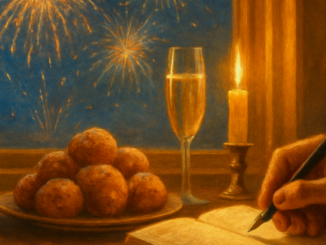
New Year fireworks symbolizing Masonic reflection and renewal at midnight
Spiritual Traditions

Old & New Year: A Time for Reflection and Renewal

The turning of the year is one of those rare moments that invites us to pause — to look back at the road we’ve traveled and to gaze ahead at the path yet to unfold. New Year’s Eve is more than just the final page of a calendar. It is a deeply personal threshold, a symbolic crossing from what was into what could be. It is a time for honest reflection, for releasing what no longer serves us, and for setting intentions that align with who we truly wish to become. The Deeper Meaning Behind Our Traditions Fireworks lighting up the midnight sky, champagne glasses raised in celebration, the joyful company of loved ones — these familiar rituals give the night its festive character. But beneath the surface of these traditions lies a deeper message. Fireworks remind us that even in the darkest of times, light and energy can break through. Gathering with those we love symbolizes our deep need for connection and our shared wish for happiness. And the countdown itself serves as a powerful reminder that every single second holds within it the potential for a new beginning. Reflection: Shining a Light on the Past Year The end […]

Desert wilderness path symbolizing the spiritual journey in Freemasonry
Religion

Numbers: The Spiritual Journey Through the Wilderness

The Book of Numbers from the Old Testament tells the story of the Israelites’ journey through the wilderness on their way to the Promised Land. Rich in symbolism, this ancient text offers profound lessons on leadership, trust, and perseverance. For Freemasons, Numbers serves as a powerful metaphor for the spiritual journey we all undertake — from darkness and ignorance toward light and enlightenment. In this article, we explore how this biblical book can inspire us on our own Masonic path. What Is the Book of Numbers? Numbers is the fourth book of the Bible and chronicles the forty-year journey of the Israelites through the desert wilderness. It documents the challenges, conflicts, and miracles that occurred along the way. The book’s English name derives from the two censuses — or “numberings” — of the people that it records. However, the central theme runs far deeper than mere counting: it is a story of growth through trial, of a people being shaped and refined by their experiences in an unforgiving landscape. The Wilderness as a Test of Faith The wilderness journey symbolizes a period of profound transformation and self-discovery. In Masonic thought, the desert represents the inner quest for truth — that […]

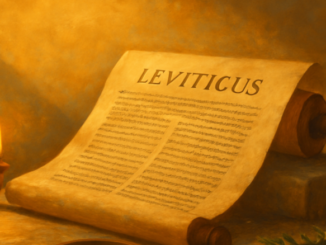
Open Bible showing the Book of Leviticus with Masonic symbolism
Spiritual Traditions

Leviticus: A Moral Guide for Spiritual Purification

The Book of Leviticus, the third book of the Old Testament, stands as one of the most complex and symbolically rich texts in the Bible. Focused on rituals, laws, and offerings designed to promote a holy way of life, Leviticus holds a particular fascination for Freemasons. Its themes of discipline, dedication, and purification resonate deeply with the Masonic journey toward spiritual enlightenment. In this article, we explore how Leviticus can inspire personal and moral growth — not just as a religious text, but as a timeless guide for those walking the path of self-improvement. What Is the Book of Leviticus? Leviticus is the third book of the Bible and contains the rules and ordinances that Moses conveyed to the Israelites. At first glance, many of these laws appear strictly ritualistic or culturally specific to the ancient world. Yet beneath the surface, they carry universal lessons about purity, devotion, and justice — themes that transcend time and culture. For the thoughtful reader, and especially for Freemasons, Leviticus offers far more than a historical code of conduct; it provides a framework for understanding the relationship between outward discipline and inward transformation. Holiness and Purification One of the central themes running through Leviticus […]

Candlelit Masonic lodge with checkered floor evoking the Exodus journey
Religion

Exodus: The Journey to Freedom and Inner Growth

Picture a lodge draped in silence, candlelight flickering across the black-and-white checkered floor. A brother reads aloud from the Book of Exodus — the story of a people who cast off their chains in the dead of night and set out into the wilderness, moving toward something they cannot yet name. The words hang in the air, and everyone in the temple feels it: this story is not merely about an ancient people in a distant land. It is about us. What makes the story of Exodus so indelible? Why does this tale of slavery, liberation, and an endless trek through the desert still move us, thousands of years after it was first told? And what does a Freemason gain by returning to this ancient narrative again and again — not as a historical document, but as a mirror for the soul? Egypt as Inner Captivity In the Book of Exodus, everything begins with slavery. The Israelites groan under the yoke of Pharaoh, trapped in a system that reduces them to mere instruments. Within Freemasonry, this image is far more than a historical fact — it is a powerful allegory. Egypt symbolizes every form of inner captivity: the chains of […]

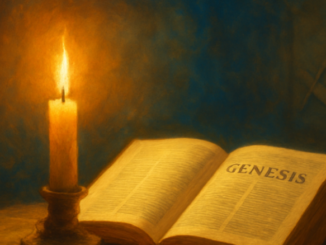
Open Volume of the Sacred Law displaying Genesis in a Masonic lodge setting
Religion

Genesis and Freemasonry: The Deep Symbolism of the Beginning

A candle flickers. A man sits alone in a dimly lit room, a heavy book open on his lap. His eyes trace the very first lines of the Old Testament — words he has read dozens of times before. Yet tonight, they feel as though they are speaking to him for the first time. Not as an ancient story about the origin of the world, but as a mirror posing a single, penetrating question: where does your creation begin? It is a question that has echoed through Masonic lodges for centuries — not as a theological puzzle, but as an invitation to self-examination. The Book of Genesis is one of the most widely read texts in human history, revered across diverse faith traditions. But what makes this creation narrative so particularly meaningful to the Freemason? The answer lies in its imagery. Genesis speaks in symbols that resonate directly with Masonic philosophy: the passage from darkness to light, from chaos to order, from unconscious existence to a life lived with awareness and intention. Becoming: Every Beginning as a Threshold Experience The word Genesis derives from the Greek for “becoming” or “origin.” That alone is telling. In Freemasonry, the concept of a […]

Ancient open book with symbolic garden imagery representing Masonic wisdom
Christianity

Song of Solomon & Symbolism: Love, Wisdom, and Freemasonry

Why would a Freemason spend time studying an ancient love poem from the Bible? The Song of Solomon contains no moral law, no historical narrative, no prophecy. It is pure poetry — brimming with longing, beauty, and mysterious imagery. And yet, hidden within that imagery are symbols that touch the very heart of Freemasonry. Let’s explore this remarkable book and the surprising connections it holds for the Craft. What Is the Song of Solomon? The Song of Solomon — sometimes called the Song of Songs or Canticles — is the twenty-second book of the Old Testament. It consists of lyrical dialogues between a bridegroom and a bride, interspersed with choruses and interludes. On the surface, it reads as a collection of love poems filled with sensory descriptions: the fragrance of myrrh, the taste of wine, the sight of blossoming vineyards. But is that really all there is? For centuries, scholars and theologians have searched for deeper layers beneath the poetic language. In the Jewish tradition, it was read as an allegory for the relationship between the Eternal and His people. In Christian circles, the bride was seen as the Church, the soul, or humanity itself seeking union with the Divine. […]

Open book of Ecclesiastes with Masonic symbols representing wisdom and light
Christianity

Ecclesiastes and Freemasonry: Wisdom in the Face of Impermanence

You probably know the feeling. You work hard toward a goal, finally reach it, and then find yourself wondering: was that really it? That quiet doubt, that subtle emptiness after an achievement — it has been described for thousands of years. The Book of Ecclesiastes confronts you with exactly this experience. And surprisingly, this ancient wisdom text touches on something that has occupied Freemasons for centuries: the question of what truly matters in a life defined by impermanence. An Ancient Voice That Still Resonates Ecclesiastes stands apart within the Old Testament. Where other books offer direction and certainty, Ecclesiastes asks questions. The author, who presents himself as a wise teacher, examines what life really means. He tries everything — wealth, pleasure, labor, knowledge. And each time, he arrives at the same conclusion: all is vanity, or as the Hebrew puts it, hevel. The word literally means vapor, breath — something that vanishes the moment you try to grasp it. Consider how radical that message was in an era when success and prosperity were seen as signs of divine favor. The Preacher dares to say aloud that the wise man dies just like the fool. That your efforts may disappear without […]

Freemasonry symbols representing unity and respect among world religions
Religion

Freemasonry and Religion: A Bridge of Connection and Respect

Freemasonry is an ancient fraternity built on universal values such as truth, brotherhood, and morality. While it is not a religion, it maintains a unique and fascinating relationship with religions around the world. How does Freemasonry position itself in relation to faith traditions, and what makes its spiritual vision so distinctive? Freemasonry: Not a Religion, But Deeply Spiritual One of the most common misconceptions about Freemasonry is that it is a religion. It is not. Freemasonry does not require its members to hold any specific religious belief. What it does ask is that members believe in a Supreme Being — often referred to as the “Grand Architect of the Universe” — a universal concept of a higher power that transcends any single faith tradition. This openness allows people from all religious backgrounds to participate and find common ground. The rituals and symbols used in Freemasonry are not religious in the traditional sense. Instead, they serve as tools for self-reflection and moral growth. This approach provides a shared foundation for members who may hold vastly different religious convictions, creating a space where spiritual exploration is encouraged without imposing any doctrine. How Freemasonry Relates to World Religions Respect for Diversity: Freemasonry recognizes […]

Symbols of Freemasonry and New Age spirituality representing universal connection
Religion

New Spirituality and Freemasonry: A Path to Universal Connection

Individual spirituality is gaining momentum across the modern world. New spiritual movements — often grouped under the umbrella of New Age — offer flexible and deeply personal approaches to finding meaning and purpose. But how do these contemporary spiritual currents relate to Freemasonry, a tradition that similarly emphasizes freedom, growth, and self-discovery? New Spiritual Movements: The Quest for Personal Meaning New spiritual movements are inherently eclectic. They blend elements from Eastern philosophies, Western psychology, and traditional religions into personalized frameworks for understanding the self and the world. Meditation, yoga, crystal healing, astrology, and energy work are just a few of the practices that have gained widespread popularity within these movements. A defining characteristic of these spiritual currents is their emphasis on personal development. Rather than following prescribed dogmas, practitioners forge their own path toward enlightenment and self-knowledge. This freedom of choice resonates with a growing number of seekers who feel confined by more rigid religious structures. Freemasonry: A Traditional Yet Flexible Approach Freemasonry shares with new spiritual movements a deep commitment to personal growth and introspection. While the Craft works with centuries-old rituals and rich symbolism, it also allows ample room for individual interpretation. Much like New Age practices, the […]

Buddhist meditation and Masonic symbols representing spiritual harmony
Religion

Buddhism and Freemasonry: A Shared Path to Inner Peace

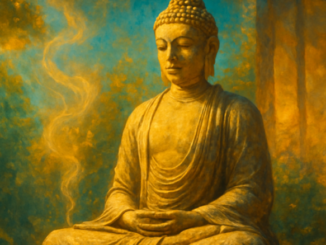
Buddhism, with its emphasis on meditation and enlightenment, has steadily grown in popularity across the Western world. At the same time, Freemasonry continues to offer a unique framework for spiritual growth and self-discovery. While these two traditions differ significantly in origin, they share a remarkable devotion to introspection, ethical living, and personal development. For those drawn to both paths, the intersections between Buddhism and Freemasonry reveal a rich landscape of shared wisdom. Buddhism: The Way of Meditation and Wisdom Buddhism is more than a religion — it is a philosophy and way of life that encourages individuals to understand and transcend suffering. At its core lie foundational teachings such as the Eightfold Path, the Four Noble Truths, and the disciplined practice of meditation. These principles guide practitioners toward clarity, compassion, and ultimately, enlightenment. Buddhist temples and meditation centers around the world serve as sanctuaries for reflection and spiritual growth. The serene images of the Buddha, the fragrance of incense, and the resonant tones of singing bowls create environments that foster harmony and inner balance. For many seekers, Buddhism offers a practical, experience-based approach to understanding the mind and finding peace. Freemasonry: A Universal Spiritual Journey Freemasonry offers a symbolic path […]

Hindu temple symbolism alongside Freemasonry symbols representing spiritual harmony
Religion

Hinduism and Freemasonry: Rituals and Spiritual Harmony

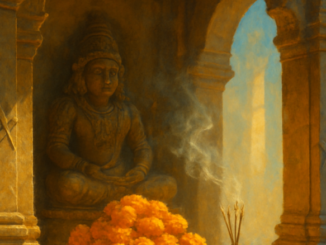
Hinduism is one of the oldest religions in the world, carrying with it a vast tradition of ritual, philosophy, and spiritual depth. Freemasonry, an age-old fraternity built on universal values, shares a remarkable number of principles with this rich spiritual heritage. Where these two traditions meet, a fascinating dialogue emerges — one rooted in symbolism, self-improvement, and the pursuit of higher truth. Hinduism: A Philosophy of Life Steeped in Ritual Hinduism is far more than a religion — it is an all-encompassing philosophy and way of life. At its heart lie foundational concepts such as karma (the law of cause and effect), dharma (righteous duty), and moksha (liberation from the cycle of rebirth). Rituals are central to Hindu practice, from the daily puja (prayer and devotion) to grand festivals like Diwali and Holi. Each ritual serves as a symbolic bridge between the earthly and the divine. Hindu temples are stunning sanctuaries filled with symbolism, where deity statues, flower offerings, and incense create a profoundly spiritual atmosphere. These temples are not only places of worship but also community centers where traditions are preserved and passed from one generation to the next. Freemasonry: A Universal Approach to Spiritual Growth Like Hinduism, Freemasonry […]

Star of David and Masonic square and compasses symbolizing shared heritage
Religion

Judaism and Freemasonry in the Netherlands: Shared Heritage

Judaism has a long and rich history in the Netherlands. From the first Sephardic Jews who fled the Inquisition to the diverse communities that thrive today, Jewish culture is woven into the fabric of Dutch society. But what connects this ancient faith to Freemasonry — an organization built on spiritual growth and universal values? As it turns out, quite a lot. Judaism: Rituals as the Backbone of Faith Rituals lie at the very heart of Judaism. Every stage of life is marked by ceremony — from the bar or bat mitzvah to the wedding canopy, from circumcision to mourning rites. The weekly Sabbath, a sacred day of rest and reflection, serves as a cornerstone ritual that draws Jewish families together across generations. Synagogues — houses of prayer, study, and community — are sanctuaries where spiritual and intellectual growth go hand in hand. The Torah, with its rich symbolism and ancient wisdom, remains an inexhaustible source of inspiration, guiding ethical conduct and philosophical inquiry alike. Freemasonry: Ritual Parallels with Jewish Tradition Freemasonry shares with Judaism a deep appreciation for ritual and symbolism. Masonic ceremonies, such as the initiation degrees, contain elements that bear striking resemblance to Jewish practices: a quest for […]

Islamic geometric patterns alongside Masonic symbols representing shared spirituality
Religion

Islam and Freemasonry in the Netherlands: Ritual & Spirit

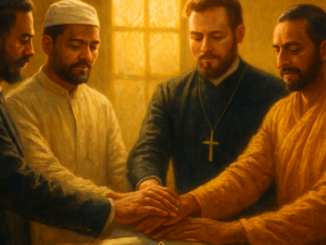
The Netherlands is a mosaic of cultures and religions, and Islam plays a prominent role in this diverse landscape. With over one million Muslims, the faith is deeply woven into Dutch society. At the same time, Freemasonry offers a non-dogmatic space for spiritual growth and moral reflection. How do these two traditions complement each other, and what can they learn from one another? Islam: A Way of Life Rich in Ritual Islam is far more than a religion — it is a complete way of life. Built on the Five Pillars — the declaration of faith, prayer, charity, fasting, and pilgrimage — Islam provides its followers with structure, purpose, and direction. The daily prayers (salat) and the annual observance of Ramadan instill discipline and deep devotion to God. Mosques serve as centers of both community and worship, spaces where spirituality and human connection come together. They are often adorned with intricate geometric patterns and calligraphy that are not merely beautiful but carry profound symbolic meaning — pointing toward the infinite nature of the divine. Freemasonry: A Space for Universal Truths While Freemasonry is not a religion, it shares notable parallels with spiritual traditions like Islam. Freemasons use rituals and symbolism […]

Open Book of Proverbs with Masonic square and compasses symbolizing wisdom
Christianity

Proverbs and Freemasonry: Wisdom as a Building Block of Character

The Book of Proverbs has spoken to seekers of wisdom for millennia. For some, it is a collection of practical rules for living from an ancient world. For others, it is a timeless mirror reflecting moral principles that remain as relevant today as when they were first written. But how does a Freemason approach these ancient texts? And what does someone discovering the symbolic richness of this book for the first time see in its pages? In this exploration, we examine two perspectives on wisdom as raw material for the inner life. The Perspective of the Traditional Reader For many readers, Proverbs is primarily a collection of practical advice attributed to wise kings and teachers of ancient Israel. The book belongs to what scholars call wisdom literature, and it contains short, pithy statements about honesty, diligence, humility, and justice. The tone is direct, sometimes stern, and always oriented toward daily life. A father speaks to his son, a teacher to his student. The wisdom conveyed is concrete: avoid the foolish, seek the righteous, guard your tongue. From this perspective, the book is essentially a manual for right conduct. The reader is encouraged to listen, to learn, and to improve their […]

Catholic church interior with symbolic elements related to Freemasonry
Religion

Roman Catholicism and Freemasonry: Rituals and Spirituality

In an age of growing secularism, Roman Catholicism remains one of the most enduring pillars of Western culture. But how does this ancient tradition relate to Freemasonry — an organization that defines itself not as a religion, but as a brotherhood with deep spiritual roots? The answer reveals surprising parallels, historical tensions, and a shared quest for meaning that continues to resonate today. Roman Catholicism: A Tradition Built on Ritual Roman Catholicism has deep historical roots across Europe and the wider world. Despite declining church attendance in many countries, the faith continues to shape the cultural and spiritual landscape. At its heart lie the sacraments, the celebration of the Eucharist, and a strong emphasis on tradition. The interior of a Catholic church reflects this beautifully — richly decorated altars, candles burning as prayers made visible, and stained-glass windows that tell the stories of Scripture. What makes Catholicism particularly distinctive is its ritual nature. From baptism to marriage and the funeral rite, every significant moment in life is framed by ceremony. These rituals provide structure, a sense of belonging, and something many regard as a spiritual compass — guiding the faithful through life’s most profound transitions. Freemasonry: Ritual in a Different […]

Open book of Psalms with Masonic square and compasses symbolizing wisdom
Christianity

Psalms and Masonic Symbolism: Practical Wisdom for Daily Life

We all know those moments — a chaotic day spiraling out of control, a difficult decision that refuses to resolve itself, or a stretch of uncertainty that just won’t lift. The Psalms, a collection of 150 songs from the Old Testament, offer surprisingly practical guidance for exactly these situations. In Freemasonry, these ancient texts serve as a rich source of symbolism that can help you take concrete steps in your personal development. This article explores how to translate the imagery of the Psalms into everyday application. The Psalms as a Toolbox for Life Written over the course of centuries, the Psalms contain songs for every human experience: joy, sorrow, fear, gratitude, and wonder. For Freemasons, this is especially relevant because the Volume of the Sacred Law holds a central place in the lodge. The Psalms are often found open upon it as a symbol of wisdom and direction. But how do you translate ancient poetry into something meaningful for your life today? The answer lies in recognizing universal patterns. When a psalmist sings of walking through a dark valley, you may recognize your own season of uncertainty. When the text speaks of building a house upon a rock, you can […]

Open ancient book with Masonic rough ashlar stone symbolizing inner growth
Christianity

The Book of Job: Suffering as a Building Block for Inner Growth

You know the feeling: a season when everything falls apart. Loss, setback after setback, and the people around you don’t seem to understand. In moments like these, a question surfaces — one that humanity has grappled with for thousands of years: why is this happening to me? The Book of Job from the Old Testament confronts us with exactly this question. But it also offers a surprisingly practical framework for anyone willing to look deeper. For Freemasons in particular, this ancient book of wisdom contains symbols that speak directly to the inner journey every Brother or Sister undertakes. The Heart of the Story: A Righteous Man Put to the Test Job is a prosperous, upright man who loses everything — his possessions, his children, his health. His friends insist he must have done something wrong to deserve such misfortune. But Job knows he is innocent. The book isn’t really about whether suffering is a punishment. It’s about how you respond when life hits you with incomprehensible adversity. Job refuses to surrender his integrity, even when everything is stripped away from him. That is the first practical lesson: character stands firm when comfort disappears. The Symbolism of the Rough Ashlar In […]

Open Book of Esther with Masonic square and compasses symbolizing hidden wisdom
Christianity

Esther: Courage and Hidden Wisdom in Freemasonry

In 478 BCE, a drama unfolded in the Persian Empire that is still commemorated to this day. A young woman, seemingly powerless at the court of an all-powerful king, changed the course of history through her courage and wisdom. The Book of Esther is unique within the Hebrew Bible: God’s name is never once mentioned, yet the divine is palpably present in every twist of the narrative. For Freemasons, this remarkable book offers a treasure trove of symbolism about hidden wisdom, moral courage, and the power of acting at precisely the right moment. A Historical Turning Point in Persia The story of Esther takes place at the court of King Ahasuerus, who ruled an empire stretching from India to Ethiopia. The historical backdrop is the Persian exile — a period when the Jewish people lived scattered under foreign rule. In this context, a young woman named Hadassah, later known as Esther, becomes queen. Her uncle Mordecai warns her to keep her heritage hidden. This element of concealment is not merely a practical survival strategy; it touches on a deeper truth about identity and the right moment of revelation. When the courtier Haman hatches a plot to annihilate all Jews in […]

Freemason in contemplation with square and compasses symbolizing mindfulness
Spiritual Traditions

Mindfulness in Freemasonry: The Art of Inner Awareness

In a world dominated by speed and distraction, mindfulness offers a powerful counterbalance. While Freemasonry doesn’t explicitly label it as such, mindfulness plays a crucial role in the practice of rituals, symbolism, and reflection within the Craft. It invites Freemasons to be fully present in the moment and to consciously work on the rough ashlar of their character. Mindfulness in Masonic Rituals One of the most striking aspects of Freemasonry is its use of ritual. Masonic rituals are carefully designed to draw Brethren out of their daily routines and guide them into a concentrated, almost meditative state of mind. The tracing board at the center of the lodge, the checkered floor, and the lesser lights all symbolize a balance between opposing forces — light and darkness, good and evil. Freemasons are encouraged to seek this balance not only in the world around them but also within themselves. This is the very essence of mindfulness: awareness of one’s inner processes and the pursuit of harmony. Symbolism as a Guide to Awareness Freemasons work on themselves through the language of symbolism. The square and compasses remind us of measure and justice, while the rough ashlar represents the ongoing journey of personal refinement. […]

Symbolic representation of Nehemiah rebuilding the wall of Jerusalem
Christianity

Nehemiah and the Symbolism of the Rebuilt Wall

Picture an ancient city wall, neglected for generations, lying in ruins. Stones scattered, gates burned, the outline of what once offered protection barely recognizable. Then someone arrives — not merely to stack stones, but to restore an entire community. The story of Nehemiah, the sixteenth book of the Old Testament, tells exactly this. Beneath the historical narrative lies a rich vein of symbolism that touches the very heart of what Freemasons strive for: building something greater than oneself, stone by stone, shoulder to shoulder. The Wall as a Boundary Between Chaos and Order A wall is more than stacked stones. In everyday life, we experience walls as unremarkable dividers — things that simply exist. But look deeper, and you discover that every wall represents a decision: here one thing ends, and there another begins. The wall of Jerusalem that Nehemiah rebuilt was literally the boundary between the holy city and the disordered world beyond it. Symbolically, it marked the transition from chaos to order, from decay to restoration. In Freemasonry, this theme of demarcation plays an essential role. The temple we build also has walls — not of stone, but of principles, of ethical boundaries that define who we aspire […]