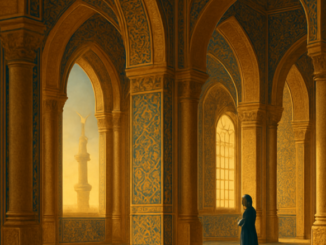
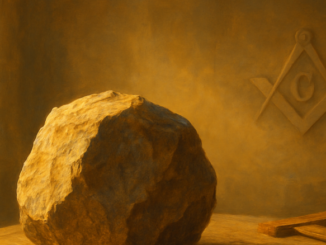
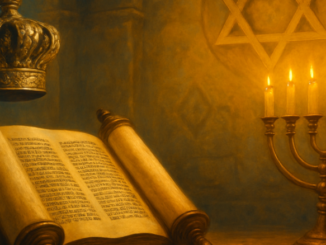
Open Bible showing the Book of Obadiah with Masonic square and compasses
Christianity

Obadiah: The Shortest Book With the Greatest Lessons on Pride

At just twenty-one verses, Obadiah is the shortest book in the Old Testament. Yet within that brevity lies a powerful message that has resonated across centuries. Where the casual reader might see an ancient text about a forgotten conflict, the searching mind discovers timeless wisdom about pride, downfall, and the path toward inner improvement. In this article, we place two perspectives side by side: the historical context of Obadiah and the symbolic meaning that Freemasons can recognize within it. The Historical World of Obadiah Obadiah directed his prophecy against Edom, a brother nation of Israel descended from Esau, the twin brother of Jacob. The text condemns Edom for its arrogance and for standing idly by while Jerusalem was plundered. The Edomites dwelled in rocky heights and believed themselves untouchable because of their geographic position. Their arrogance sprang from a false sense of security. For its original audience, this was a text of comfort and justice. They saw a brother nation that had abandoned them when it mattered most. The prophecy promised that pride would ultimately lead to a fall — a theme that runs throughout all of biblical literature. The message was clear: whoever exalts himself above others will eventually […]

A solitary chair on a windswept barrier island beach at golden hour
Spiritual Traditions

The Coast as Temple: Spiritual Lessons from a Barrier Island

A chair slowly sinks into the sand as the eyes wander across the water. In the distance, boats approach — tiny specks growing larger on the horizon. Other vessels sail away, shrinking until they vanish entirely. Behind the dunes, the land shields against the wind, while barefoot walkers stroll along the shore and the occasional brave soul takes a quick plunge into the cold sea. This simple scene on a barrier island holds more spiritual wisdom than many a thick volume of philosophy. The Beach as a Contemplative Space There is something extraordinary about sitting on a beach, gazing at the endless horizon. The boundary between water and sky blurs, time seems to slow, and the mind comes to rest. This is no accident. For centuries, people have sought out places where the elements converge — where land gives way to water and the heavens touch the earth. In many traditions, such places are regarded as threshold spaces, liminal areas where ordinary life pauses and room opens up for deeper reflection. Freemasonry understands this principle well. The lodge itself is precisely such a set-apart space, deliberately separated from the outside world to make reflection possible. But beyond the ritual environment, […]

Temple of Solomon pillars representing Masonic symbolism and inner growth
Christianity

First Kings: The Temple as a Blueprint for Your Inner Life

Imagine you’re finally starting that great project you’ve been dreaming about for years. The building blocks are ready, the plans have been drawn, but now the real work begins. That must have been exactly how King Solomon felt when he received the charge to build the Temple. In the Book of First Kings, we find far more than a story about stone and cedar — we encounter a deeper truth about how to build something lasting, something greater than yourself. A Kingdom in Transition First Kings opens with the close of an era. King David — the shepherd who rose to become a ruler — passes his mantle to his son Solomon. This moment of succession is more than a political handover. It is a deeply human turning point: the moment you receive the torch from those who came before you and realize that the responsibility is now yours alone. You may recognize this feeling from your own life. A mentor stepping aside, a parent letting go, a role that suddenly falls on your shoulders. In every transition like this, there is both fear and possibility. When Solomon is given a choice, he does not ask for wealth or power. […]

Stone foundation being built symbolizing Masonic inner kingdom building
Christianity

Second Samuel: Building an Inner Kingdom Stone by Stone

Imagine that after years of preparation, you finally receive the responsibility you’ve been working toward. A new leadership role, your own business, or perhaps parenthood. The question that arises isn’t just how you’ll fill that role — it’s who you want to be within it. Second Samuel, the tenth book of the Old Testament, tells exactly this kind of story. It chronicles the establishment of a kingdom, but its symbolism reaches far beyond political power. Read through the lens of Freemasonry, and it unfolds as a guide for building an inner kingdom — stone by stone. The Heart of Second Samuel: From Warrior to Builder Second Samuel covers the reign of King David, from his anointing to the later years of his rule. Where the first book centered on the struggle for recognition, this sequel explores what happens after that recognition has been won. David conquers the city that would become his capital. He brings the Ark of the Covenant to its resting place and receives a promise that will endure across generations. But the book also reveals his deeply human weaknesses: moral failings, family conflicts, and the anguish of loss. For the Freemason, this narrative follows a familiar pattern. […]

Ancient horn of anointing oil symbolizing inner calling and Masonic transformation
Christianity

First Samuel: Anointing Oil as a Symbol of Inner Calling

A small flask of oil. Ordinary, unremarkable. And yet, when the prophet Samuel pours that oil over the head of a simple shepherd, everything changes. The First Book of Samuel is far more than a chronicle of kings and battles. It reveals a deeper truth about calling, transformation, and the invisible forces that can reshape a person from within. For those who read with symbolic eyes, this ancient text opens a world that resonates profoundly within Freemasonry: the journey from darkness to light, from ignorance to insight. The Horn of Oil: More Than a Ritual Object Picture the horn — a tangible, physical vessel filled with oil pressed from olives. In the daily life of ancient Israel, oil was indispensable: fuel for lamps, nourishment for the body, a balm for healing. But when that same oil is poured over the head of a chosen one, it takes on an entirely different character. The anointing oil becomes a carrier of something that transcends the senses. It marks a transition, a transformation that cannot be seen but is deeply felt. In Freemasonry, we recognize similar moments. When a candidate is initiated, certain actions and objects may appear deceptively simple at first glance […]

A plumb line hanging against rough stone symbolizing Masonic integrity
Christianity

Amos and the Voice of Justice: A Prophet for Builders

You probably know the feeling: you see something going wrong around you, but you hesitate to speak up. Who are you to raise your voice? You’re no expert, no leader, no authority. And yet, something keeps gnawing at you. That very tension lies at the heart of the Book of Amos — a text written over 2,700 years ago that still resonates with anyone who wrestles with the question: when should I speak, and when should I remain silent? A Herdsman Becomes a Prophet Amos was no priest, no scholar, and no man of rank. He describes himself as a herdsman and a dresser of sycamore figs from the small village of Tekoa. He had no formal training in sacred scripture and held no position in the temple. Yet he traveled to the northern kingdom of Israel to speak words that have echoed through the centuries. His message was uncomfortable: he called out those in power for their injustice, their greed, and their neglect of the most vulnerable members of society. Why should this matter to you? Perhaps you recognize that familiar hesitation — the reluctance to speak up when you see something that isn’t right. The nagging doubt about […]

Ruth gleaning in the cornfields symbolizing loyalty and Masonic transformation
Christianity

Ruth and the Cornfield: Loyalty and Symbolism in Freemasonry

Loyalty is a word that rolls easily off the tongue, but it only reveals its true nature when everything else falls away. What remains of a promise when there is nothing left to gain? When following someone leads not to prosperity but to uncertainty, poverty, and exile? The Book of Ruth poses exactly this question — and the answer it gives is so radical that it still unsettles us three thousand years later. Ruth does not choose loyalty because it is wise. She chooses loyalty because it is essential. The Paradox of Gaining Through Loss Let us begin at the beginning — which is to say, at the end. The Book of Ruth opens with a cascade of loss. Naomi loses her husband, then both her sons. She stands in a foreign land without protection, without a future, without a name that still carries weight. She renames herself Mara — the bitter one. It is a gesture of total surrender to emptiness. And precisely at that lowest point, in that absolute desolation, something takes root that proves stronger than any material certainty: the loyalty of a daughter-in-law who refuses to leave. Here we touch a paradox that Freemasonry knows intimately. […]

Masonic gavel on a workbench symbolizing the cycle of growth and renewal
Christianity

Judges and the Cycle of Falling and Rising: Symbols of Growth

A hammer rests on the workbench. It is motionless, yet it carries within it the potential for both creation and destruction. In much the same way, the Book of Judges lies before us — a collection of stories about leaders who rise and vanish, about a people who fail and recover, fail and recover again. What does this ancient text tell us about the human soul? And how does the symbolism of this seventh book of the Old Testament mirror the path that every Freemason walks? The Cycle as an Archetypal Pattern The Book of Judges does not describe a linear history — it traces a spiral. The people turn away from their path, fall into oppression, cry out for help, and a leader emerges to deliver them. After a period of peace, the cycle begins anew. This pattern repeats itself twelve times, like a mantra carved into the very fabric of the text. For the Freemason, this cycle is deeply familiar. The rough ashlar is not shaped into a perfect cube in a single stroke. It is a process of failure and correction, of straying and returning to center. The cycle in Judges is not a sign of weakness […]

Symbolic river crossing representing Masonic thresholds and spiritual growth
Christianity

The Book of Joshua: Crossing Thresholds as a Symbol of Growth

There are moments in life when you stand before a boundary you have never crossed. It might be a river, a doorway, or simply a decision that will change everything. The Book of Joshua in the Old Testament describes exactly such a moment: the people of Israel stand on the banks of the Jordan, ready to enter the Promised Land. But beneath this narrative of conquest and settlement lies a deeper layer of symbolism that still resonates more than three thousand years later. For Freemasons, this sixth book of the Hebrew Bible contains strikingly familiar themes about thresholds, courage, and the ongoing journey toward inner growth. The River as a Symbol of Transition The Jordan is no ordinary river in the story of Joshua. It serves as the dividing line between wilderness and fertile land, between wandering and arrival. Crossing it marks an irreversible change — there is no going back. The image of a river as a threshold appears across countless spiritual traditions. Water represents purification, but also the unknown — something fluid that has not yet taken solid form. In Freemasonry, the threshold plays an equally significant role. Entering the lodge is not merely stepping through a doorway. […]

Open Volume of the Sacred Law on a Masonic altar with symbolic light
Christianity

Deuteronomy and Masonic Symbolism: Two Paths, One Light

In a small lodge room somewhere in a quiet provincial town, silence falls as the Worshipful Master speaks the opening words. The brethren listen to ancient texts that speak of light, law, and the journey of the soul. Thousands of years earlier, a people stood at the edge of a promised future while their leader recited the law one final time. Two worlds, two eras — and yet the same search for wisdom and direction. Deuteronomy: The Repetition of the Law Deuteronomy, the fifth book of the Old Testament, literally means “second law” or “repetition of the law.” It forms the capstone of the Five Books of Moses and contains his final addresses to the people before they entered the Promised Land. No new laws are given here. Instead, the commandments already received are restated — this time with an urgent call to preserve them and pass them on to future generations. The central theme of Deuteronomy revolves around remembrance and transmission. The people had wandered through the desert for forty years, and a new generation stood ready to continue the work of their forebears. The law is not presented merely as regulation but as a living heritage meant to […]

Open Bible showing the Book of Joel with Masonic symbols of light and darkness
Christianity

The Book of Joel: Destruction and Renewal as an Inner Journey

Most of us have lived through seasons when everything we carefully built seemed to crumble. A time when certainties wavered and we wondered whether the light would ever return. This is precisely the experience at the heart of the Book of Joel — one of the shortest yet most penetrating prophetic texts in the Old Testament. For Freemasons, this small but mighty book contains surprising layers of meaning that speak directly to the heart of the initiatory journey. A Plague That Strips Everything Bare The Book of Joel opens with a harrowing image: a locust plague that devours the land completely. Wave after wave of locusts descend, sparing nothing. The vines wither, the grain harvest fails, even the trees die. It is a picture of total devastation — one you may recognize from your own life, when setback followed setback in relentless succession. What stands out is that the prophet does not look away from the suffering. He invites the people to truly face the destruction, to mourn and to grieve. In Freemasonry, we know a similar moment: the confrontation with our own imperfection before we can begin to build. You can only rebuild once you have honestly looked at […]

Coast guard officer leaping onto a drifting boat on a stormy ocean
Spiritual Traditions

Leaping Into the Unknown: Freemasonry, Courage, and Rescue

You may have seen the footage — a coast guard officer leaping without hesitation onto a rudderless boat in the middle of a churning ocean. It’s the kind of image that stirs something deep within us, something that goes beyond mere admiration for physical bravery. Watching that leap, I found myself thinking about the deepest questions of human existence, and about the journey we all share — a journey that lies at the very heart of Freemasonry. When the Helm Slips From Your Hands Imagine yourself on the open sea. The water stretches endlessly around you, and suddenly nothing works the way it should. The rudder won’t respond, the engine sputters, and the waves take over. This is hardly a rare metaphor in human life. We all know those moments when we lose control, when our carefully plotted course slips away and we find ourselves drifting at the mercy of circumstances. In Freemasonry, the stormy sea has long served as a symbol for the unrest of an unenlightened mind. The candidate who first enters the lodge is often described as a seeker — a ship that has not yet found a safe harbor. This is not weakness. It is the […]

Cape Verde football team embodying courage and unity on the world stage
Spiritual Traditions

The Unexpected Underdog: What Cape Verde Teaches Us About Courage

In a crowded living room, a Freemason watches the screen intently. Cape Verde — an island nation of barely half a million people — is holding its own against the mighty Spain. Somewhere in that tension, in that improbable resistance, he recognizes something he has also felt in the lodge: the power that emerges when humility and determination meet the seemingly impossible head-on. When the Small Challenges the Great There are moments in sport that transcend goals and statistics. Today’s World Cup clash, in which Cape Verde nearly pulled off a stunning upset against Spain, is one of those moments. A team whose players trace their roots to both the Cape Verdean islands and the Netherlands showed that conviction can sometimes outweigh reputation. For anyone willing to look beyond the scoreboard, a profound spiritual lesson unfolds. In Freemasonry, we hold the principle that true growth does not come from displays of strength, but from acknowledging our own limitations. The candidate who enters the lodge for the first time does not arrive as a conqueror — he arrives as a seeker. He comes not to impress, but to learn. Much like Cape Verde stepped onto the pitch without any expectation of […]

Red traffic light glowing at night as a symbol of spiritual pause
Spiritual Traditions

The Red Traffic Light as a Spiritual Teacher

You may have seen the footage. Thousands of Japanese football fans celebrating wildly in the streets — singing, dancing, erupting with joy — until the traffic light turns red. Then everything stops. Silence. Stillness. Only when the light turns green does the celebration resume. This scene struck me deeply. Not because of the football, but because of what it reveals about the human soul and its capacity for inner freedom. A Moment of Recognition Imagine yourself surrounded by thousands of people cheering, singing, and dancing. The emotion is overwhelming, the energy contagious. And then, at the peak of collective ecstasy, a red light appears. A simple signal. No police officer, no authority intervening. Just you and that light. What do you do? The Japanese supporters chose stillness. Not out of fear of punishment, but from something deeper — a rooted awareness that true joy does not vanish through a moment of restraint. On the contrary, they demonstrated that discipline and celebration can strengthen one another rather than cancel each other out. This is a spiritual lesson that resonates powerfully with me as a Freemason. The Art of the Voluntary Halt In Freemasonry, we often speak about subduing our passions. This […]

Symbolic light illuminating Masonic and Gnostic spiritual traditions
Spiritual Traditions

What Connects Freemasonry and Gnosis? Exploring Inner Knowledge

When we explore the connection between Freemasonry and Gnostic traditions, we step into territory where ancient questions come alive once more. What does it truly mean to know? And how does knowing differ from believing? These are questions that searching minds have been asking since the early centuries of the Common Era — and they still echo through the lodges of today. The relationship between these two traditions runs deeper than most people realize, and it has something genuinely valuable to offer us in the present moment. Why Do People Compare Freemasonry with Gnostic Thought? It’s a fair question to start with, and the comparison doesn’t arise by accident. Both traditions emphasize that outward forms are merely carriers of deeper meaning. A Gnostic from antiquity would say that the material world is a veil behind which a higher reality is hidden. A Freemason speaks of symbols that only reveal their secrets when the gaze turns inward. In both cases, the personal inner journey stands at the center — not the blind acceptance of dogma. Yet the resemblance is subtler than it first appears. Gnosis, the Greek word for “knowledge,” refers to a direct, experiential form of knowing. It isn’t about […]

Open Bible showing the Book of Hosea beside Masonic square and compasses
Christianity

Hosea and the Freemason: Two Perspectives on Faithfulness

The Book of Hosea occupies a remarkable place in the Hebrew Bible. Written by an eighth-century BCE prophet, it speaks of broken promises, unfaithfulness, and the possibility of restoration. But what happens when a biblical scholar and a Freemason each pick up the same text? Both approaches open windows onto deep symbolism — though from very different rooms. The Biblical Scholar Reads: A Covenant History For the biblical scholar, Hosea is first and foremost a historical document. The book emerged during a time of political instability, when the Northern Kingdom of Israel was caught between rival empires. The prophet received an extraordinary commission: he was to marry a woman who would be unfaithful to him. This marriage became a living metaphor for the relationship between the Divine and His people. The scholar analyzes linguistic structures, compares manuscripts, and situates the text within its original context. Unfaithfulness is understood here as idolatry — the straying toward foreign gods and political alliances. The academic approach seeks to uncover what the text meant for its original audience. Which cults were being criticized? Which historical events are reflected in the prophecy? The book closes with a promise of renewal, and the scholar examines how […]

Two spiritual paths converging — Gnostic knowledge and Masonic symbolism
Spiritual Traditions

Inner Knowledge in the Netherlands: Two Paths to the Light

Anyone who explores the pursuit of gnosis in the Netherlands quickly discovers that the search for inner knowledge takes many forms. Some find their way through Gnostic communities, others through Freemasonry. Both traditions share a deep longing: to uncover the truth behind the veil. Yet their methods and philosophies differ considerably. In this article, we place two spiritual worlds side by side — not to judge, but to understand what they have in common and what we can learn from both. The Gnostic Tradition in the Netherlands: Knowledge as Liberation The word gnosis comes from Greek and literally means knowledge. But this is not ordinary knowledge gleaned from textbooks. It refers to a direct, inner experience of the divine. Since the early twentieth century, the Netherlands has harboured a vibrant interest in this spiritual current. Various communities and study groups devote themselves to ancient Gnostic texts, seeking to make their wisdom applicable to everyday life. At the heart of Gnostic thought lies the idea that the material world is a reflection of a higher reality. Every human being carries a divine spark within, yet has forgotten it. By acquiring inner knowledge — by awakening — one can return to one’s […]

Daniel standing calmly in the lions' den symbolizing Masonic steadfastness
Christianity

Daniel and the Lions’ Den: Steadfastness in Practice

You’re about to make a difficult decision. Colleagues expect you to go along with the crowd, friends don’t understand your hesitation, and somewhere deep inside, you know what the right thing to do is — but it may cost you dearly. The Book of Daniel speaks directly to moments like these. This ancient Old Testament text doesn’t offer abstract theology; it presents concrete examples of people who followed their inner compass under immense pressure. For Freemasons, these stories resonate with one of the Craft’s central questions: how do you build a character that remains standing when the world around you is shaking? The Heart of the Book of Daniel The Book of Daniel tells the story of a young man from Judah who is taken as an exile to Babylon. There he is educated at the royal court, given a new name, and immersed in a culture that is entirely different from his own traditions. Despite tremendous pressure to conform completely, Daniel holds fast to his inner principles. The book consists of two parts: stories of steadfastness under trial, and apocalyptic visions of the future. The most well-known stories are that of the fiery furnace — in which three of […]

Karel van Zweden Masonic lodge in Zutphen — a place of spiritual tradition
Spiritual Traditions

Karel van Zweden Zutphen: Spiritual Legacy of a Masonic Lodge

In the heart of the historic Hanseatic city of Zutphen lies a remarkable place where spirituality and tradition converge. The Karel van Zweden lodge bears the name of an eighteenth-century monarch renowned for his pursuit of inner wisdom. For over two centuries, this Masonic lodge has served as a meeting point for those who grapple with life’s greatest questions. What makes this place so special? And what spiritual lessons can we still draw from its enduring legacy today? The Spiritual Roots of Karel van Zweden Zutphen When we speak of the Karel van Zweden lodge in Zutphen, we enter a world where the outer and the inner merge. The lodge’s namesake, a Swedish prince of the eighteenth century, was known for his fascination with esoteric traditions and his pursuit of enlightenment in the philosophical sense of the word. He saw in Freemasonry a path to self-knowledge that reached far beyond social standing or worldly power. This spiritual foundation is still reflected in the work carried out within the lodge today. Freemasons in Zutphen come together not to receive answers, but to ask questions. They seek what connects them as human beings, beyond the superficial differences of background, profession, or worldview. […]

Ancient temple vision symbolizing Ezekiel's connection to Masonic philosophy
Christianity

Ezekiel and Freemasonry: Visions as Inner Building Blocks

What can the enigmatic visions of a sixth-century BCE prophet possibly teach us today? The Book of Ezekiel brims with images that stir the imagination: wheels within wheels, a valley of dry bones, and a temple described down to the smallest measurement. For those who read with a Masonic eye, these ancient texts open up a world of symbolism that turns out to be remarkably relevant. Let’s enter into conversation with this ancient book and discover what it has to offer the modern Freemason. Who Was Ezekiel, and Why Should Freemasons Care? Ezekiel was a priest who was carried into exile in Babylon around 597 BCE, along with many other inhabitants of Judah. There, far from the destroyed Temple in Jerusalem, he received a series of extraordinary visions that he recorded in meticulous detail. But why should a modern person — and especially someone interested in Freemasonry — spend time with these ancient texts? The answer lies in the universal themes woven throughout the book. Ezekiel speaks of destruction and rebuilding, of personal responsibility, of the possibility of starting anew. These are themes that sit at the very heart of Freemasonry: the idea that a human being is like a […]